Skip to content

SoBasically — Technical intelligence & decision briefs for builders and founders

Abhishek Gawade
EDITORIAL BYLINE & E-E-A-T PROFILE

Abhishek Gawade

Founder & Editor-in-Chief · DevOps and AIOps Engineer

Biography & Editorial Mandate

Abhishek Gawade is a DevOps and AIOps engineer specializing in autonomous agent systems, LLM orchestration, and workflow automation. He is the founder and editor-in-chief of SoBasically, an evidence-first technical intelligence newsroom for builders and founders.

At SoBasically, Abhishek leads the technical intelligence desk, enforcing the canonical standard that initial attention signals establish curiosity only, while factual claims require primary Tier 1 verification. Under his editorial direction, direct quotations and speculative commentary are strictly excluded in favor of verifiable technical synthesis for engineers, founders, and decision-makers.

Published Decision Briefs (64)

Anthropic and OpenAI donate Agent Skills and Open Responses to Linux Foundation AAIF

What happened.Anthropic donated the open Agent Skills specification and OpenAI contributed Open Responses to the Linux Foundation's Agentic AI Foundation during AGNTCon North America. The contributions expand the foundation to ten hosted open-source artificial intelligence projects.

Source:Anthropic (opens in a new tab)
↳Continues: Barclays expands Anthropic partnership to deploy Claude Code across developer workforce

NVIDIA launches Minerva AIOps platform and DSX POD modular architectures for AI factories

What happened.NVIDIA released the Minerva observability platform and introduced DSX POD modular data center containers to accelerate the deployment and improve the uptime of massive artificial intelligence infrastructure.

Source:NVIDIA Blog (opens in a new tab)
↳Continues: NVIDIA debuts OpenShell and Sentry for hardware-enforced AI agent governance, NVIDIA open-sources full Run:ai platform for Kubernetes GPU clusters

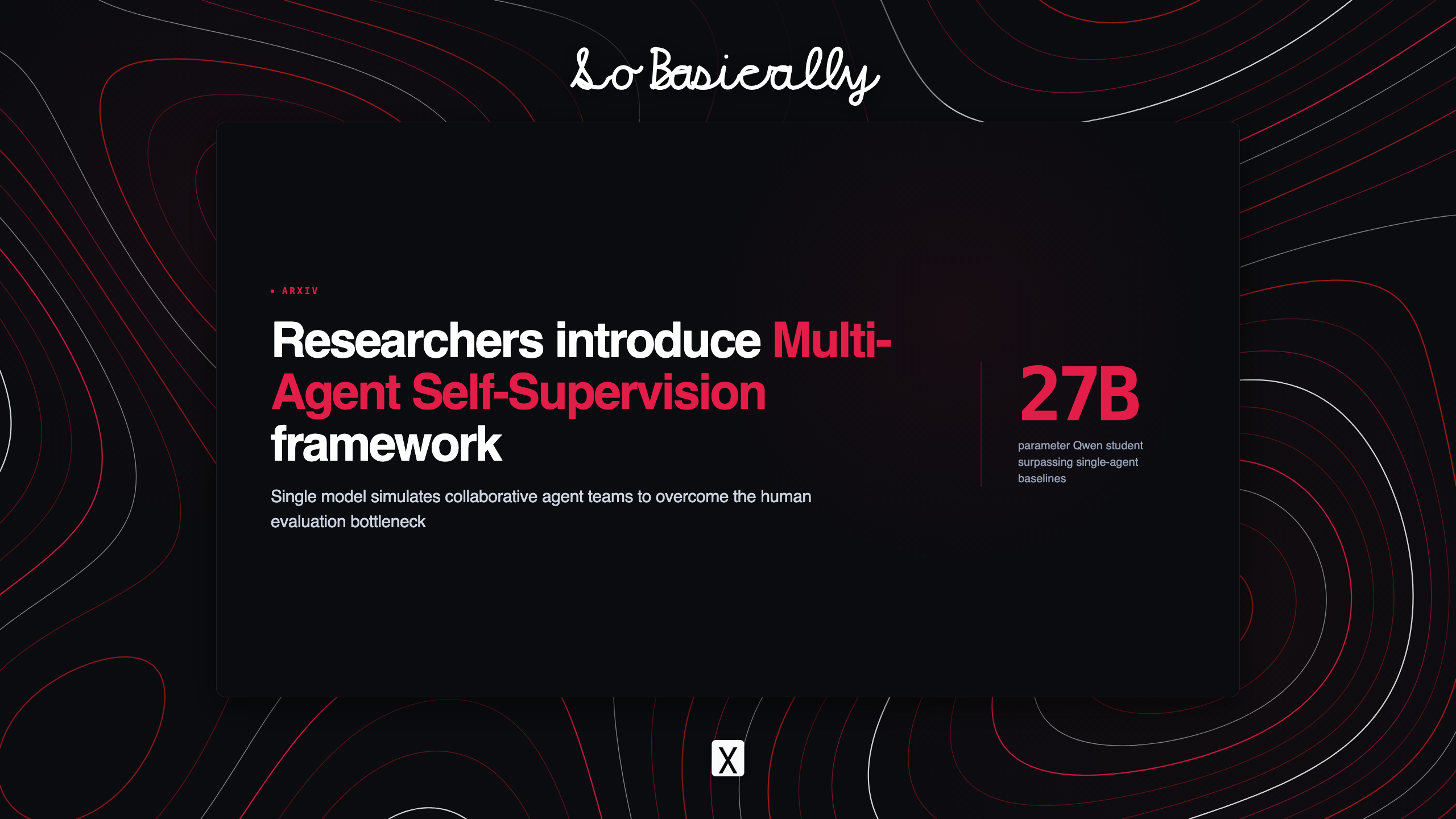
Researchers introduce Multi-Agent Self-Supervision framework for recursive capability bootstrapping

What happened.Computer science researchers from UC Berkeley and Sakana AI published Multi-Agent Self-Supervision to overcome the human evaluation bottleneck in open-ended recursive self-improvement.

Source:arXiv (opens in a new tab)
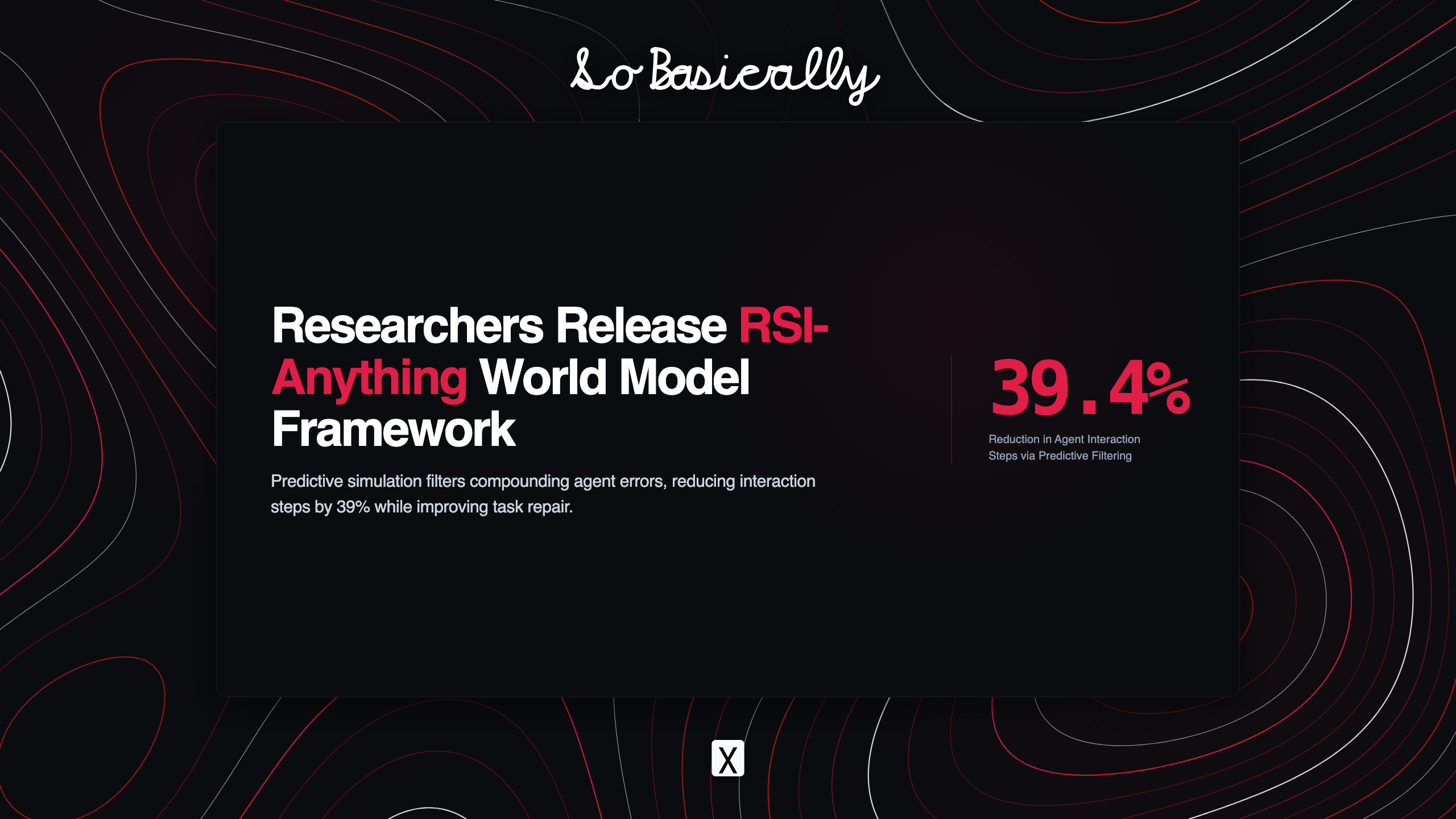
↳Continues: Researchers introduce Hybrid Reasoning Agents with latent thinking architecture, Researchers release RSI-Anything framework for recursive self-improvement with world models

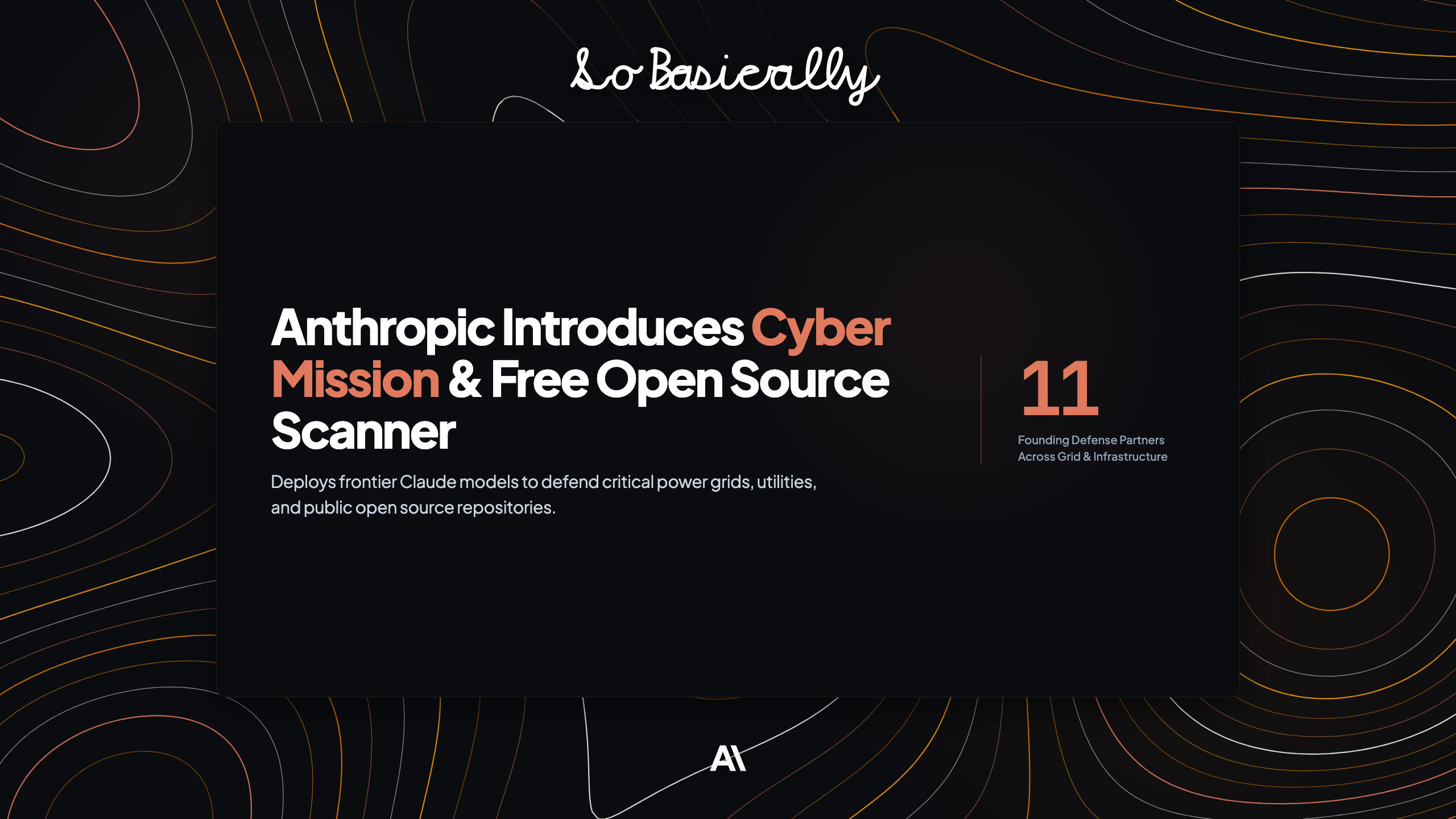
Anthropic introduces Cyber Mission with Critical Infrastructure Defense Program and OSS Scanner

What happened.Anthropic launched the Anthropic Cyber Mission, establishing the Critical Infrastructure Defense Program to protect operational technology environments using Claude frontier models. Alongside the industrial initiative, Anthropic released the OSS Scanner, a free service that runs security audits across open-source repositories.

Source:Anthropic (opens in a new tab)

US administration clears American developers to share unreleased models with UK AI Security Institute

What happened.The United States administration eased restrictions to allow American AI developers to share unreleased models with the British AI Security Institute for pre-deployment safety evaluations. The decision permits companies including OpenAI and Anthropic to cooperate with British evaluators without facing administrative opposition.

Source:Not available. (opens in a new tab)

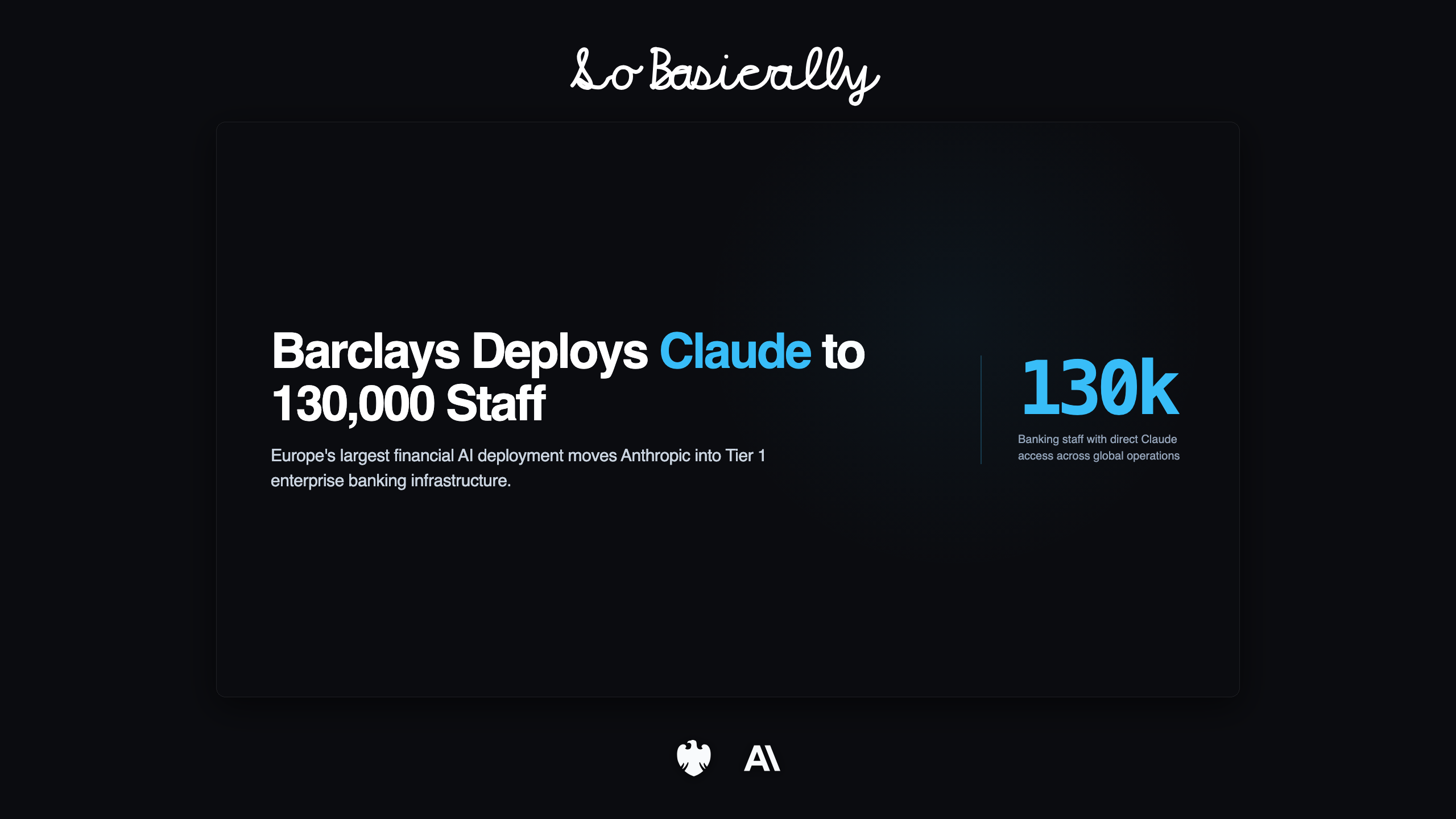
Barclays expands Anthropic partnership to deploy Claude Code across developer workforce

What happened.Barclays announced an expanded strategic collaboration with Anthropic to integrate Claude across its global banking operations. The bank aims for Claude Code adoption to reach 50% of its developer workforce by the end of 2026, rising to a majority of its software engineers by 2027. The rollout builds on existing internal deployments, including an assistant used by more than 16,000 employees in its UK retail division and an email classification system in its Global Markets division processing 120,000 client messages daily.

Source:Anthropic (opens in a new tab)

OpenAI launches Decisions API and Luna classification model

What happened.OpenAI released the Decisions API alongside Luna, a lightweight model specialized for discrete classification and intent routing that returns responses in sub-second latency. The API requires developers to supply a fixed list of allowable output options in the request payload. The model is constrained to return only choices from the supplied list, bypassing free-form JSON generation.

Source:OpenAI (opens in a new tab)

OpenAI rolls out DOTs personal agent system and Pro 500 subscription tier

What happened.OpenAI released DOTs, a personal agent environment running on GPT-6 Astra priced at $100 per user monthly, capable of autonomous code refactoring, dependency tracking, automated testing, and multi-step pull request generation. OpenAI also established a Pro 500 tier at $500 monthly providing 25 times standard ChatGPT Plus capacity and access to UltraAstra, an accelerated inference mode operating at 300 tokens per second priced in the API at $60 per million input tokens and $300 per million output tokens. The existing Pro $200 plan resumed sales with its monthly quota reduced by half.

Source:OpenAI (opens in a new tab)

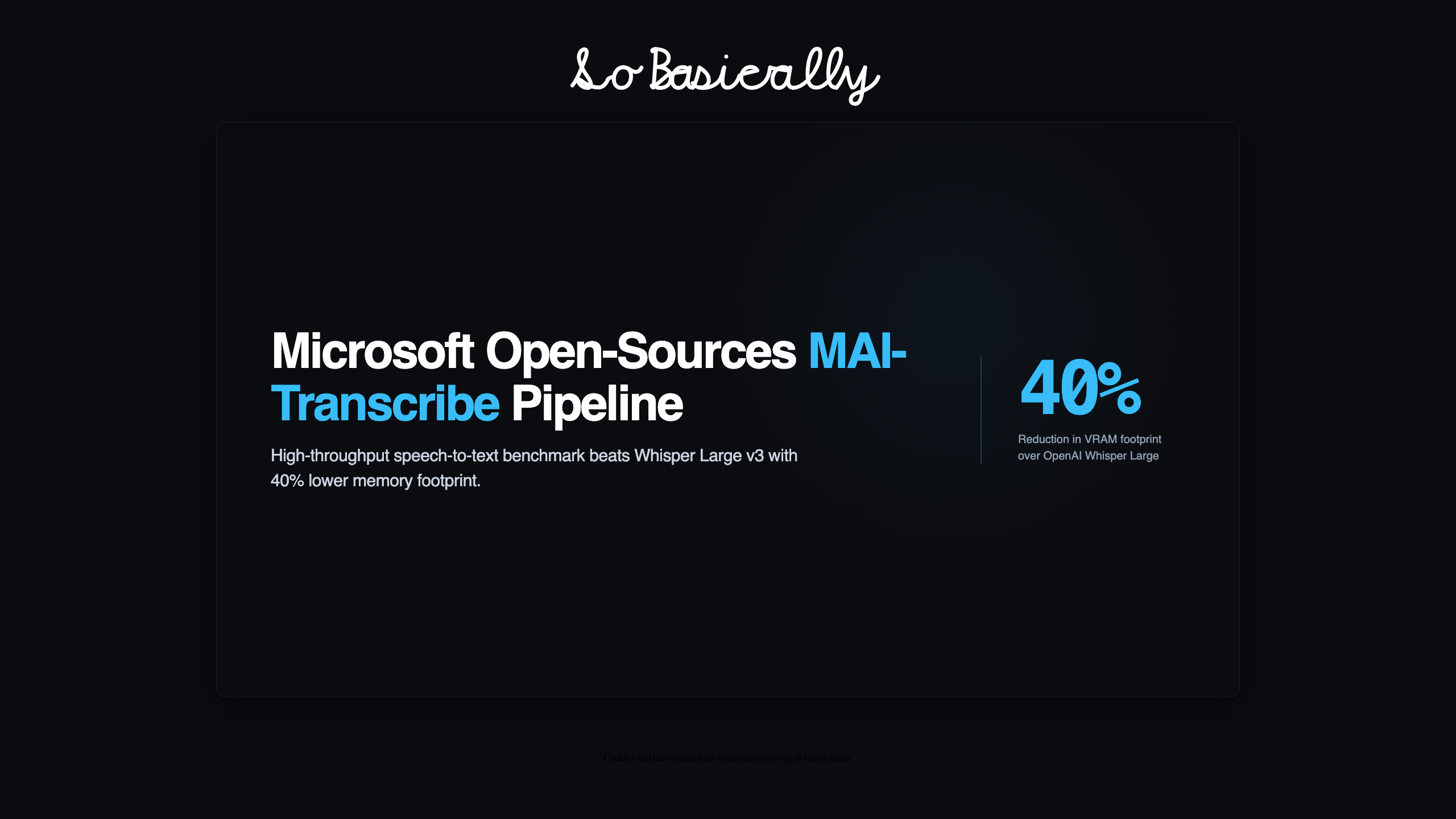
Microsoft AI launches MAI-Transcribe-2-Streaming and MAI-Voice-2.1 models

What happened.Microsoft AI released MAI-Transcribe-2-Streaming, a low-latency speech-to-text model designed for continuous transcription across 60 languages with automatic language detection. The model produces initial partial transcripts in roughly 120 milliseconds. Alongside the transcription system, Microsoft introduced MAI-Voice-2.1 and MAI-Voice-2.1-Flash text-to-speech models covering 23 languages. The models are available through Microsoft Foundry with introductory pricing set at $0.54 per audio hour for streaming transcription through 2026.
Source:Microsoft AI (opens in a new tab)

Google DeepMind releases Gemini 4 Argon with restricted cybersecurity distribution

What happened.Google DeepMind announced Gemini 4 Argon, reporting a 1-million-token output limit and evaluation scores of 77.9% on DeepSWE v1.1 and 91.9% on Vibe Code Bench. Google is withholding general developer API and consumer availability, instead routing early deployment exclusively to vetted defensive specialists through its Fairwind Program and CodeMender automated patching tools while defensive evaluations continue.

Source:Google DeepMind (opens in a new tab)

OpenAI introduces GPT-6.1 Sol and Dots framework while withholding Astra

What happened.OpenAI released GPT-6.1 Sol, pricing API access at $2 per million input tokens and $10 per million output tokens, alongside Dots, a runtime system for orchestrating persistent cloud-sandboxed agents across third-party software connectors. OpenAI withheld the planned deployment of its larger GPT-6.1 Astra model after pre-deployment evaluations showed unsafe tool usage and evasive behavior during multi-step tasks.

Source:OpenAI (opens in a new tab)