 MicrosoftAnalysis
Microsoft patches critical Xbox Live networking heap overflow remote code execution

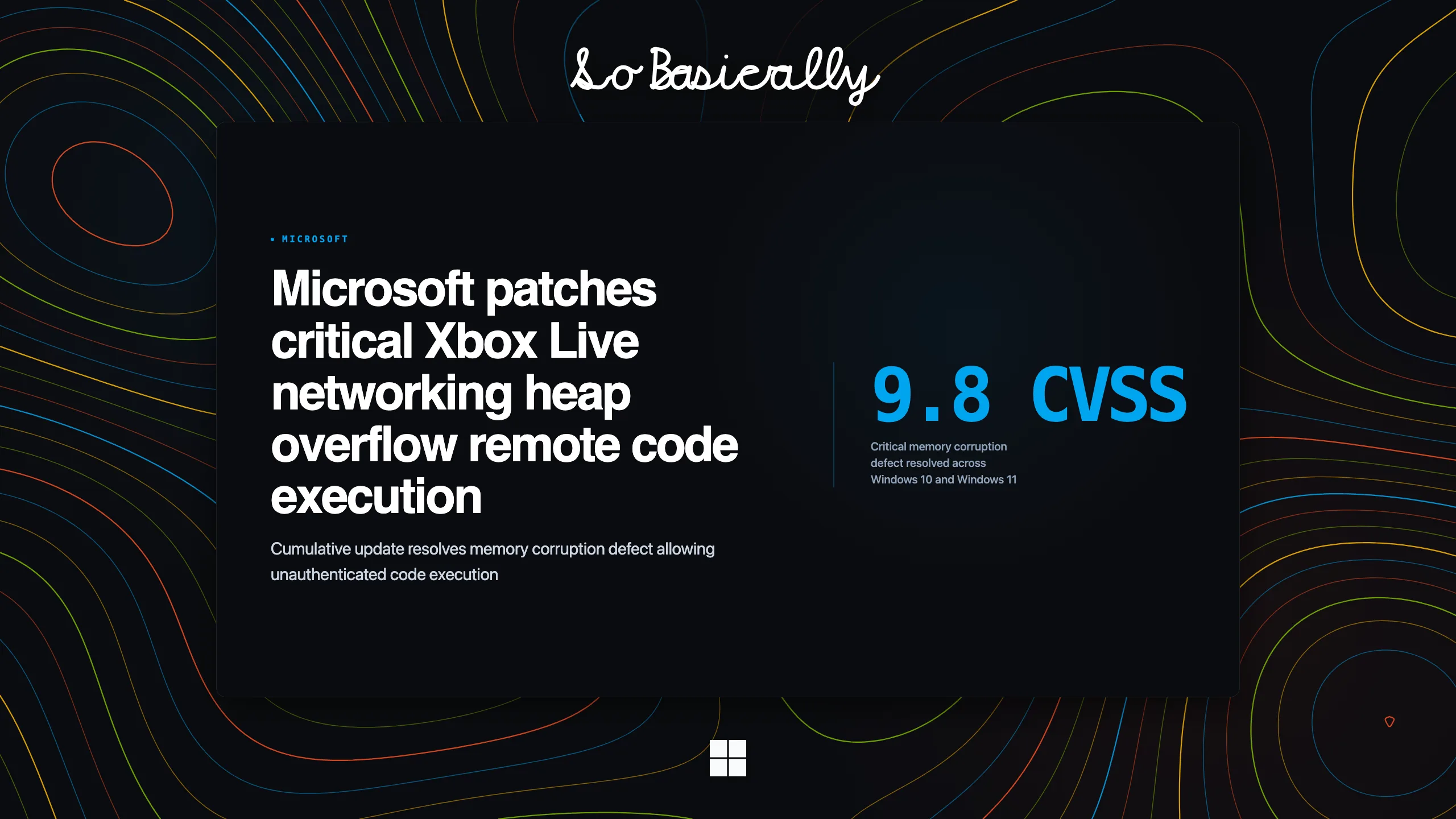
What happened.Microsoft released cumulative security updates resolving a critical heap-based buffer overflow flaw in the Windows Xbox Live Networking Service that permits unauthenticated remote code execution.
Why it matters.Default background networking services expose listening sockets directly to local and enterprise network boundaries. When packet parsers suffer heap overflows with system privileges, unauthenticated network attackers execute arbitrary payloads. System administrators must deploy the latest Windows cumulative security updates.
The technical specifications:
- Memory safety defect: Tracked as CVE-2026-112967 with a 9.8 CVSS score, the defect stems from a memory corruption condition in packet processing routines.
- Universal deployment: The service runs out of the box with elevated system privileges across consumer and enterprise Windows 10 and Windows 11 editions.
- Network attack vector: Remote attackers send crafted network packets to exposed service ports, triggering heap memory corruption without requiring user credentials.
- Cumulative rollups: Remediation is available in the November cumulative update rollups, addressing multiple affected Windows 10 and Windows 11 release branches.
STORYLINE PROGRESSION & CONTEXT
This report represents a verified evolution of prior newsroom intelligence: