 MicrosoftAnalysis
Microsoft patches critical unauthenticated LDAP remote code execution defect

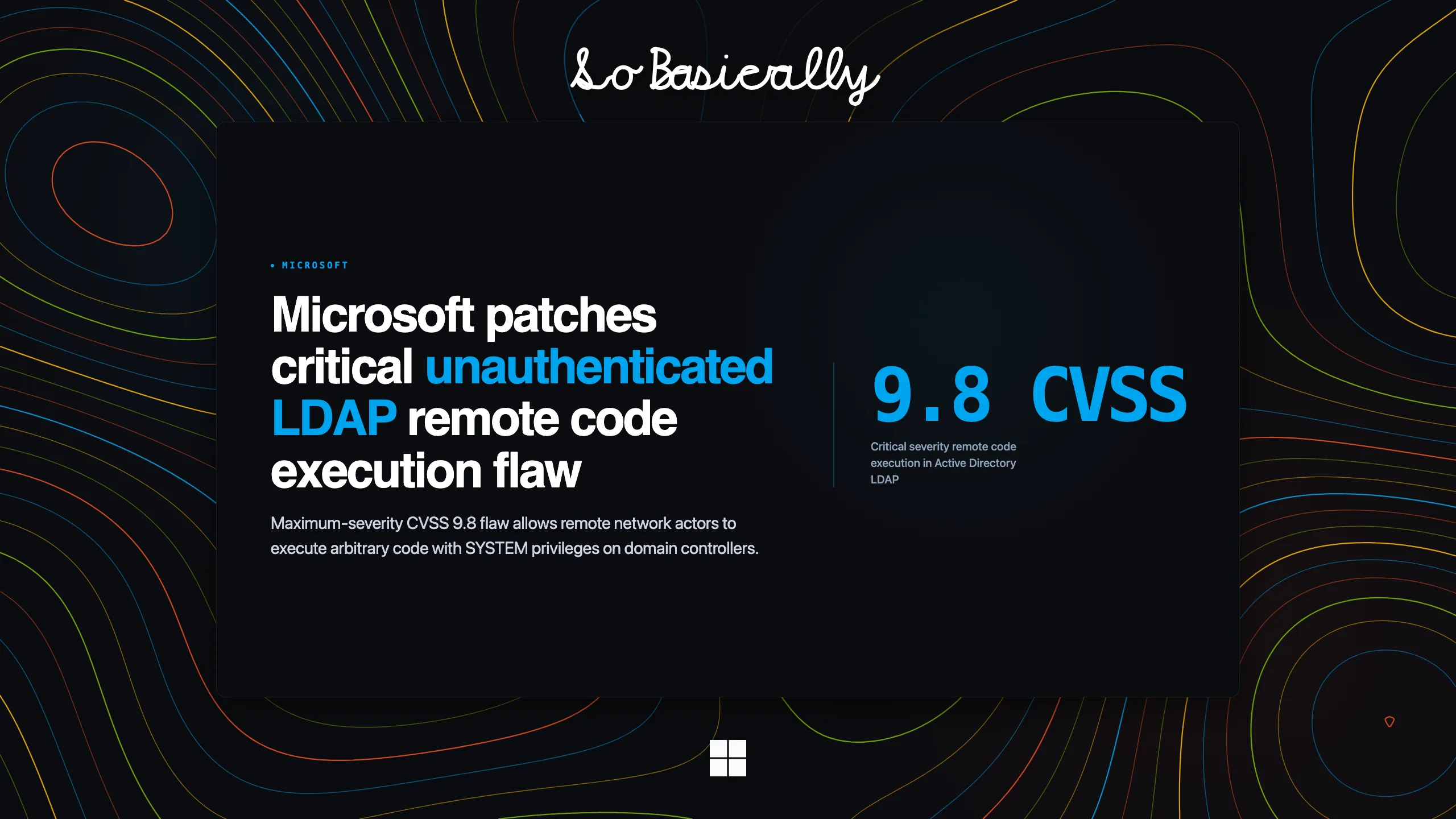
What happened.Microsoft resolved a maximum-severity remote code execution flaw in Active Directory Lightweight Directory Access Protocol during its monthly security release.
Why it matters.Active Directory is the central identity authority for corporate enterprise networks worldwide. When unauthenticated network vulnerabilities permit arbitrary code execution on domain controllers, attackers gain administrative control over all domain assets. Enterprise systems engineers must apply the latest Windows Server security rollups to domain infrastructure immediately.
The technical specifications:
- Vulnerability mechanics: Tracked as CVE-2026-119958 with a 9.8 CVSS score, the defect stems from improper memory handling in Windows LDAP services.
- Exploitation path: Remote unauthenticated attackers send crafted network payloads directly to exposed directory service endpoints without entering valid domain credentials.
- System compromise: Successful exploitation triggers heap memory corruption and executes arbitrary code with privileged SYSTEM permissions on domain controllers.
- Remediation release: Microsoft distributed cumulative monthly security updates across supported Windows Server operating system versions to patch vulnerable services.