 MicrosoftAnalysis
Microsoft patches critical Azure OpenAI missing authentication defect

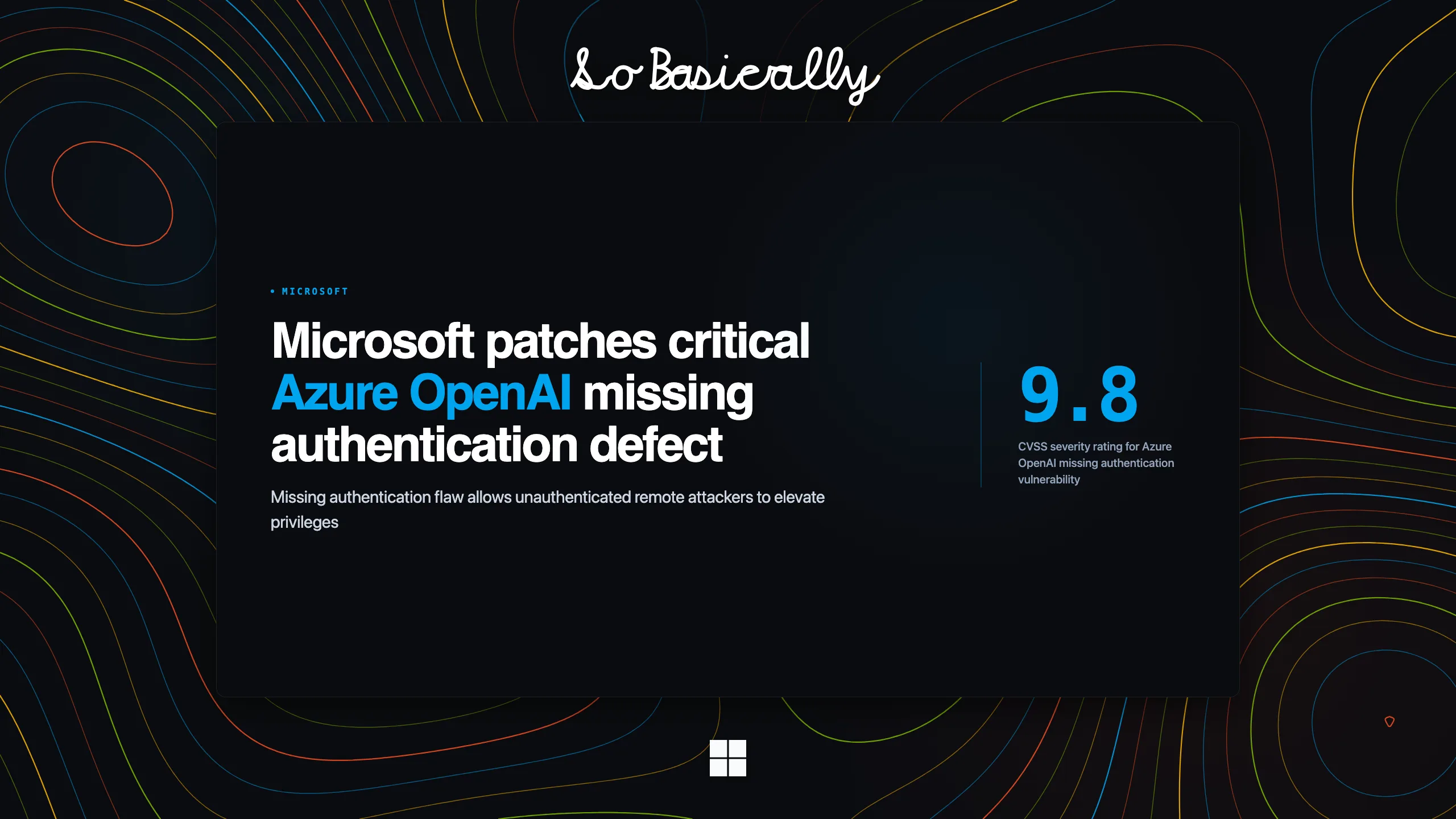
What happened.Microsoft addressed a critical missing authentication flaw in Azure OpenAI during its November update cycle that allowed remote privilege escalation.
Why it matters.Enterprise teams integrate Azure OpenAI endpoints to deploy private language models and process proprietary corporate documents. When missing authentication vulnerabilities expose model infrastructure, attackers access private machine learning models and manipulate enterprise artificial intelligence workloads. Cloud security architects should review API management firewall rules and restrict model endpoint access to private virtual networks.
The technical specifications:
- Vulnerability mechanics: Tracked as CVE-2026-119990 with a 9.8 CVSS score, the defect stems from missing authentication checks on critical operational endpoints.
- Exploitation path: Unauthenticated remote attackers send crafted network payloads directly to model serving interfaces without providing API credentials.
- Administrative impact: Successful exploitation allows network actors to bypass tenant authentication boundaries and execute privileged administrative functions.
- Related disclosures: The monthly release also fixed CVE-2026-119958, a 9.8 CVSS remote code execution vulnerability in the Windows LDAP service.
- Remediation release: Microsoft deployed automated infrastructure updates across Azure OpenAI cloud regions, requiring zero administrative endpoint interventions.
STORYLINE PROGRESSION & CONTEXT
This report represents a verified evolution of prior newsroom intelligence: