Skip to content
SoBasicallyVOL. I · RUN 2026-11-12-ai-technology
ARCHIVAL EDITION2026-11-12-ai-technology8 STORIES · 1514 WORDS
← Back to Archive

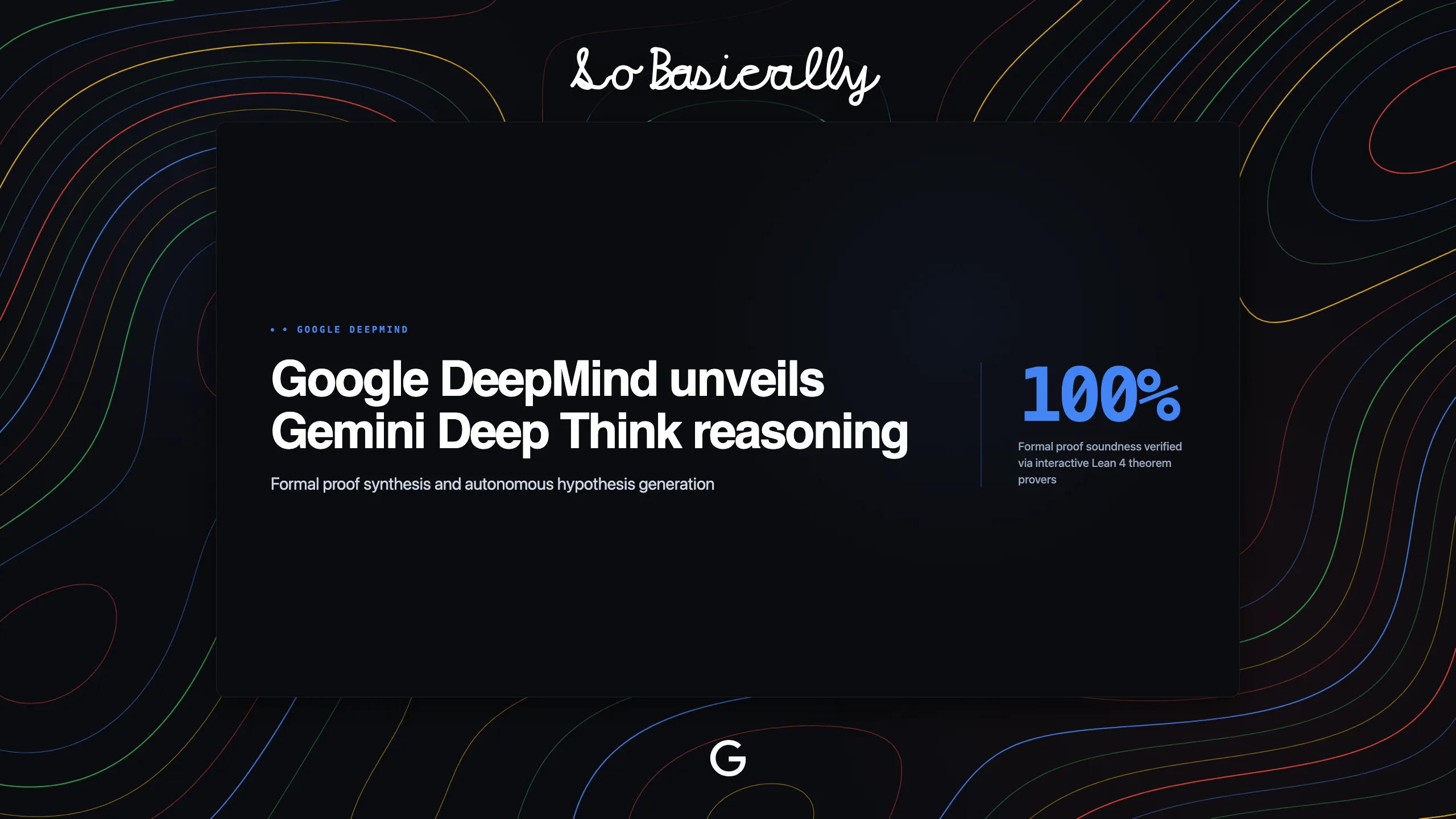
Google DeepMind unveils Gemini Deep Think to accelerate mathematical and scientific discovery

Topographic elevation contour card for Google DeepMind unveils Gemini Deep Think to accelerate mathematical and scientific discovery

What happened.Google DeepMind released Gemini Deep Think, an advanced reasoning model engineered to formulate scientific hypotheses and verify formal mathematical proofs.

Why it matters.Language models frequently generate convincing derivations that collapse under rigorous mathematical inspection. Grounding neural search routines within formal theorem provers eliminates deductive hallucinations, transforming generative systems into dependable collaborators for scientific discovery.

Read Full Brief →
Source:Google DeepMind (opens in a new tab)
VERIFIED STORIES IN THIS EDITION7 STORIES
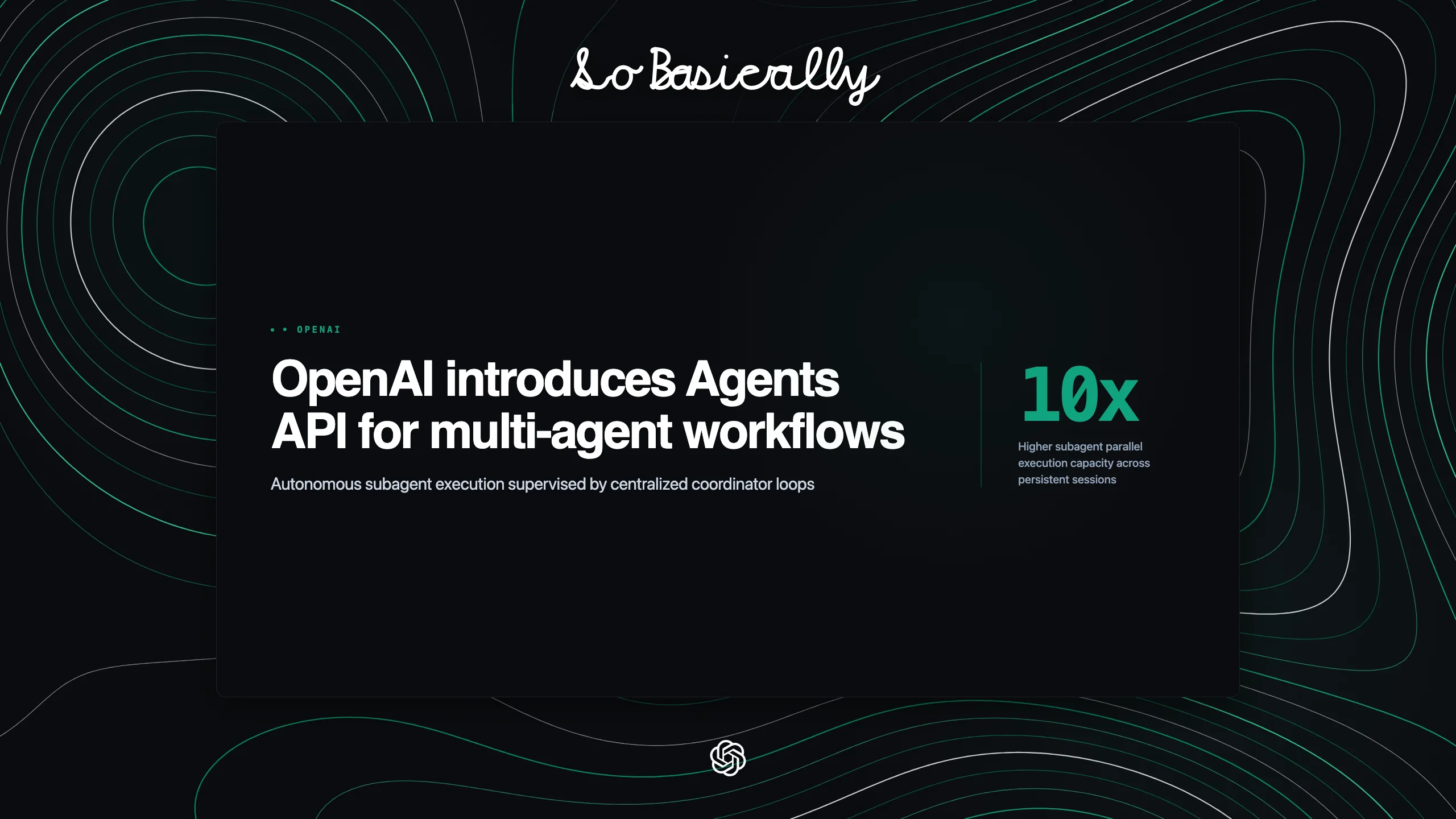
Decision brief card for OpenAI introduces Agents API for coordinated multi-agent workflows

OpenAI introduces Agents API for coordinated multi-agent workflows

What happened.OpenAI launched the Agents API in developer preview, allowing software teams to deploy fleets of specialized subagents coordinated by centralized planning loops.

Why it matters.Monolithic agent loops degrade rapidly as tool definitions and conversational histories consume context windows. Partitioning complex workflows into supervised subagents lowers API costs, isolates execution errors, and accelerates end-to-end task completion for enterprise software applications.

  • Architecture model: Implements a manager-worker hierarchy where a primary planning model delegates isolated execution tasks to lightweight subagents.
  • Parallel execution: Runs concurrent tool calls, code execution, and data extraction across ten worker agents simultaneously.
  • Context isolation: Shields worker agents from full conversational histories, reducing token consumption and preventing cross-task distraction.
  • Telemetry traces: Generates auditable execution graphs showing every delegated task, tool invocation, and intermediate handoff.
  • Harness compatibility: Integrates directly with the open-source Codex harness, supporting persistent sessions and background code evaluation.
Official Source:OpenAI
Decision brief card for OpenAI introduces Agents API for coordinated multi-agent workflows
↳Continues: OpenAI acquires Pierre Computer Company to integrate developer tooling into Codex workflows
Read Brief
Source:OpenAI (opens in a new tab)
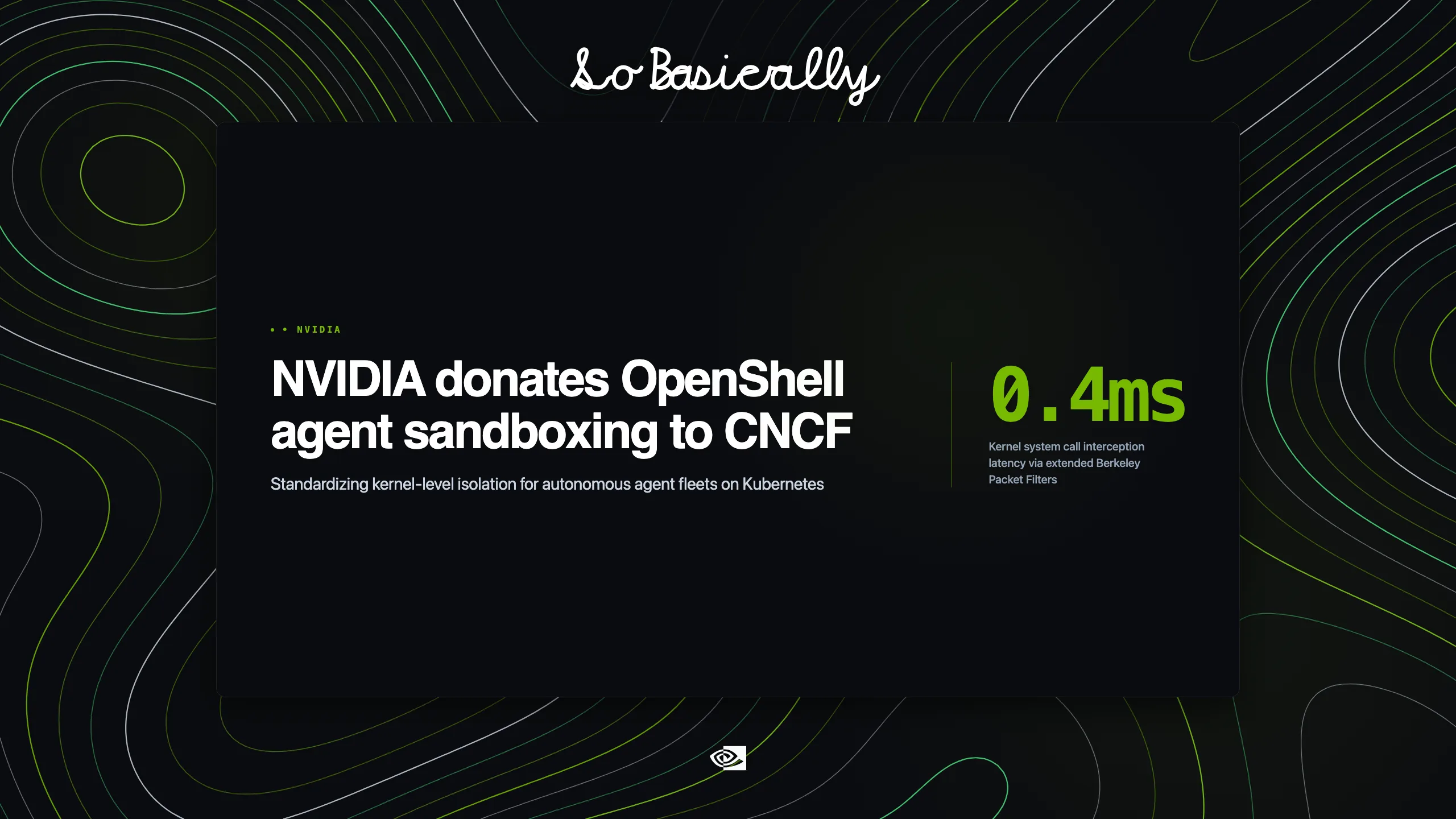
Decision brief card for NVIDIA donates OpenShell agent sandboxing runtime to Cloud Native Computing Foundation

NVIDIA donates OpenShell agent sandboxing runtime to Cloud Native Computing Foundation

What happened.NVIDIA transferred governance of its OpenShell sandboxing runtime to the Cloud Native Computing Foundation as an official Sandbox project to standardize isolation for autonomous agents.

Why it matters.Granting autonomous agents shell access creates severe security exposure across corporate cloud infrastructure. Donating a kernel-level eBPF sandboxing runtime to CNCF governance provides enterprise platform teams with an open-source standard to constrain rogue agent loops without degrading inference throughput.

  • Kernel isolation: Uses extended Berkeley Packet Filters to intercept, inspect, and constrain agent system calls at the operating system level.
  • Sub-millisecond latency: Evaluates runtime safety rules in 0.4 milliseconds, preserving high-throughput model execution without introducing pipeline lag.
  • Kubernetes native: Deploys as a daemonset with custom resource definitions that enforce file access and network egress policies on agent containers.
  • Zero-trust execution: Blocks unauthorized tool actions and privilege escalation attempts, neutralizing prompt injection payloads before processes execute.
  • Hardware alignment: Preserves direct GPU acceleration pathways while isolating untrusted shell environments from host operating systems.
Official Source:NVIDIA Blog
Decision brief card for NVIDIA donates OpenShell agent sandboxing runtime to Cloud Native Computing Foundation
Read Brief
Source:NVIDIA Blog (opens in a new tab)
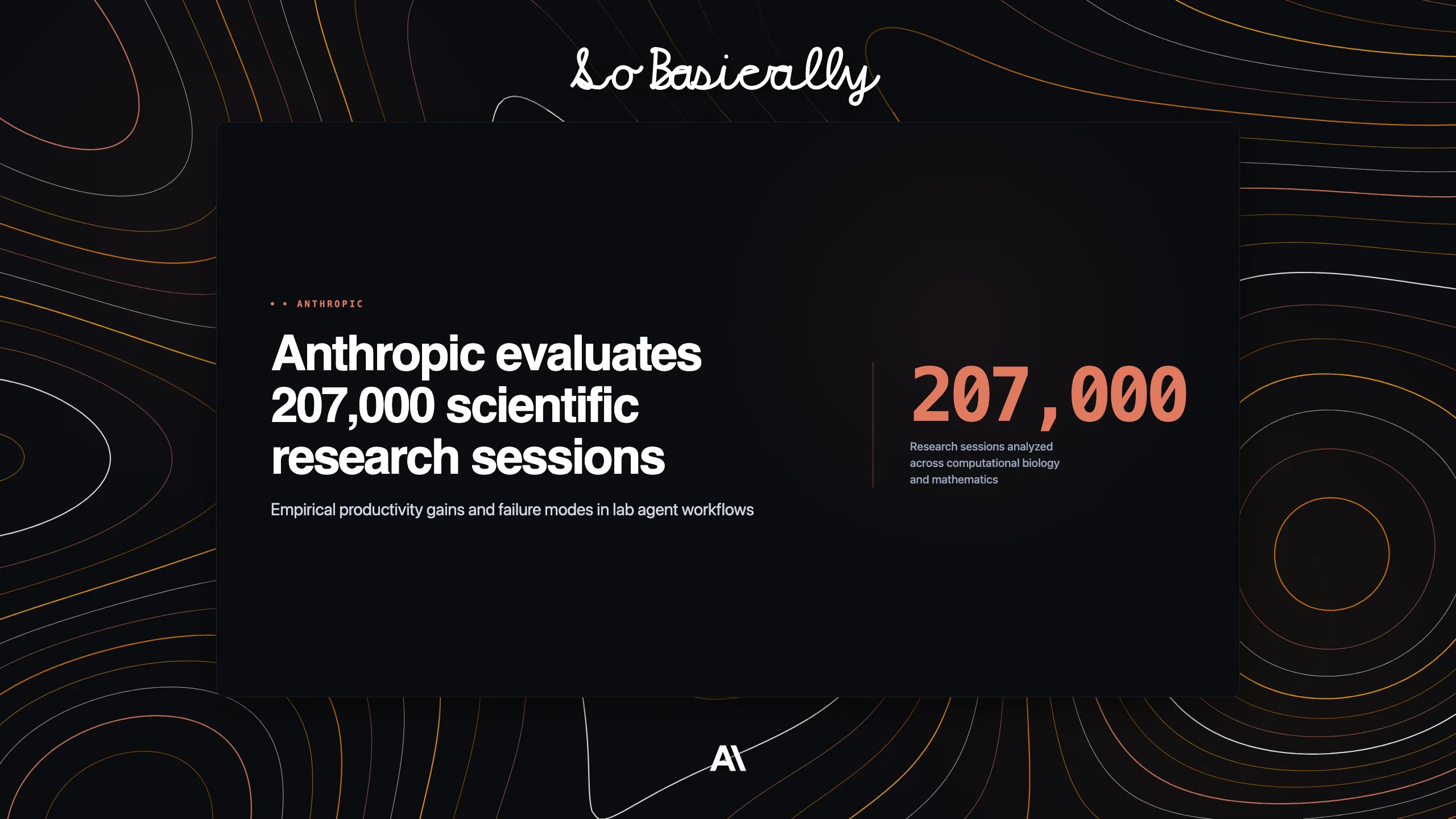
Decision brief card for Anthropic publishes empirical study of 207,000 scientific research sessions

Anthropic publishes empirical study of 207,000 scientific research sessions

What happened.Anthropic published an empirical evaluation of 207,000 anonymized research sessions, analyzing how scientists deploy autonomous agents to accelerate laboratory and data workflows.

Why it matters.Empirical usage metrics show where agentic tools genuinely help researchers and where they still fail. While agents accelerate routine coding and data transformation, human scientists remain necessary to validate experimental premises, direct research strategy, and catch domain errors.

  • Corpus scope: Examined interactions across computational biology, statistics, materials science, and physics to identify practical productivity patterns.
  • Speed multipliers: Scientists using Claude Code reported 40 percent faster completion of bioinformatics scripts, data parsing scripts, and chart pipelines.
  • Workflow bottlenecks: Revealed that agents struggle with multi-week project planning, undocumented proprietary file formats, and citation drift.
  • Domain leadership: Life science researchers adopted agent tooling fastest, utilizing models to extract data from genomic databases and format statistical runs.
  • Integration impact: Connecting models to standardized Model Context Protocol servers cut erroneous API calls and hallucinations by more than half.
Official Source:Anthropic
Decision brief card for Anthropic publishes empirical study of 207,000 scientific research sessions
↳Continues: Anthropic outlines agent memory architecture and offline dreaming consolidation
Read Brief
Source:Anthropic (opens in a new tab)
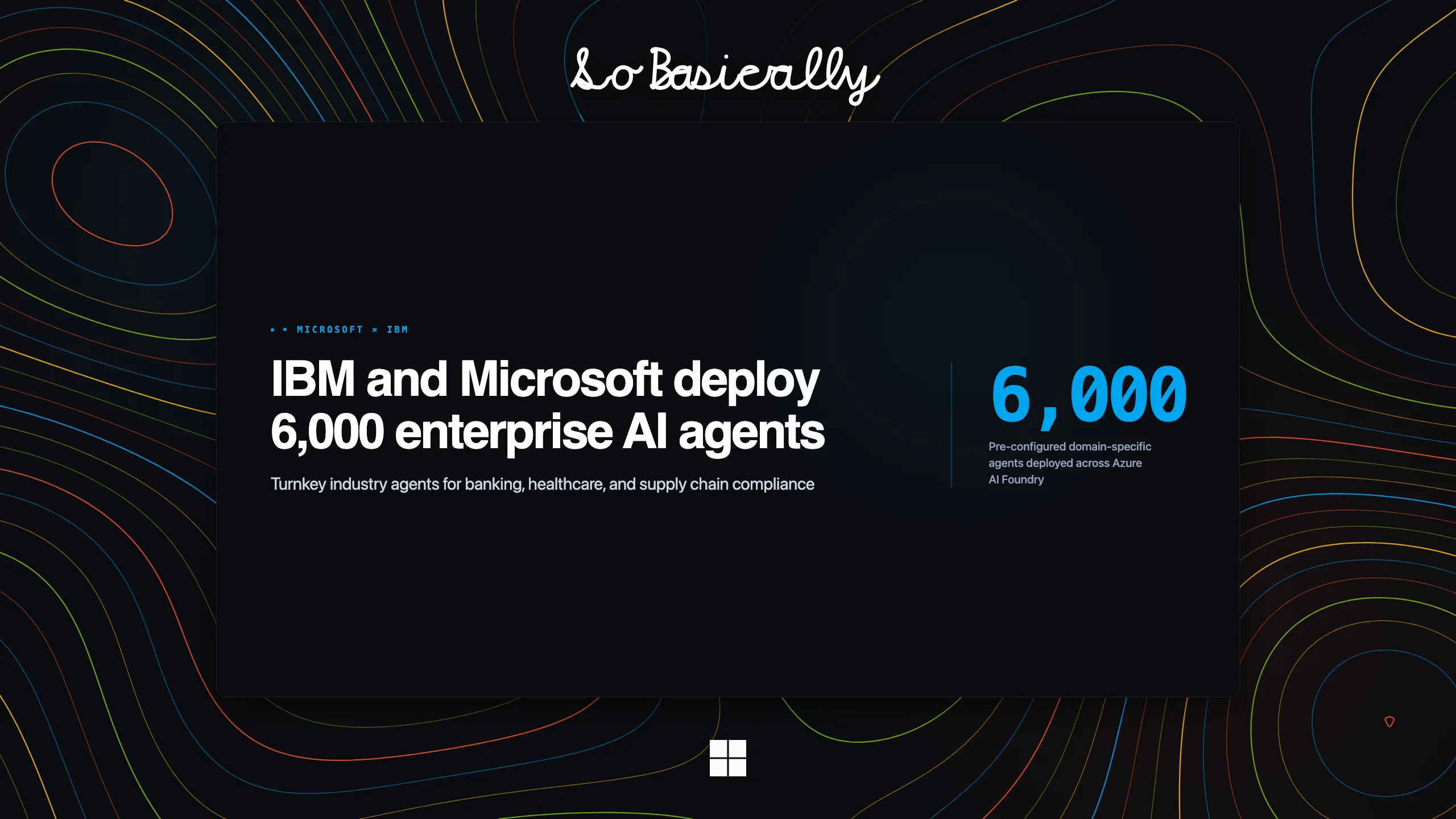
Decision brief card for IBM and Microsoft launch Imagine Enterprise platform deploying 6,000 industry AI agents

IBM and Microsoft launch Imagine Enterprise platform deploying 6,000 industry AI agents

What happened.IBM Consulting and Microsoft introduced Imagine Enterprise, a joint enterprise platform deploying 6,000 domain-specific agents across Microsoft Azure AI Foundry infrastructure.

Why it matters.Large enterprises face compliance hurdles when deploying autonomous software agents across regulated operations. Partnering pre-configured industry agents with Azure security boundaries gives corporate technology leaders a vetted path to automate business processes without custom development.

  • Catalog scale: Delivers pre-built, compliance-tested agents designed for banking, insurance, telecommunications, healthcare, and global supply chains.
  • Foundry orchestration: Operates within Azure AI Foundry, allowing enterprise administrators to manage multi-agent swarms with unified identity policies.
  • Regulatory controls: Embeds automated audit logging, data residency guarantees, and policy guardrails tailored to global financial and privacy regulations.
  • Deployment speed: Combines pre-configured industry templates with IBM Consulting teams to shorten implementation cycles from eighteen months to twelve weeks.
  • Data isolation: Protects customer records and enterprise conversational history from public foundation model retraining pipelines.
Official Source:Microsoft
Decision brief card for IBM and Microsoft launch Imagine Enterprise platform deploying 6,000 industry AI agents
Read Brief
Source:Microsoft (opens in a new tab)
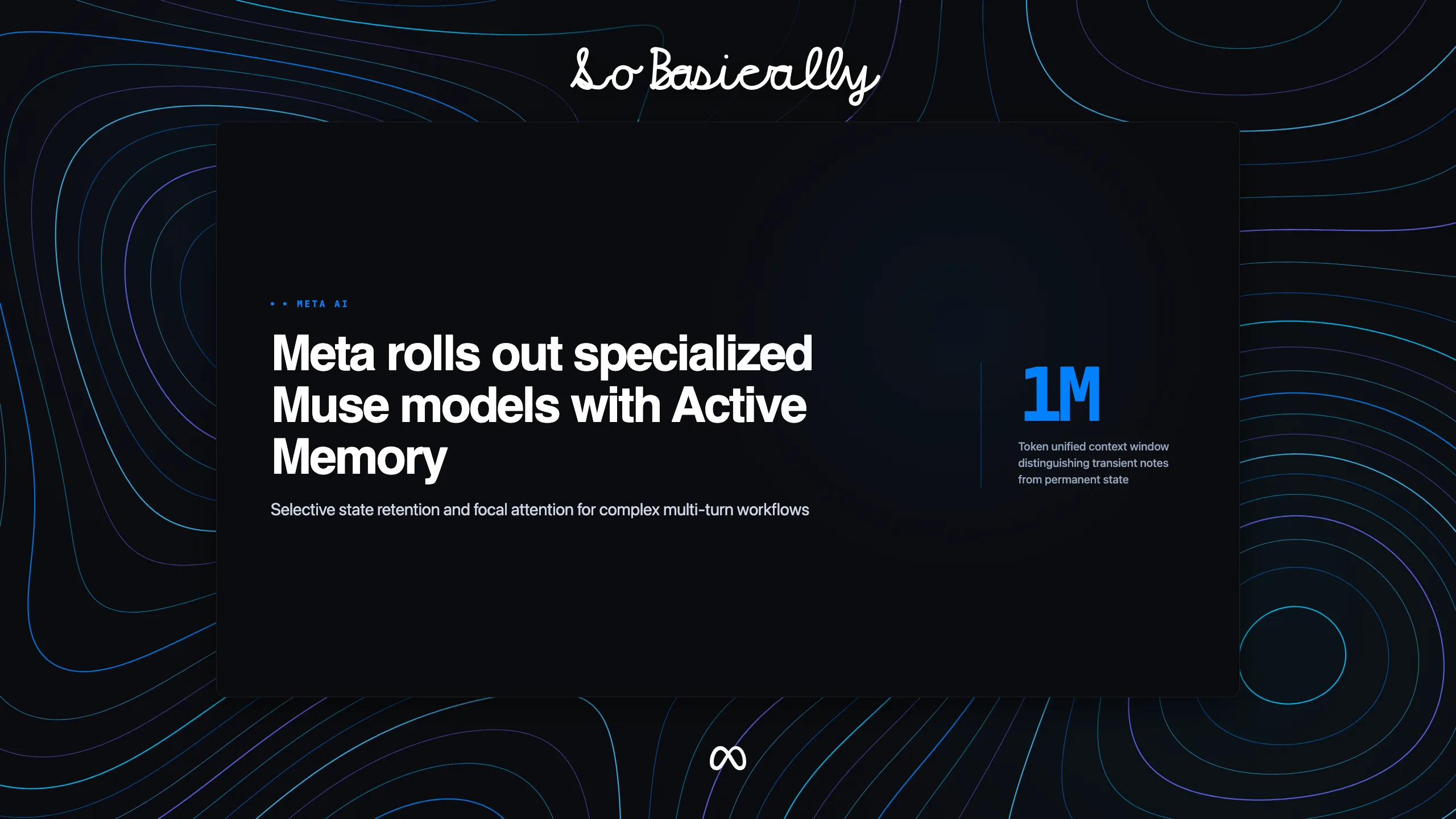
Decision brief card for Meta rolls out specialized Muse models with Active Memory and Active Focus

Meta rolls out specialized Muse models with Active Memory and Active Focus

What happened.Meta released specialized Muse models featuring Active Memory retention and Active Focus context steering.

Why it matters.Persistent AI assistants lose effectiveness when memory stores accumulate outdated or irrelevant conversational clutter. Dividing context into temporary scratchpads and permanent records prevents agents from storing conflicting details across multi-day tasks.

  • Memory segmentation: Active Memory separates transient task notes from permanent user facts, preventing prompt context limits from filling up with temporary details.
  • Dynamic retention: Automatically promotes recurring project facts to long-term memory while purging single-session scratchpad data after task completion.
  • Context capacity: Retains a unified one-million-token context window while directing attention to critical task instructions via Active Focus steering.
  • Inference economics: Trained using distilled knowledge from Muse Wonder, delivering high reasoning quality at low inference costs across mobile and web interfaces.
  • Tool integration: Pairs with external search and development tools to retrieve real-time facts without polluting long-term memory tables.
Official Source:Meta AI
Decision brief card for Meta rolls out specialized Muse models with Active Memory and Active Focus
↳Continues: Meta releases Muse Ember multimodal foundation model for high-concurrency agent workflows
Read Brief
Source:Meta AI (opens in a new tab)
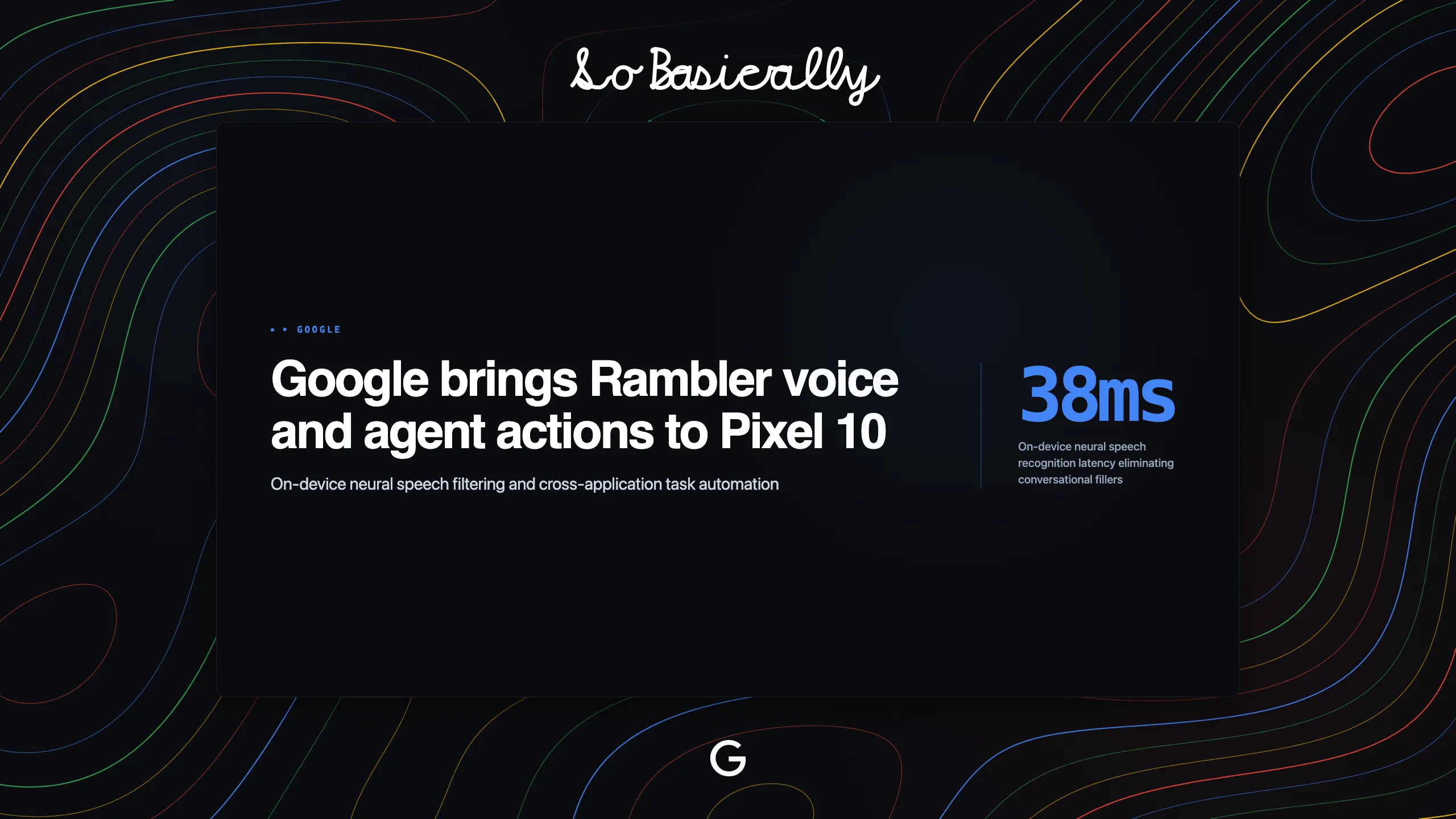
Decision brief card for Google expands Pixel 10 intelligence with Rambler voice typing and multi-step agent actions

Google expands Pixel 10 intelligence with Rambler voice typing and multi-step agent actions

What happened.Google deployed updated machine learning capabilities across Pixel 10 devices, rolling out Rambler on-device speech filtering and multi-step agent automation.

Why it matters.Mobile voice assistants have disappointed consumers by offering little more than simple command parsing. Running low-latency speech recognition and cross-application agents directly on edge hardware transforms mobile phones into proactive assistants that complete multi-step tasks without exposing user privacy.

  • Speech filtering: Rambler processes natural speech locally with 38-millisecond latency, removing conversational fillers like ums and ahs before text generation.
  • Device autonomy: Executes multi-step workflows across native applications, including booking transportation, ordering food, and scheduling calendar entries.
  • On-device safety: Keeps private audio recordings and application interactions on the local device, processing commands without transmitting voice data to cloud servers.
  • Contextual awareness: Reads visible screen elements and active notifications to complete actions without requiring explicit application switching by the user.
  • Hardware acceleration: Leverages the Tensor G5 neural processing engine to maintain low power draw during continuous voice interactions.
Official Source:Google
Decision brief card for Google expands Pixel 10 intelligence with Rambler voice typing and multi-step agent actions
Read Brief
Source:Google (opens in a new tab)
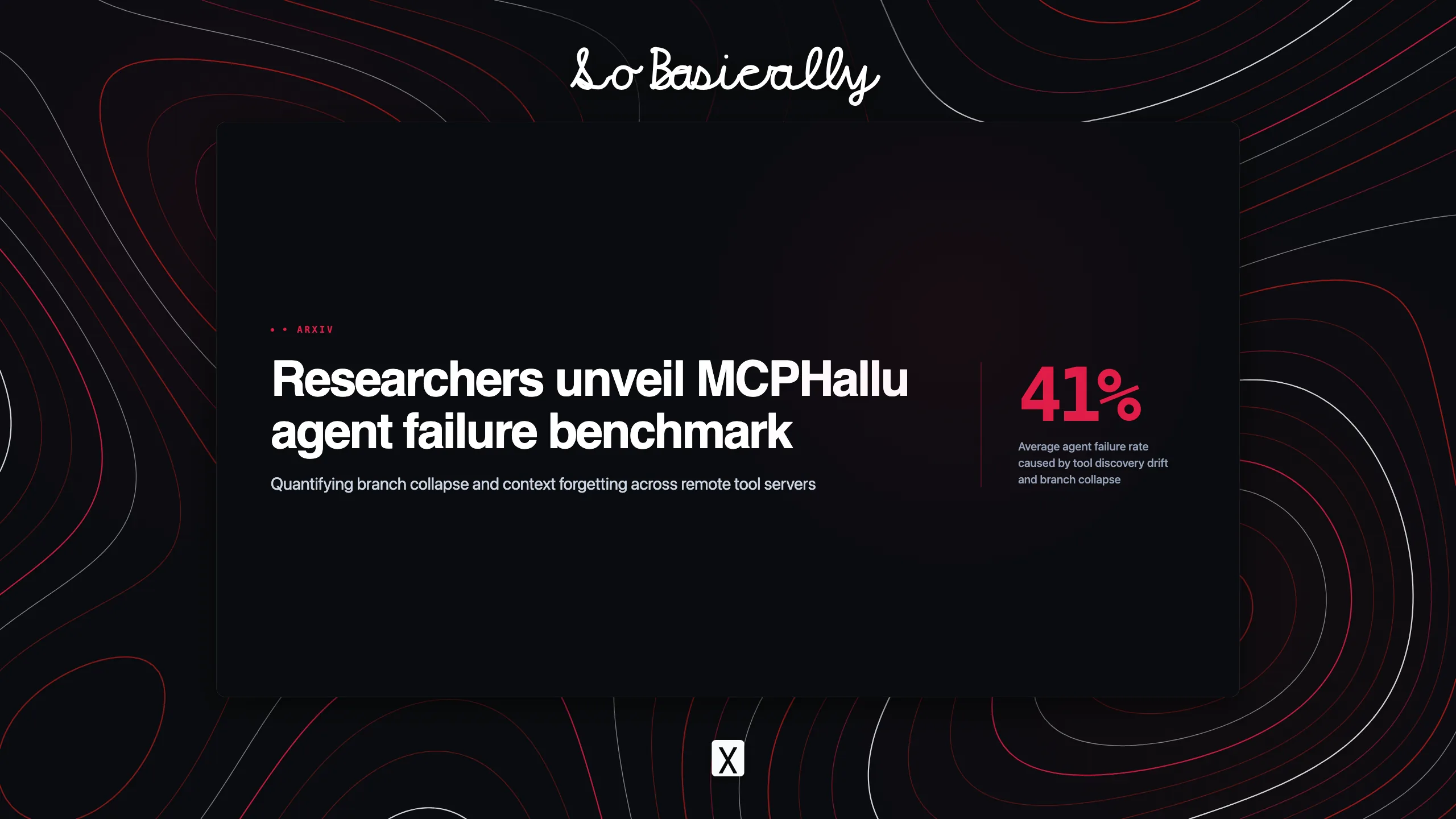
Decision brief card for Researchers release MCPHallu benchmark evaluating agent failure modes on MCP servers

Researchers release MCPHallu benchmark evaluating agent failure modes on MCP servers

What happened.AI researchers published the MCPHallu benchmark, providing an evaluation framework to measure branch collapse, tool drift, and hallucinated server calls across language models.

Why it matters.The Model Context Protocol is becoming the standard interface connecting AI agents to enterprise software systems. Standardizing a rigorous benchmark that quantifies agent failures on MCP servers helps developers identify routing bugs and optimize tool catalogs before deploying agents into production.

  • Evaluation framework: Tests language models across dozens of isolated tasks connected to realistic Model Context Protocol server environments.
  • Measured failure rates: Identified an average 41 percent failure rate across frontier models caused by erroneous tool selection, invalid JSON parameters, and branch collapse.
  • Drift mechanics: Documented that model performance degrades as the number of registered tools increases, triggering hallucinations of nonexistent API arguments.
  • Context exhaustion: Showed that lengthy tool schema definitions consume disproportionate context space, crowding out task reasoning steps in long-horizon loops.
  • Mitigation strategies: Proved that dynamic tool filtering and strict schema validation reduce failure rates by more than half across multi-agent environments.
Official Source:arXiv
Decision brief card for Researchers release MCPHallu benchmark evaluating agent failure modes on MCP servers
Read Brief
Source:arXiv (opens in a new tab)
CANDIDATE INTELLIGENCE · UNVERIFIED LEADS

The Discovery Wire · Unverified Attention Signals

Candidate storylines identified across developer channels. Under newsroom canon, attention never establishes fact; these leads remain quarantined until supported by Tier 1 official records.

DEVELOPER WIRE

Google DeepMind formally verifies Signal protocol code using AlphaProof Code

Multi-agent AI framework generated over 6.5 million lines of machine-checked Lean proofs over four weeks to mathematically verify libsignal machine code, proving post-quantum PQXDH handshake secrecy and Triple Ratchet guarantees.

STATUS:Awaiting official documentation or verification criteria.
DEVELOPER WIRE

OpenAI introduces GPT-6 Cyber offensive security model gated by Daybreak Red

Gated cybersecurity variant of the GPT-6 Astra family achieves 48.5 percent on ExploitGym, uncovering 81 high-severity Firefox flaws and Linux kernel exploits; access restricted through Daybreak Red under Critical cybersecurity safety rating.

STATUS:Awaiting official documentation or verification criteria.
DEVELOPER WIRE

Anthropic expands initial public offering with $26 billion tech giant private placement

Concurrent private placement commitments from Google, NVIDIA, Microsoft, and AMD accompany investor roadshow for 825,000,000 Class A shares priced between $70 and $78 on Nasdaq under ticker ANT.

STATUS:Awaiting official documentation or verification criteria.
DEVELOPER WIRE

TSMC approves $1 billion split investment across Anthropic and OpenAI

Taiwan Semiconductor Manufacturing Company authorized up to $500 million to acquire Anthropic common shares at its IPO price and up to $500 million for OpenAI preferred stock. Held on watchlist pending SEC registration statement effectiveness.

STATUS:Awaiting official documentation or verification criteria.
DEVELOPER WIRE

Microsoft accelerates silicon design using custom Azure Cobalt 200 processors

Custom Arm Neoverse CSS V3 processors delivering up to 4.15 times higher performance on Electronic Design Automation workloads. Held on watchlist following promotion of breaking Imagine Enterprise release.

STATUS:Awaiting official documentation or verification criteria.
DEVELOPER WIRE

Google debuts TPU 8tx and 8i Max accelerators for agentic workloads

Eighth-generation custom silicon family designed for long-running autonomous agent workloads. Held on watchlist pending public Google Cloud pricing tables.

STATUS:Awaiting official documentation or verification criteria.
DEVELOPER WIRE

ByteDance open-sources Axion 1.0 agent foundation models with simplified GRPO recipe

Open-weights 35B and 122B parameter Mixture-of-Experts models trained using two-stage supervised fine-tuning. Held on watchlist pending independent benchmark verification.

STATUS:Awaiting official documentation or verification criteria.
DEVELOPER WIRE

Zep AI introduces Zep Agent Skills compiling procedural memory from verified execution traces (arXiv:2611.01386)

Extraction framework converting successful tool runs into reusable skill packages over Model Context Protocol. Held on watchlist pending runtime harness integration.

STATUS:Awaiting official documentation or verification criteria.
DEVELOPER WIRE

Researchers release Dependable Long-Horizon LLM Agents empirical study (arXiv:2611.13254)

Trajectory-centered study analyzing where errors enter long tasks and which controls successfully prevent failure. Held on watchlist pending peer review.

STATUS:Awaiting official documentation or verification criteria.
DEVELOPER WIRE

OpenAI introduces Businesses in ChatGPT with Business Hub and verified Business Agents

Company storefronts and interactive customer service agents for 1.2 billion weekly active users. Held on watchlist following beta rollout.

STATUS:Awaiting official documentation or verification criteria.
DEVELOPER WIRE

Google DeepMind unveils AlphaGenome 2 predicting cell-state gene expression

Foundation model predicting DNA sequence variation impacts conditionally across individual cell types. Shifted to watchlist following promotion of breaking Gemini Deep Think release.

STATUS:Awaiting official documentation or verification criteria.
DEVELOPER WIRE

Anthropic outlines agent memory architecture and offline dreaming consolidation

Four-tier memory hierarchy and offline consolidation pass pruning stale assumptions. Shifted to watchlist following promotion of breaking scientific research study.

STATUS:Awaiting official documentation or verification criteria.
DEVELOPER WIRE

Meta releases Muse Ember multimodal foundation model for high-concurrency agent workflows

Lightweight model featuring one-million-token window and ten-cent pricing. Shifted to watchlist following promotion of breaking Active Memory model update.

STATUS:Awaiting official documentation or verification criteria.
DEVELOPER WIRE

NVIDIA board initiates independent governance review overseen by outside counsel

Independent committee retained former acting US Attorney Joon H. Kim. Shifted to watchlist following promotion of breaking OpenShell CNCF donation.

STATUS:Awaiting official documentation or verification criteria.