 MicrosoftAnalysis
Microsoft warns of exploited Windows NTLM hash disclosure flaw

Listen to Briefing
0:00/1:52
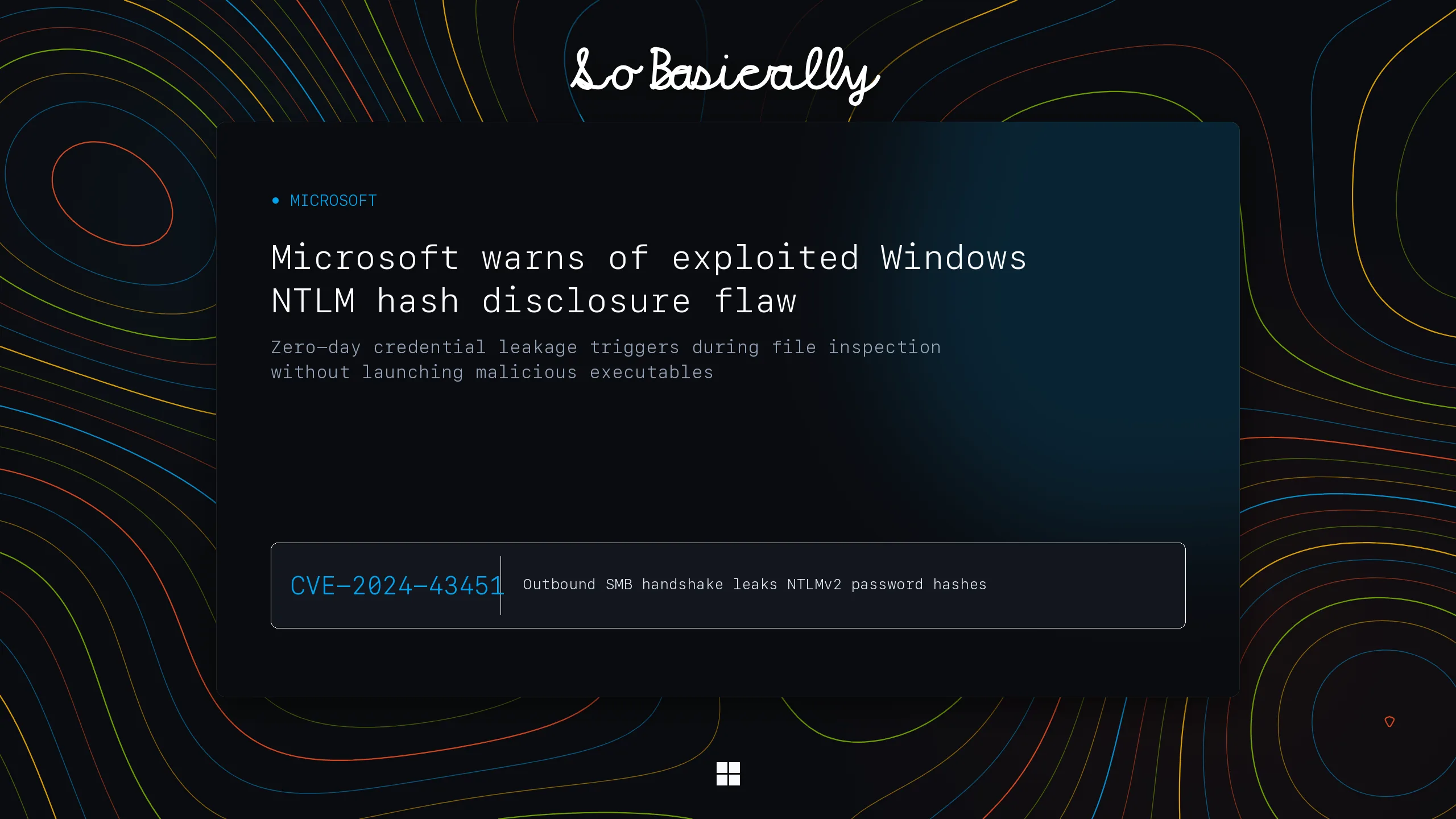
What happened.Microsoft issued a security update warning that threat actors actively weaponized a zero-day NTLM hash disclosure spoofing vulnerability across multiple Windows releases.
Why it matters.Attackers combine credential leakage bugs with pass-the-hash techniques to leapfrog perimeter firewalls and impersonate authenticated corporate staff. Because the exploit triggers during simple file browsing without running an executable, standard end-user awareness training cannot prevent credential leakage. Infrastructure teams must deploy the cumulative Windows update and block outbound traffic on TCP port 445 at corporate firewalls.
The technical specifications:
- Vulnerability tracking: Tracked as CVE-2024-43451 with a CVSS score of 6.5, the flaw exposes user credentials during routine file management operations.
- Minimal interaction: Unlike conventional malware requiring double-click execution, single-clicking, right-clicking to inspect, or dragging a weaponized shortcut file triggers the leak.
- Outbound handshake: The malicious file initiates an automated Server Message Block connection to an external server, sending the user password hash across the wire.
- Targeted campaigns: Threat intelligence researchers observed threat groups deploying weaponized archive files against commercial infrastructure to facilitate rapid credential harvesting.
STORYLINE PROGRESSION & CONTEXT
This report represents a verified evolution of prior newsroom intelligence: