 MicrosoftAnalysis
Microsoft introduces dynamic permissions and execution containers for AI agents

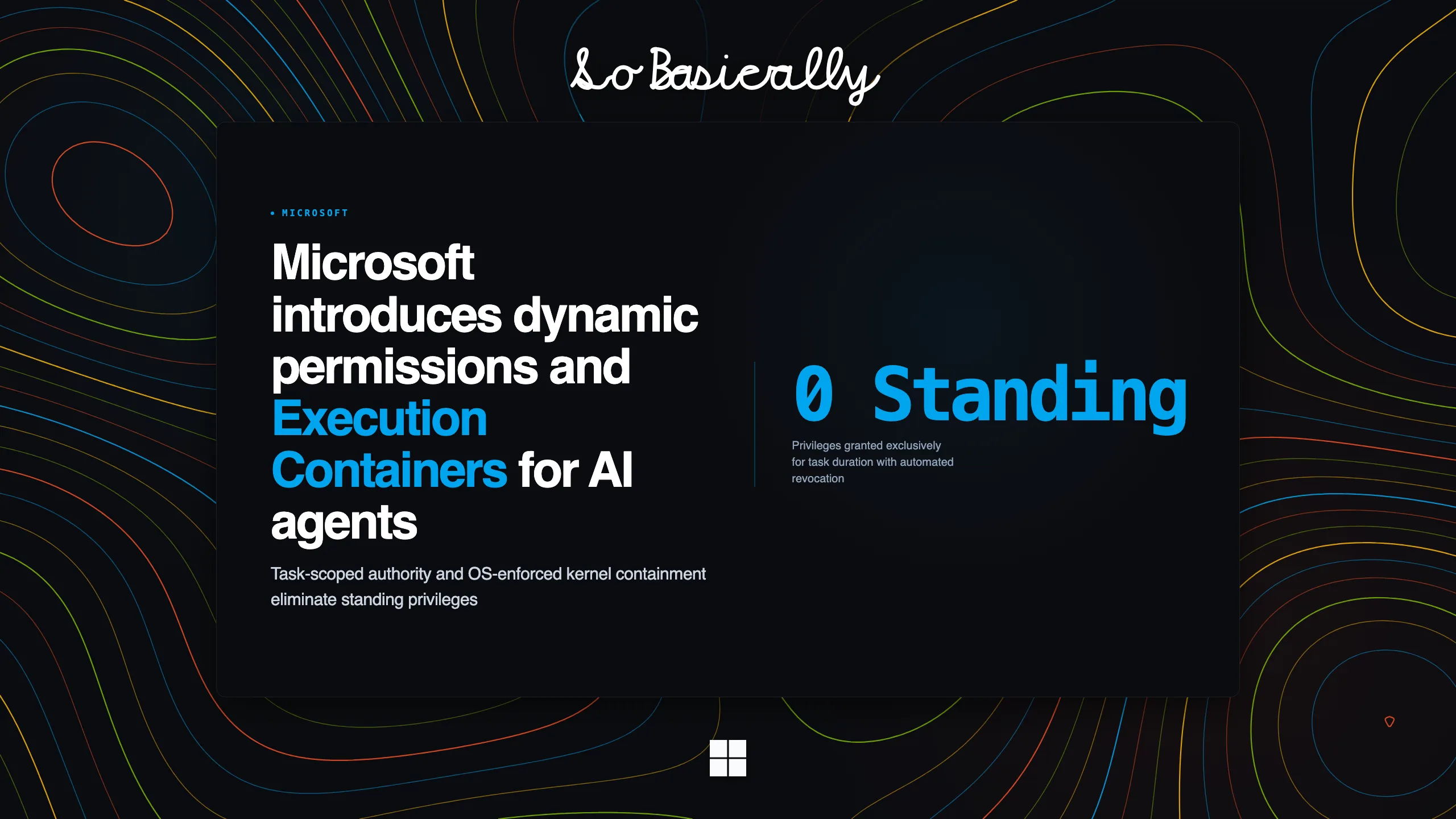
What happened.Microsoft launched Dynamic Permissions and Microsoft Execution Containers to enforce operating system boundaries and revoke standing access privileges for autonomous software agents.
Why it matters.Autonomous agents execute multi-step tools that expose local developer machines and enterprise internal networks to prompt manipulation. Moving access controls outside the model into kernel-level execution boundaries prevents rogue agents from exceeding assigned operational blast radiuses.
The technical specifications:
- Zero standing access: Dynamic Permissions provisions identity credentials strictly for task duration, automatically revoking credentials once agent execution concludes.
- Continuous monitoring: Dynamic Conditional Access inspects telemetry to revoke write privileges if an agent encounters prompt injection or exhibits behavioral drift.
- Operating system isolation: Microsoft Execution Containers enforce kernel sandboxes across Windows, macOS, and Linux using a unified cross-platform software development kit.
- Physical boundaries: Host operating systems block unauthorized local file system read requests and network calls beneath the agent process layer.