 GoogleAnalysis
Google patches critical zero-interaction RCE flaw in Android Framework

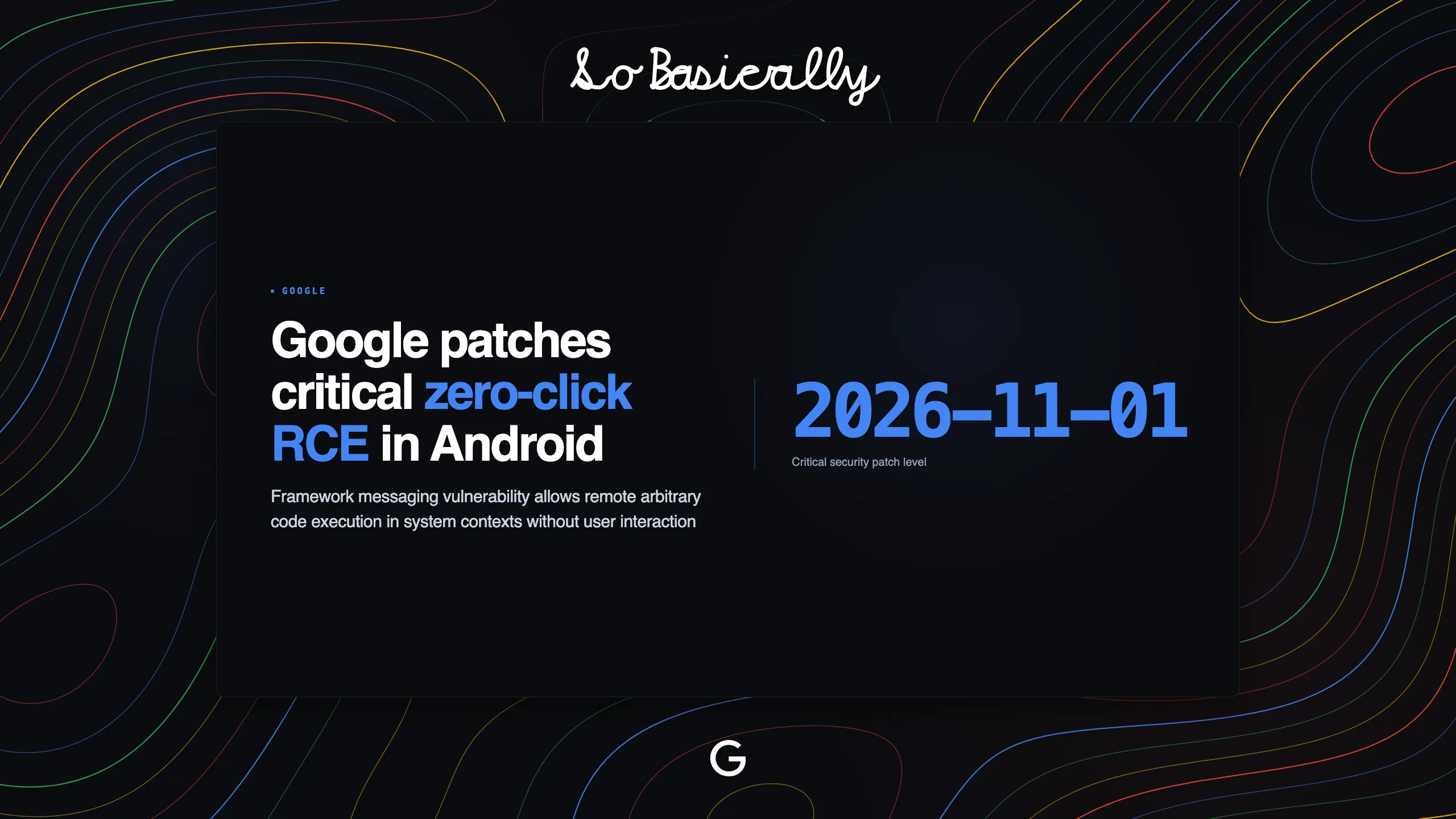
What happened.Google published its November 2026 Android Security Bulletin addressing a critical zero-interaction remote code execution vulnerability in the Android Framework.
Why it matters.Core operating system frameworks manage inter-process communication and security sandboxes across mobile operating environments. When zero-click code execution bugs compromise framework boundaries, threat actors install rootkits or intercept corporate tokens without triggering user suspicion. Enterprise mobility administrators should mandate the 2026-11-01 patch level across corporate fleets. Device vendors must expedite over-the-air firmware deployments.
The technical specifications:
- Vulnerability mechanics: Tracked as CVE-2026-58868, the flaw exists within core Framework IPC messaging components across modern Android versions.
- Exploit execution: The vulnerability allows remote attackers to execute arbitrary code within system contexts without requiring user interaction or elevated permissions.
- Platform scope: The flaw affects Android versions 14, 15, 16, and 17 deployed across mobile devices, enterprise tablets, and connected endpoints.
- Patch distribution: Google released fixes under security patch level 2026-11-01, distributing source updates to Android Open Source Project repositories.
- Carrier coordination: Ecosystem device manufacturers received vulnerability details one month prior to public disclosure to stage carrier firmware updates.