Skip to content
INTELLIGENCE BEAT2 Briefs

Reasoning

2 Briefs

Verified technical decision briefs tracking reasoning developments

NVIDIA introduces Dynamo distributed inference framework for scaling reasoning models across GPU clusters
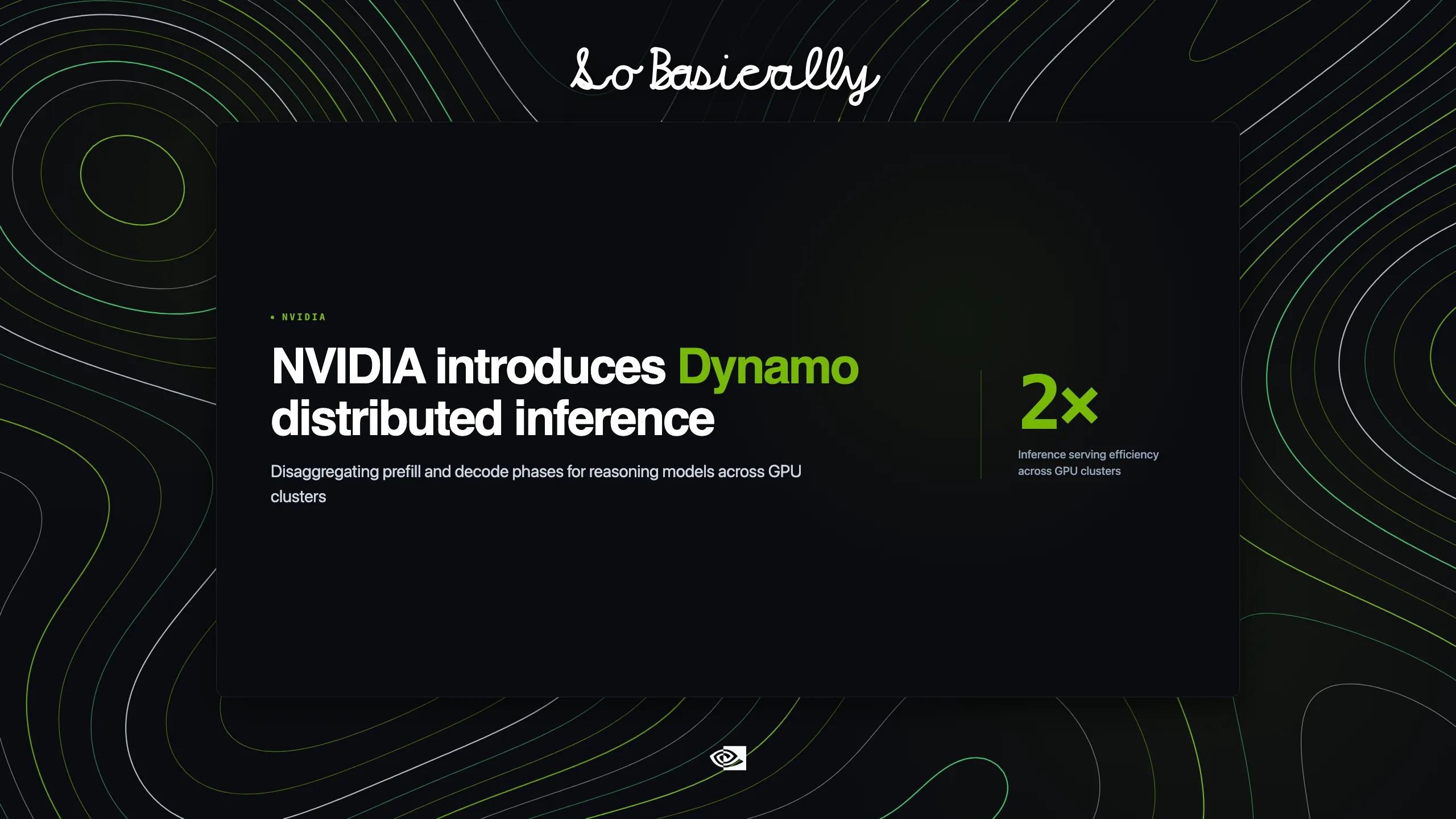
Topographic elevation contour card for NVIDIA introduces Dynamo distributed inference framework for scaling reasoning models across GPU clusters

What happened.NVIDIA introduced Dynamo, an open-source distributed inference framework designed to scale reasoning models by disaggregating prefill and decode compute phases across GPU clusters.

Why it matters.Reasoning models generate massive internal deliberation traces that exhaust memory bandwidth when served on unified GPU pipelines. Decoupling prefill and decode stages cuts time-to-first-token in half while dramatically increasing cluster hardware utilization for engineering teams hosting open frontier weights.
↳Continues: NVIDIA contributes OpenShell agent governance runtime to CNCF and open-sources NVKE stack
Read Full Brief →
Source:NVIDIA Blog (opens in a new tab)
All Stories1 story
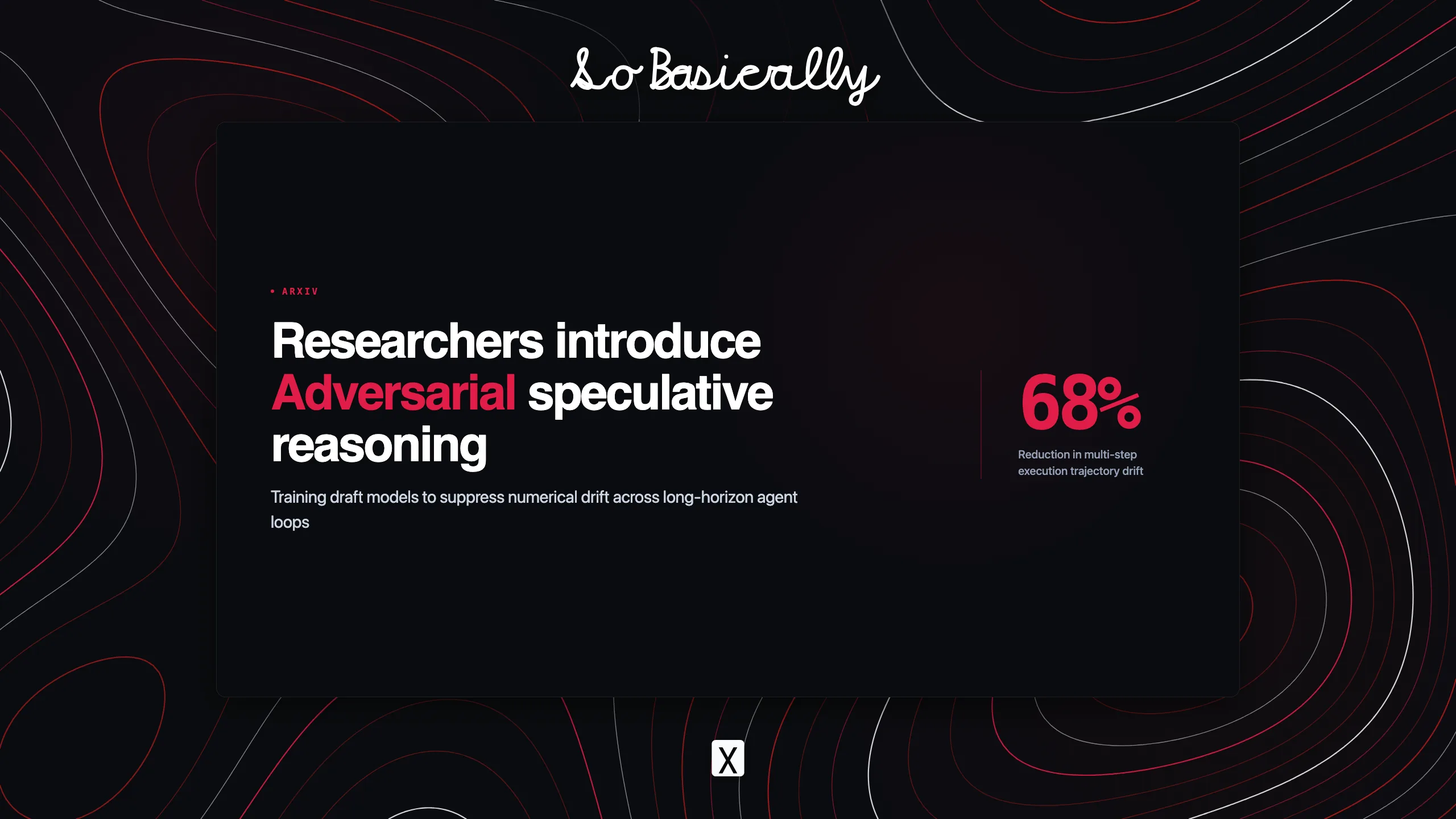
Decision brief card for Researchers introduce adversarial speculative reasoning to stabilize long-horizon AI agent trajectories

Researchers introduce adversarial speculative reasoning to stabilize long-horizon AI agent trajectories

What happened.AI researchers introduced an adversarial speculative reasoning framework that trains draft models to suppress numerical noise and reasoning drift during long-horizon agent execution.

Why it matters.Speculative decoding speeds up language model inference by pairing a tiny draft model with a large verifier, but tiny reasoning errors quickly derail multi-step agent planning. Fortifying draft models against adversarial drift allows developers to run fast speculative inference without sacrificing accuracy on complex tool chains.

  • Error amplification: Demonstrated that standard speculative draft models introduce microscopic numerical errors that compound into catastrophic trajectory failures over extended execution steps.
  • Adversarial training: Trains draft models against adversarial perturbers to force verification alignment on critical logic tokens while maintaining speculative speed.
  • Trajectory fidelity: Reduced multi-step execution drift by 68 percent across complex mathematics and systems programming agent benchmarks.
  • Inference acceleration: Preserves a 2.4-times speculative decoding latency speedup over non-speculative autoregressive baselines without degrading final task accuracy.
  • Verification savings: Decreases target model rollback and re-computation events by 51 percent during multi-turn tool interaction sequences.
Official Source:arXiv
Decision brief card for Researchers introduce adversarial speculative reasoning to stabilize long-horizon AI agent trajectories
↳Continues: Researchers introduce Evidence-Linked Memory to prevent degradation in long-horizon LLM agents
Read Brief
Source:arXiv (opens in a new tab)