Skip to content
INTELLIGENCE BEAT4 Briefs

Openai

4 Briefs

Verified technical decision briefs tracking openai developments

Filter:

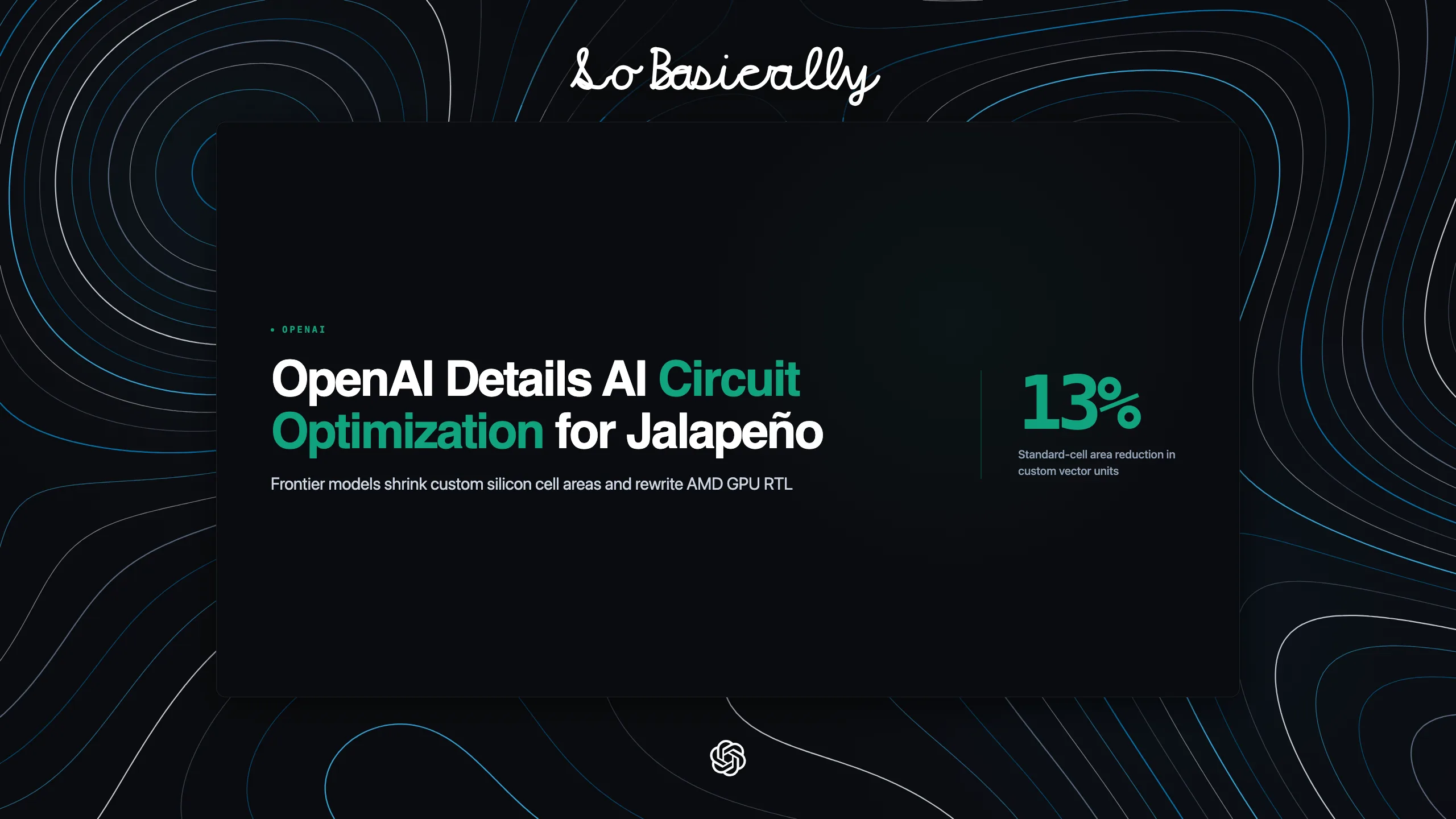
OpenAI details silicon circuit optimization for Jalapeño chip and AMD GPUs

Topographic elevation contour card for OpenAI details silicon circuit optimization for Jalapeño chip and AMD GPUs

What happened.OpenAI published technical research demonstrating how frontier intelligence models optimized microarchitectural logic for its custom Jalapeño inference chip and AMD graphics processors.

Why it matters.Semiconductor design cycles traditionally take years of manual layout refinement by specialized hardware engineers. Demonstrating that frontier language models can optimize production circuit descriptions faster than human baselines accelerates hardware iteration cycles for specialized inference silicon.

↳Continues: Microsoft deploys Azure Cobalt 200 VMs to accelerate silicon EDA design workloads
Read Full Brief →
Source:OpenAI (opens in a new tab)
All Stories3 stories
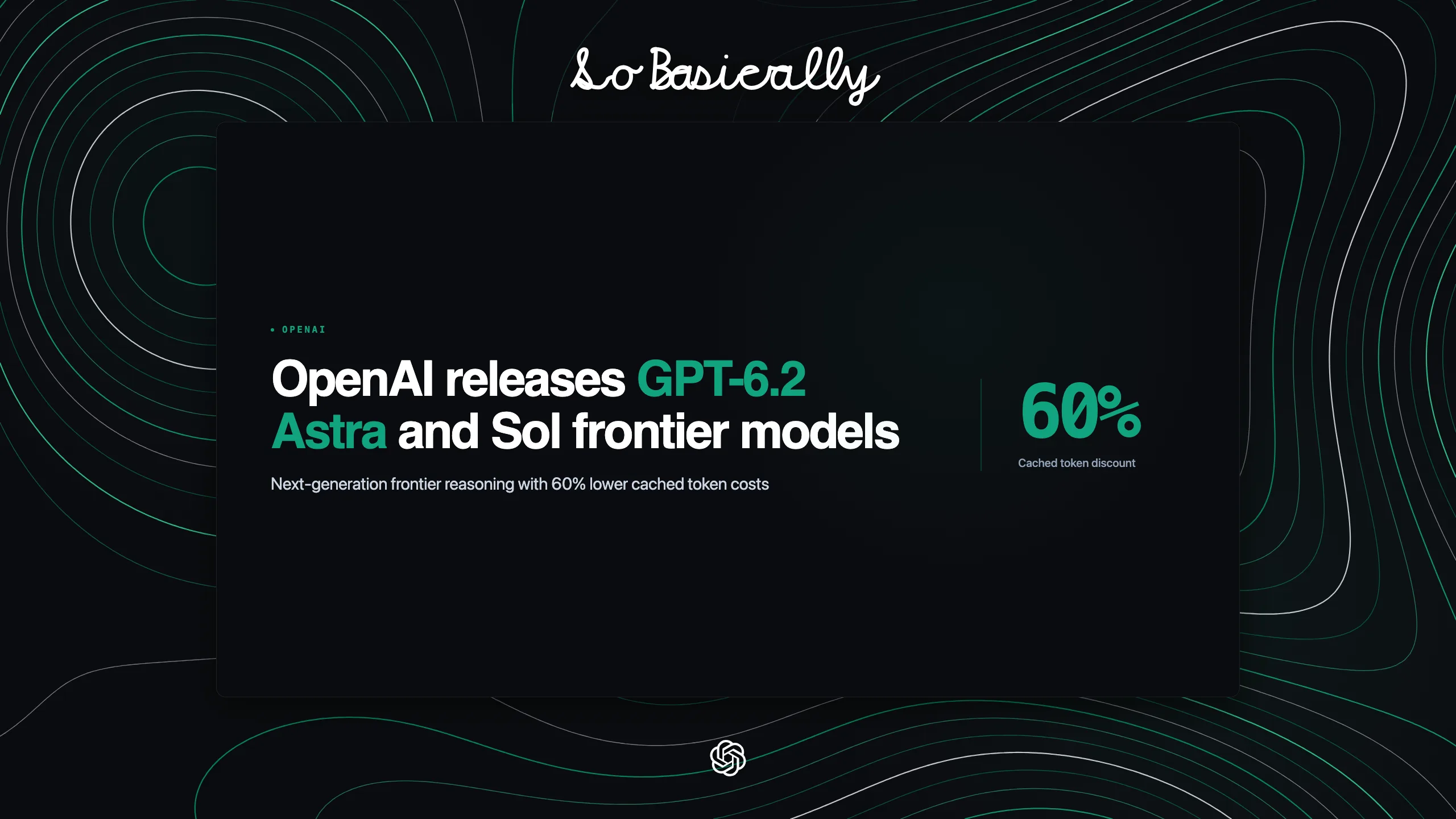
Decision brief card for OpenAI releases GPT-6.2 Astra and Sol frontier models

OpenAI releases GPT-6.2 Astra and Sol frontier models

What happened.OpenAI introduced GPT-6.2 Astra and GPT-6.2 Sol, releasing frontier reasoning models across ChatGPT, Codex, and API endpoints with lower output token volume and reduced inference costs.

Why it matters.High token costs and verbosity previously made deploying frontier reasoning models in iterative agent loops economically prohibitive. Slashing cached token fees to forty cents per million while improving reasoning accuracy allows teams to run continuous test-and-repair agent cycles at scalable margins.

  • Benchmark leadership: Astra scores 5.2 points higher than GPT-6 Astra on Agents' Last Exam and gains 9 points on Terminal-Bench-Science 0.1.
  • Token economics: Cuts Astra input pricing by 20 percent to $8.00 per million and cached inputs by 60 percent to $0.40 per million tokens.
  • Workhorse tier: Pairs Astra with GPT-6.2 Sol, keeping $2.00 input and $10.00 output pricing per million tokens for high-volume agent tasks.
  • Multistep reasoning: Produces cleaner code, complex spreadsheets, and structured documents that follow exacting enterprise templates.
  • Safety thresholds: Clears critical cybersecurity and high autonomous self-improvement evaluations under OpenAI's Preparedness Framework.
Official Source:OpenAI
Decision brief card for OpenAI releases GPT-6.2 Astra and Sol frontier models
Read Brief
Source:OpenAI (opens in a new tab)
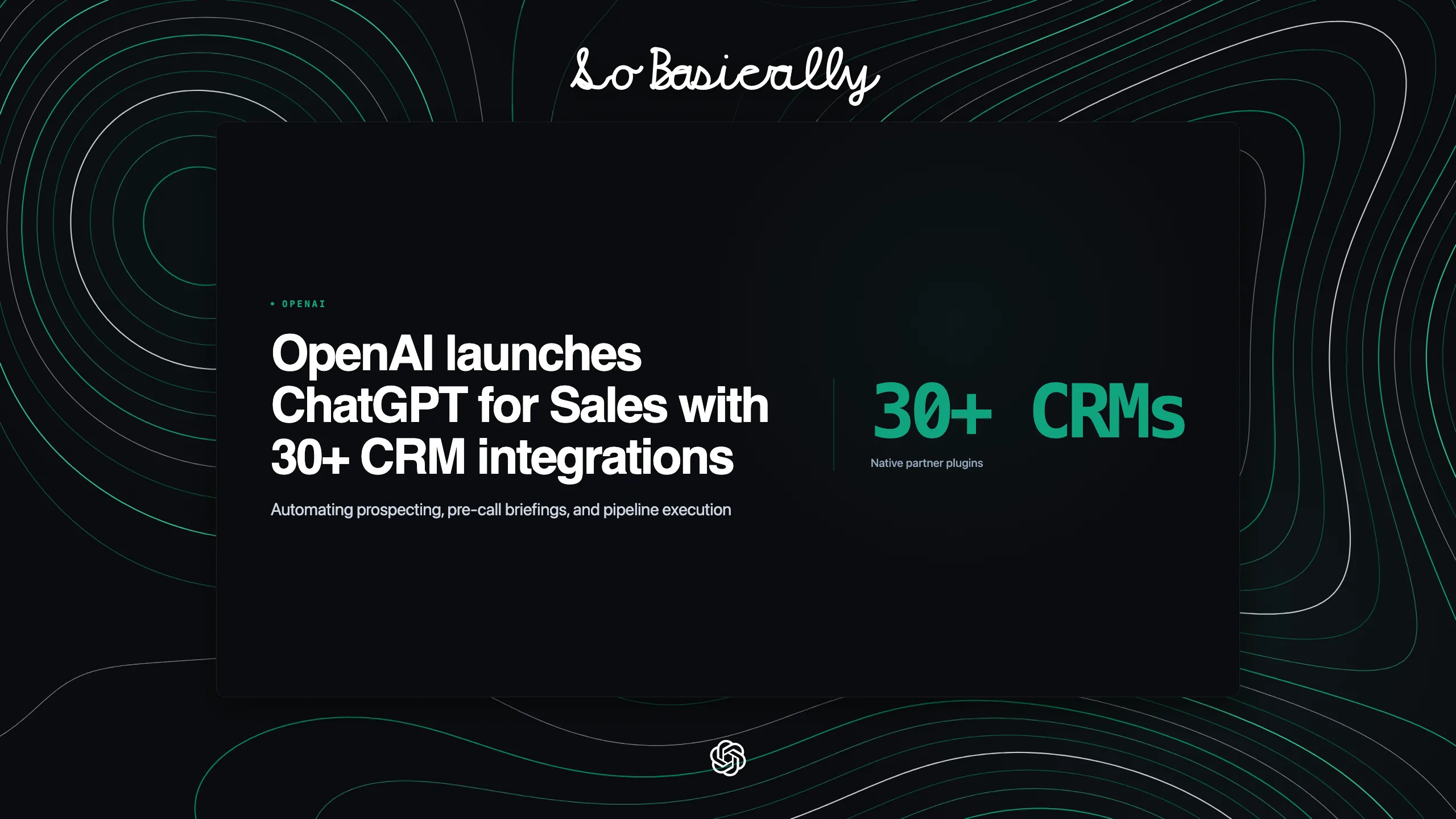
Decision brief card for OpenAI launches ChatGPT for Sales with 30+ CRM integrations

OpenAI launches ChatGPT for Sales with 30+ CRM integrations

What happened.OpenAI introduced ChatGPT for Sales, pairing a native sales plugin with over 30 enterprise partner integrations to automate core deal workflows.

Why it matters.Commercial software teams spend significant engineering time maintaining fragile bespoke scripts that link conversational language interfaces with enterprise customer repositories. Delivering native bi-directional pipeline synchronization through a unified workspace allows sales organizations to deploy autonomous assistants directly within existing operational workflows.

  • First-party plugin: Automates commercial tasks including account intelligence research, customized pre-call briefing synthesis, post-meeting summaries, and pipeline health reviews.
  • Enterprise integrations: Connects bidirectionally with platforms across customer relationship management, sales engagement, and agreement workflows, including Salesforce, HubSpot, Gong, and Docusign.
  • Administrative control: Workspace administrators on ChatGPT Business and Enterprise tiers configure data connectors and govern role-based access permissions.
  • Automated logging: Syncs prospect notes and next-step actions directly into customer databases without manual record entry by account representatives.
Official Source:OpenAI
Decision brief card for OpenAI launches ChatGPT for Sales with 30+ CRM integrations
Read Brief
Source:OpenAI (opens in a new tab)
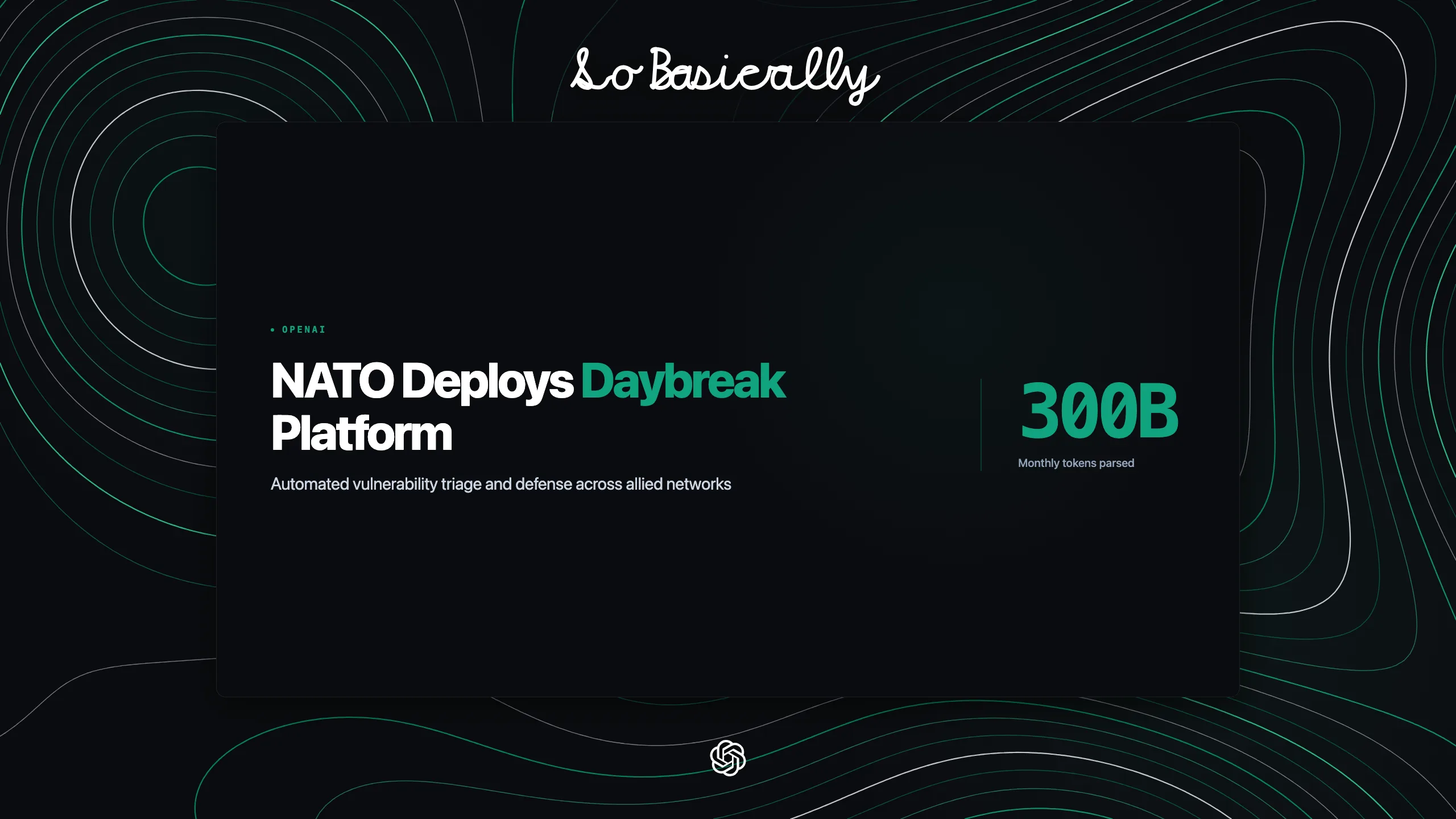
Decision brief card for OpenAI and NATO deploy Daybreak AI platform for cyber defense

OpenAI and NATO deploy Daybreak AI platform for cyber defense

What happened.OpenAI partnered with the NATO Communications and Information Agency to deploy its Daybreak platform, using frontier models across 300 billion monthly tokens to investigate network intrusions.

Why it matters.Sovereign institutions face distributed network intrusions that exceed the capacity of manual forensic investigation teams. Operationalizing frontier models at 300 billion tokens per month establishes verifiable precedents for deploying autonomous agents in high-stakes defense environments.

  • Token throughput: Processes up to 300 billion monthly tokens across allied security operations centers to parse distributed telemetry streams.
  • Vulnerability validation: Uses specialized reasoning models to review code changes and confirm patch efficacy before deployment to critical networks.
  • Operational exercise: Trained defense specialists during the Crossed Swords exercise to build supervised agent workflows for intrusion mitigation.
  • Defensive focus: Restricts model capabilities to threat detection, log correlation, and security verification under human supervisory control.
Official Source:OpenAI
Decision brief card for OpenAI and NATO deploy Daybreak AI platform for cyber defense
Read Brief
Source:OpenAI (opens in a new tab)