Skip to content
INTELLIGENCE BEAT2 Briefs

Authorization Bypass

2 Briefs

Verified technical decision briefs tracking authorization bypass developments

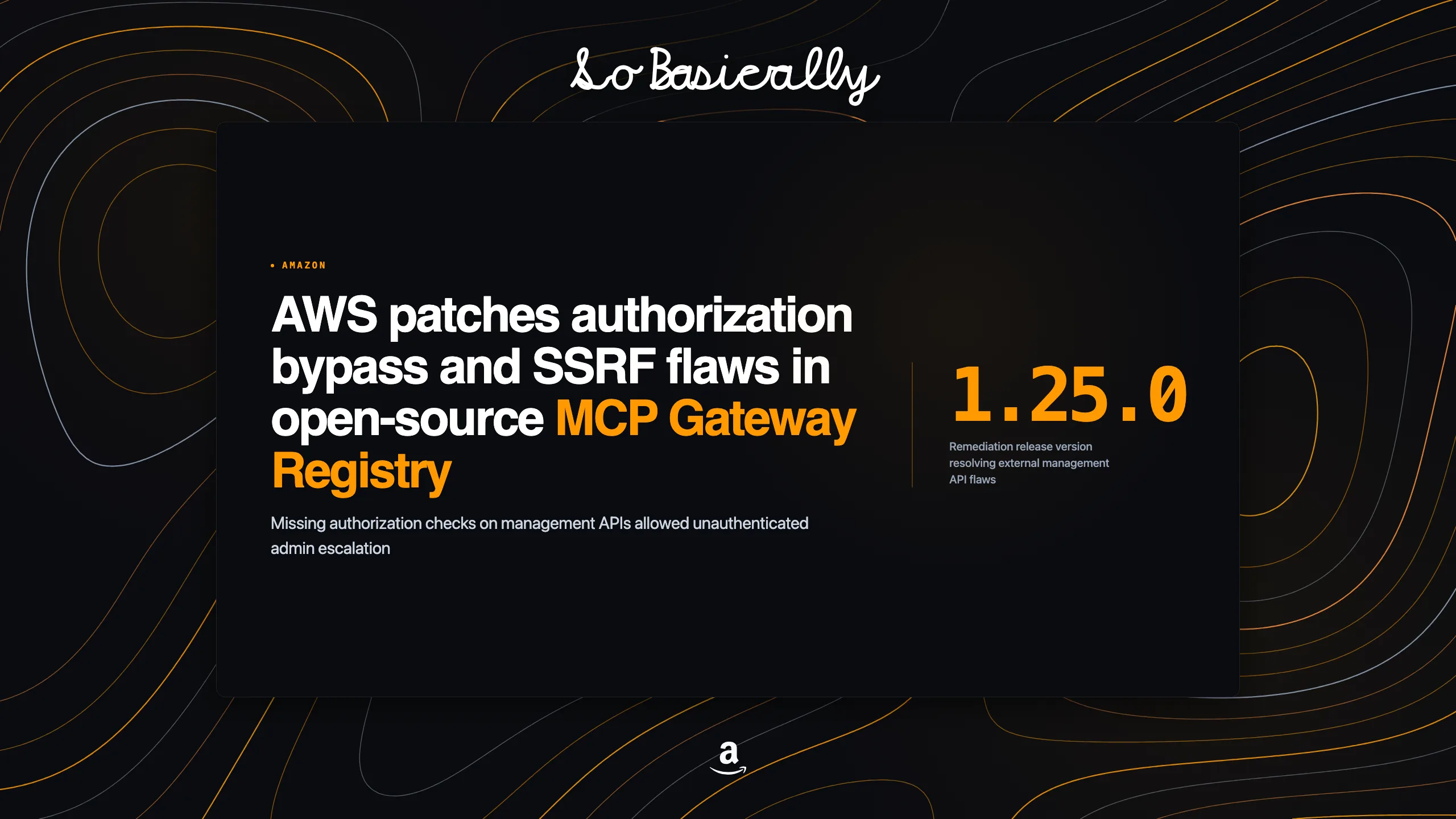
AWS patches authorization bypass and SSRF flaws in open-source MCP Gateway Registry

Topographic elevation contour card for AWS patches authorization bypass and SSRF flaws in open-source MCP Gateway Registry

What happened.Amazon Web Services published security bulletins resolving missing authorization and server-side request forgery vulnerabilities in its open-source MCP Gateway Registry.

Why it matters.Model Context Protocol registries connect artificial intelligence agents to cloud tools. When authorization checks fail, threat actors hijack agent tool routing and intercept private requests. Cloud architects must upgrade registries to version 1.25.0 immediately and audit scope databases.

↳Continues: AWS patches security policy bypass in AWS API MCP Server allowing unauthorized tool calls
Read Full Brief →
Source:AWS Security Bulletins (opens in a new tab)
All Stories1 story
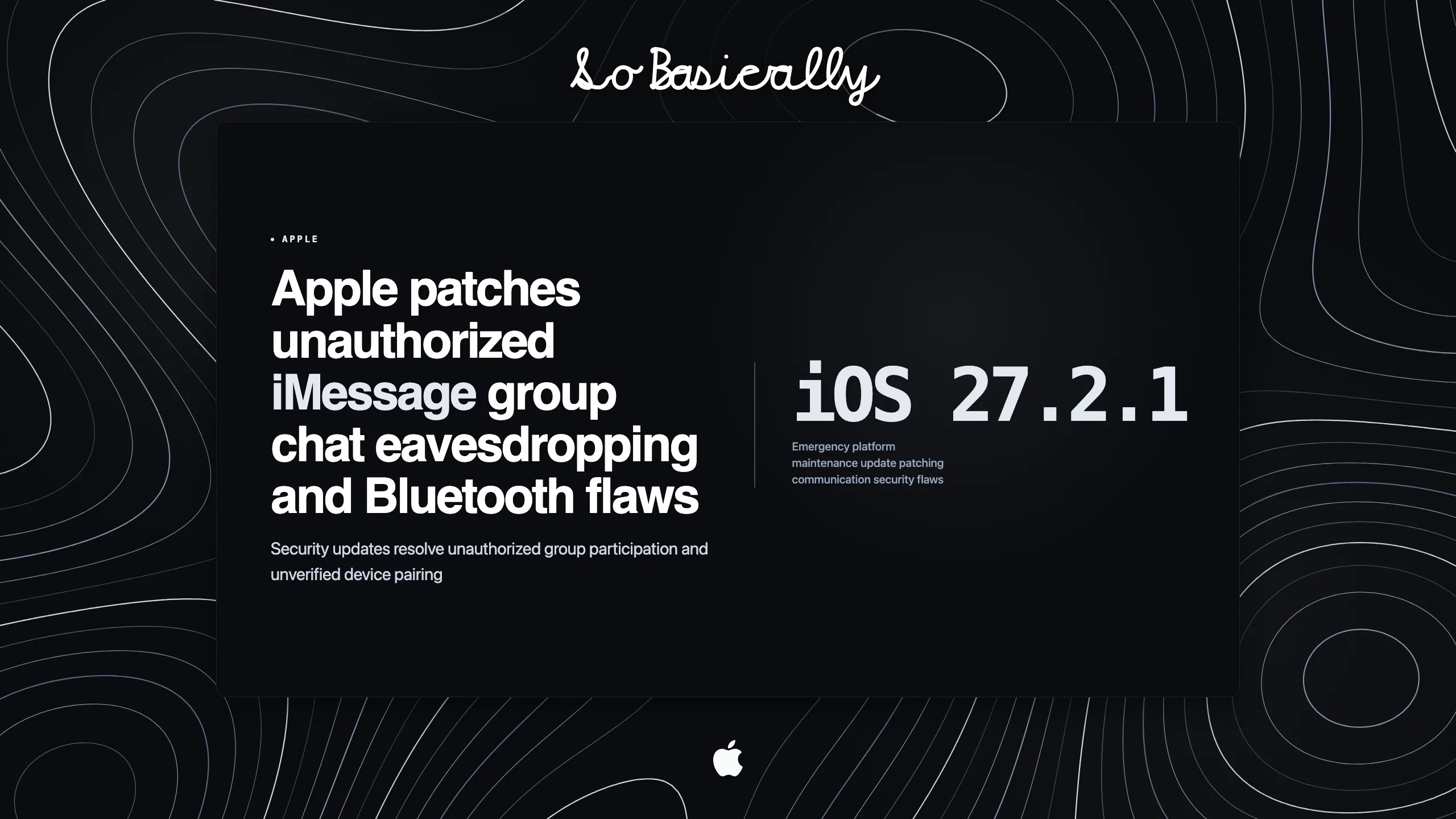
Decision brief card for Apple patches unauthorized iMessage group chat eavesdropping and Bluetooth flaws

Apple patches unauthorized iMessage group chat eavesdropping and Bluetooth flaws

What happened.Apple published iOS 27.2.1 and iPadOS 27.2.1 addressing vulnerabilities that permitted unauthorized users to join iMessage group chats and bypass Bluetooth pairing.

Why it matters.Mobile operating systems safeguard sensitive executive communications and handle confidential business correspondence. When messaging protocols leak group messages to unauthorized participants, corporate privacy and confidentiality are compromised. Corporate mobility teams must enforce iOS 27.2.1 and iPadOS 27.2.1 installations across managed device fleets. Users should verify Bluetooth pairing lists and remove unknown connected accessories.

  • Messaging eavesdropping: Tracked as CVE-2026-113961, an authorization flaw allowed remote attackers to join active iMessage group chats and receive participant messages without approval.
  • History exposure: Tracked as CVE-2026-113960, a related privacy defect allowed newly added group members to access chat history created before they joined.
  • Bluetooth pairing bypass: Tracked as CVE-2026-113964 and CVE-2026-113965, CoreUtils logic flaws let nearby malicious Bluetooth accessories pair without user confirmation.
  • AirPlay rate limits: CVE-2026-113968 and CVE-2026-113969 addressed pairing code brute-force issues by restoring rate limits across network services.
  • Remediation releases: Updates shipped for iPhone 11 and later, iPad Pro models, iPad Air 4th generation and later, and iPad mini 6th generation.
Official Source:NIST NVD
Decision brief card for Apple patches unauthorized iMessage group chat eavesdropping and Bluetooth flaws
Read Brief
Source:NIST NVD (opens in a new tab)