 MicrosoftAnalysis
Microsoft Entra Device Registration patches critical privilege escalation flaw

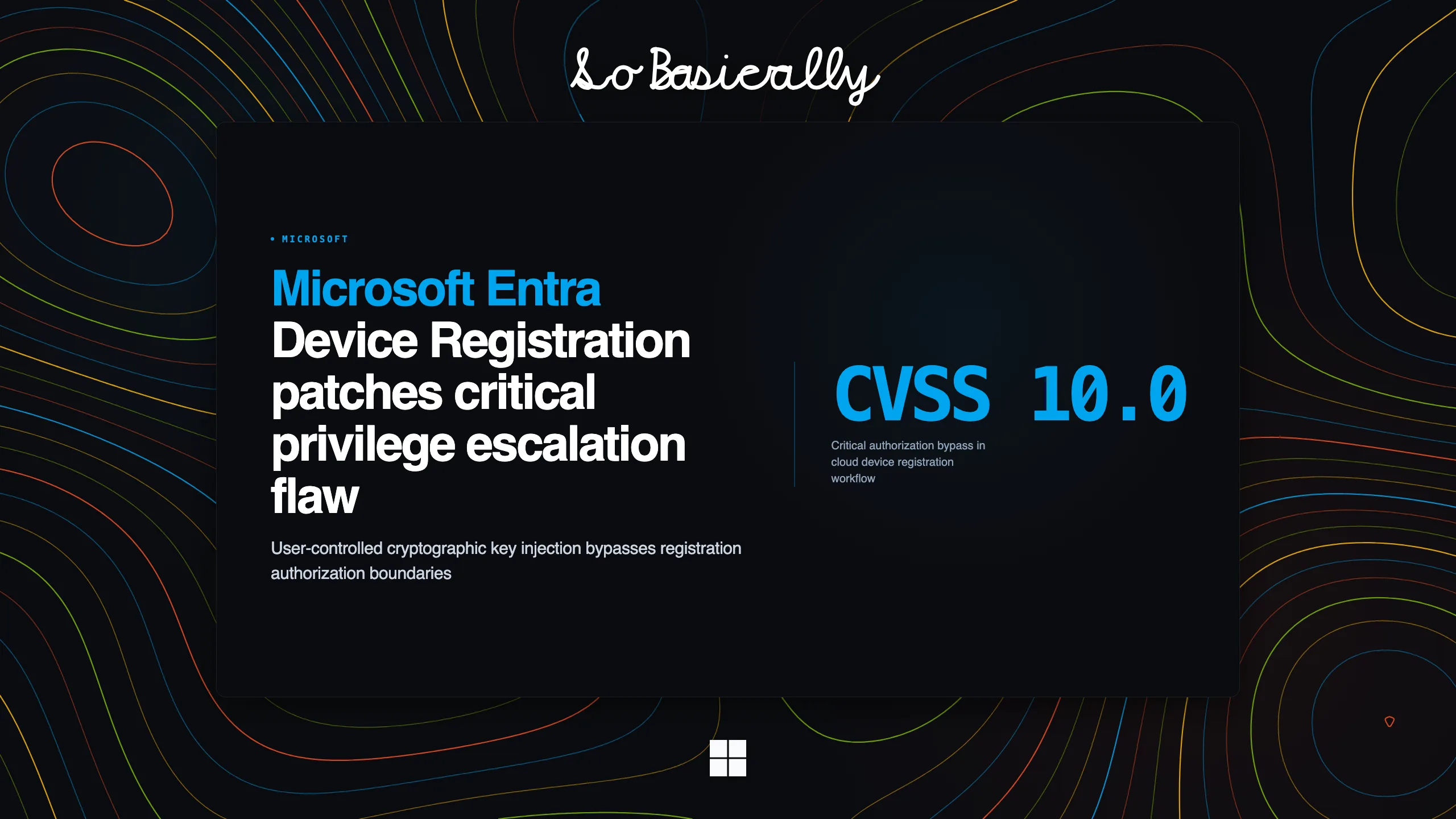
What happened.Microsoft released a security advisory addressing a maximum-severity authorization bypass vulnerability in Microsoft Entra Device Registration.
Why it matters.Modern enterprise security architectures rely on device registration services to establish trusted identity perimeters. When authorization checks accept untrusted cryptographic parameters during device enrollment, attackers bypass multi-factor conditional access controls and escalate privileges to global tenant administrators. Cloud security teams should review tenant audit logs for unauthorized device additions. Identity administrators must verify continuous device compliance evaluations across corporate directories.
The technical specifications:
- Vulnerability mechanics: Tracked as CVE-2026-109469 with a maximum CVSS score of 10.0, the defect involves authorization bypass through user-controlled cryptographic keys.
- Identity elevation: Unauthenticated network actors can leverage user-controlled key parameters during registration handshakes to elevate privileges across enterprise cloud tenants.
- Cloud boundary impact: The flaw circumvents device compliance boundaries and conditional access policies enforcing trusted endpoint enrollment.
- Tenant scope: The vulnerability affects identity registration endpoints managing enterprise devices joined to Microsoft Entra ID.
- Remediation deployment: Microsoft deployed automated cloud-side updates across global Entra ID infrastructure, requiring no manual endpoint firmware modifications.