 GoogleAnalysis
Google patches active XML use-after-free zero-day in Chrome

Listen to Briefing
0:00/1:57
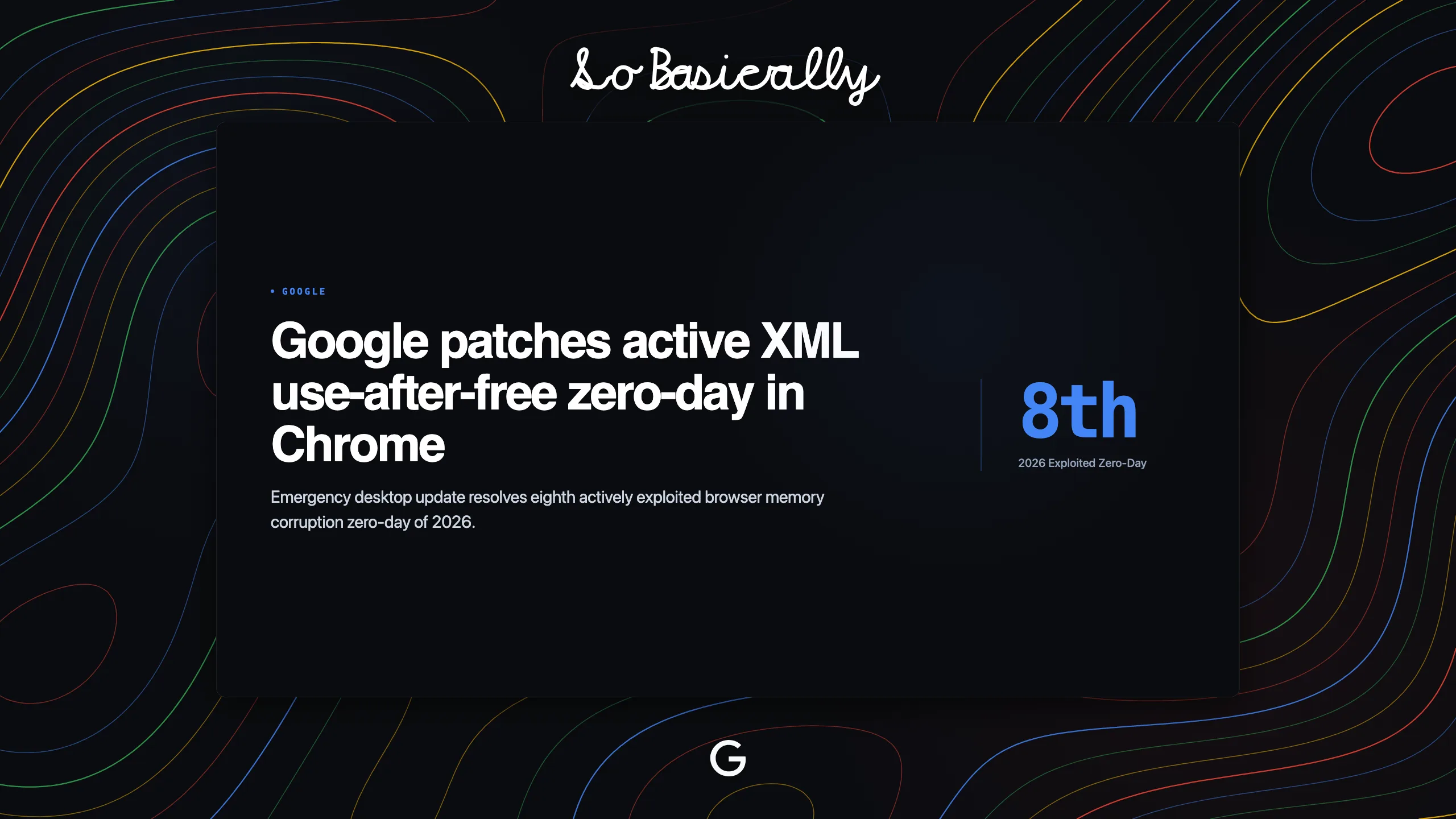
What happened.Google deployed an emergency out-of-band security update for Chrome to address an actively exploited use-after-free zero-day vulnerability in its XML parser.
Why it matters.Web browser zero-days provide attackers with a direct path to execute malicious payloads on corporate endpoints when employees visit compromised web pages. When threat groups chain renderer memory corruption bugs with operating system sandbox escapes, full endpoint compromise can occur without user awareness. Enterprise desktop administrators should force rapid browser restarts across managed fleets to activate the security fixes.
The technical specifications:
- Zero-day tracking: Tracked as CVE-2026-125350 with high severity, the vulnerability represents the eighth Chrome zero-day flaw patched in active exploitation during 2026.
- Memory corruption: The flaw exists within the browser XML parsing subsystem, where malformed document structures trigger improper memory reuse during content rendering.
- Targeted exploitation: Google confirmed reports that adversaries weaponized the defect in targeted attacks to execute arbitrary code within sandboxed browser processes.
- Desktop distribution: Fixes rolled out across Stable channel builds 131.0.6778.85/.86 for Windows and macOS, and 131.0.6778.85 for Linux operating systems.
STORYLINE PROGRESSION & CONTEXT
This report represents a verified evolution of prior newsroom intelligence: