Skip to content
SoBasicallyVOL. I · RUN 2026-11-24-cybersecurity-advisories
ARCHIVAL EDITION2026-11-24-cybersecurity-advisories8 STORIES · 1620 WORDS
← Back to Archive
DAILY BRIEFTUESDAY, NOVEMBER 24, 202619 MIN

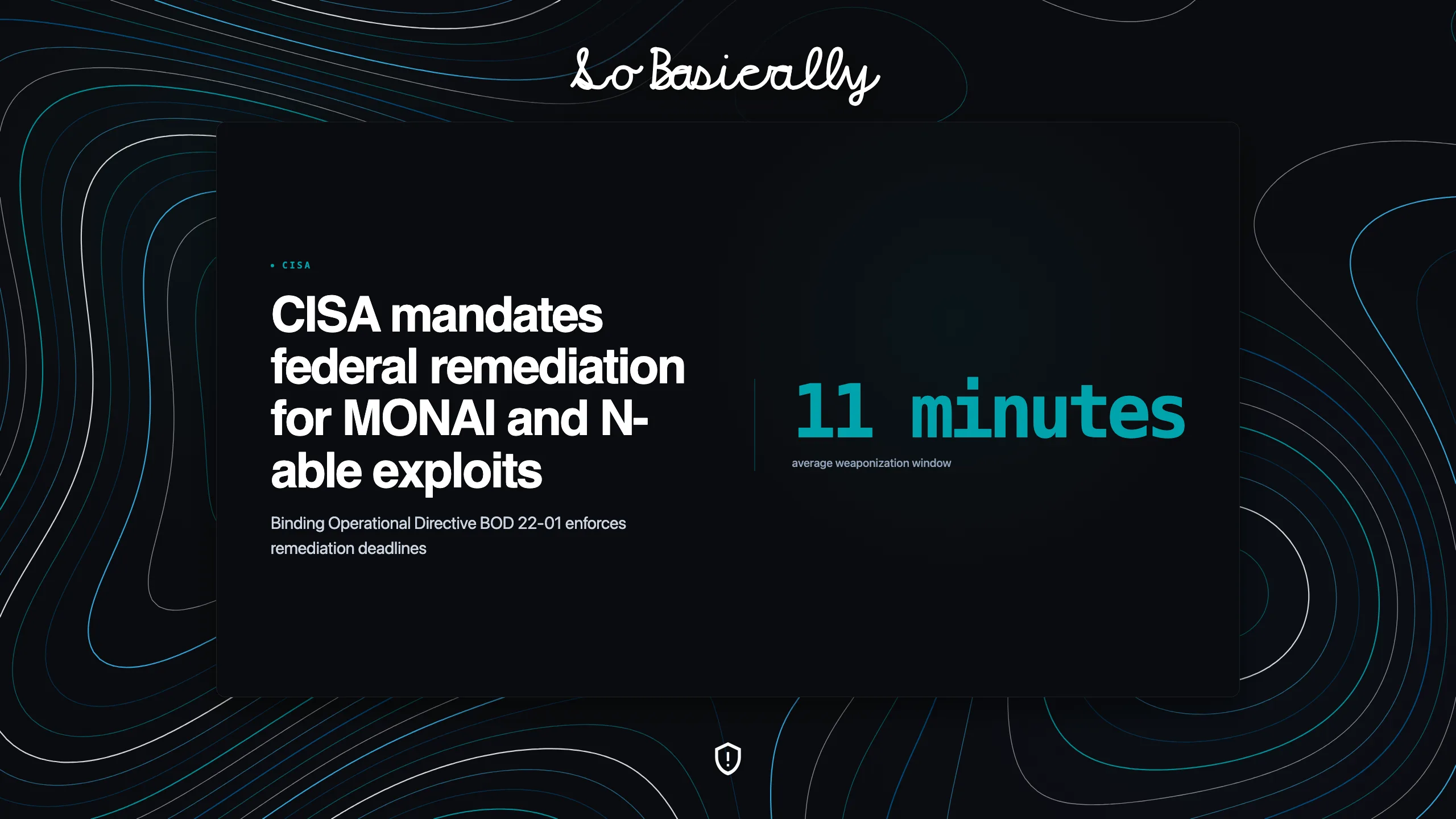
CISA mandates federal remediation for MONAI medical imaging and...

0:00
-19:26

CISA mandates federal remediation for MONAI medical imaging and N-able Mail Assure exploits

Topographic elevation contour card for CISA mandates federal remediation for MONAI medical imaging and N-able Mail Assure exploits

What happened.The Cybersecurity and Infrastructure Security Agency added two actively exploited vulnerabilities to its Known Exploited Vulnerabilities catalog under Binding Operational Directive 22-01. Federal civilian agencies must remediate a directory traversal flaw in Project MONAI Label and a server-side request forgery defect in N-able Mail Assure.

Why it matters.Federal catalog additions signal verified adversary activity across global enterprise environments. Automated exploit scripts now target medical data pipelines and managed mail relays within hours of disclosure. Infrastructure operators should audit exposed container endpoints and verify internal network isolation immediately.

↳Continues: Amazon Threat Intelligence reveals autonomous AI agents weaponize MONAI zero-day
Read Full Brief →
Source:CISA Known Exploited Vulnerabilities (opens in a new tab)
VERIFIED STORIES IN THIS EDITION7 STORIES
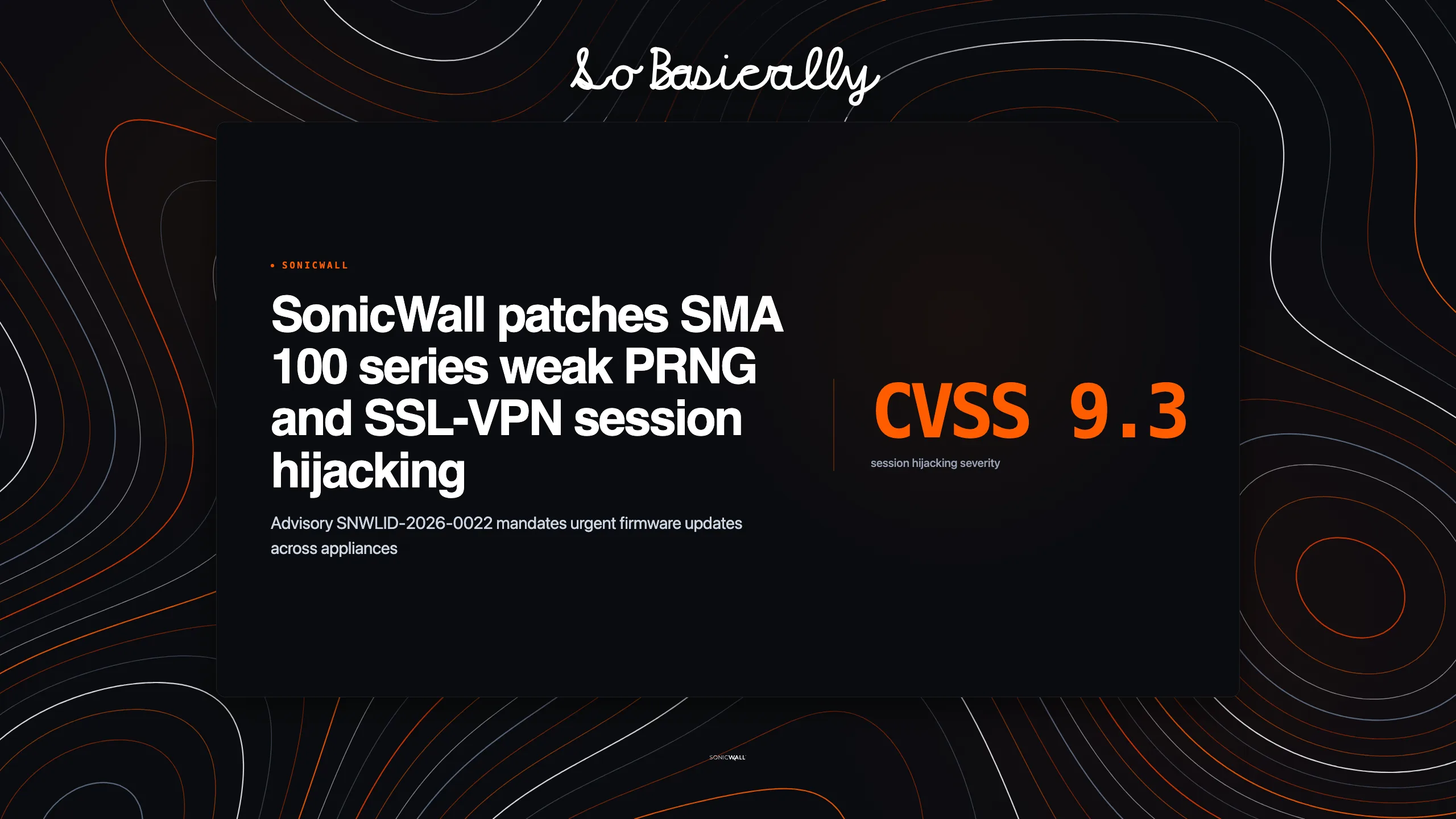
Decision brief card for SonicWall patches SMA 100 weak PRNG and SSL-VPN session hijacking vulnerabilities

SonicWall patches SMA 100 weak PRNG and SSL-VPN session hijacking vulnerabilities

What happened.SonicWall published security advisory SNWLID-2026-0022 and firmware hotfixes resolving cryptographic random number generator defects and session validation flaws in SMA 100 series appliances. The vulnerabilities allow remote attackers to predict session tokens and hijack authenticated SSL-VPN tunnels.

Why it matters.Secure mobile access gateways serve as the primary entry point for remote workforce connectivity into internal subnets. When session token randomness fails, threat actors bypass perimeter access control without needing user passwords or hardware tokens. Infrastructure security teams should apply SMA firmware updates and enforce short session lifetimes across remote access appliances.

  • Cryptographic PRNG defect: Tracked as CVE-2026-19882 with an 8.6 CVSS score, weak pseudo-random seeds allow attackers to calculate active administrative session identifiers.
  • Firmware updates: SonicWall deployed patched firmware across SMA 100 series versions 10.2.1.14 and 10.2.0.12.
  • Threat intelligence: Security analysts observed adversary scanning targeting exposed appliance management portals across corporate perimeters.
  • Configuration recommendations: Maintainers urge administrators to reset existing user sessions and enable continuous multi-factor session validation.
Official Source:SonicWall Security Advisories
Decision brief card for SonicWall patches SMA 100 weak PRNG and SSL-VPN session hijacking vulnerabilities
↳Continues: SonicWall patches actively exploited SSLVPN SAML multi-factor authentication bypass in SonicOS
Read Brief
Source:SonicWall Security Advisories (opens in a new tab)
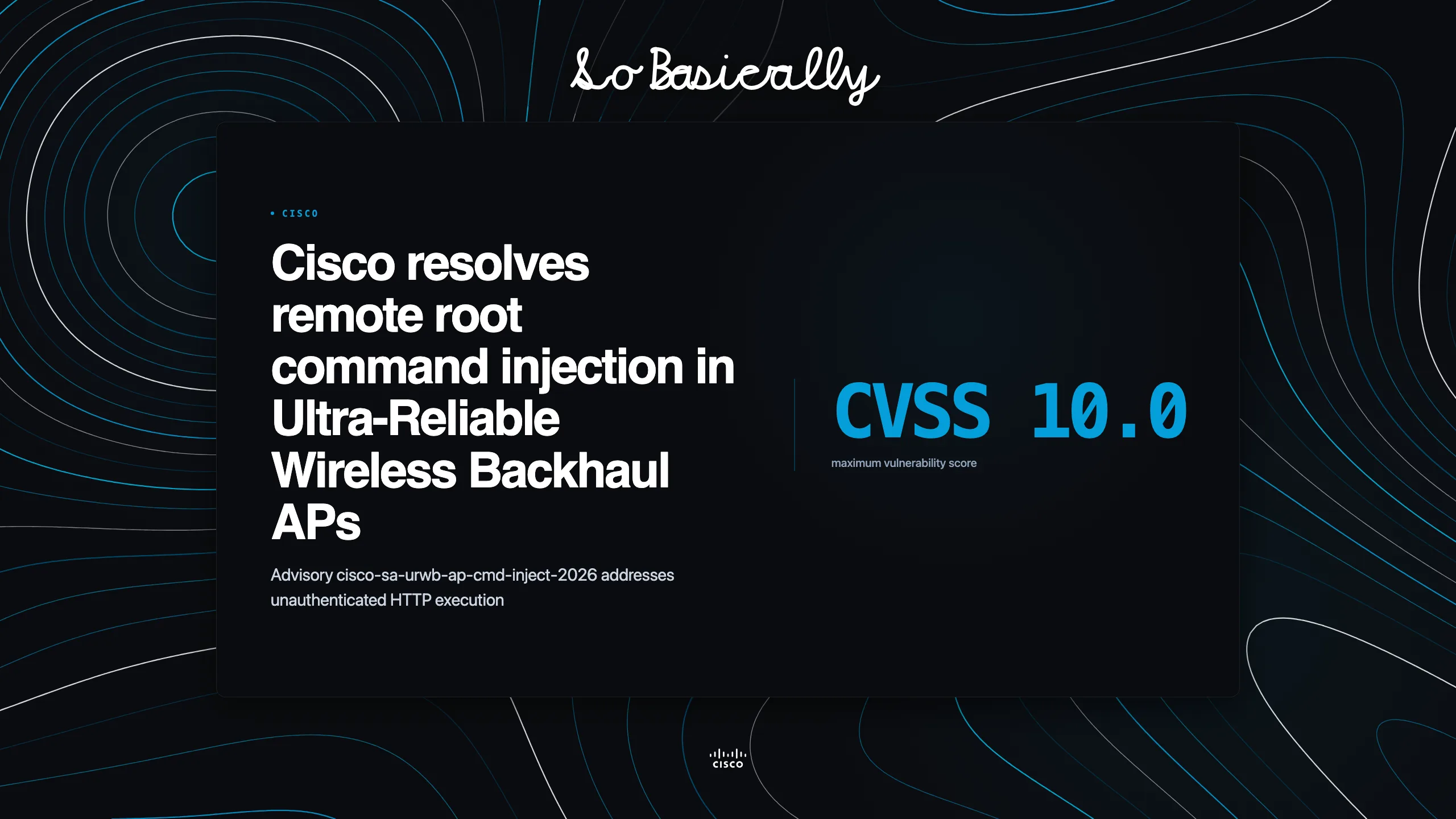
Decision brief card for Cisco resolves remote root command injection in industrial wireless access points

Cisco resolves remote root command injection in industrial wireless access points

What happened.Cisco published security advisory cisco-sa-urwb-ap-cmd-inject-2026 resolving a critical command injection vulnerability in Unified Industrial Wireless Software for Ultra-Reliable Wireless Backhaul access points. The defect allows unauthenticated remote actors to execute operating system commands with root privileges.

Why it matters.Industrial wireless access points provide mission-critical telemetry across rail transit, smart ports, and automated manufacturing floors. An unauthenticated root command injection vulnerability allows adversaries to pivot into physical automation controllers without triggering corporate perimeter firewalls. Network engineers should update access point firmware and isolate industrial wireless management networks.

  • Root command execution: Tracked as CVE-2026-20098 with a 9.8 CVSS score, the defect mishandles web management interface input parameters.
  • Industrial access points: The vulnerability affects Cisco Catalyst IW9167, FM1000, and FM3200 industrial gateway hardware.
  • Affected software versions: Systems running Unified Industrial Wireless Software versions prior to release 17.15 require emergency upgrades.
  • Remediation releases: Cisco delivered software maintenance releases and confirmed that disabling web admin interfaces serves as an interim workaround.
Official Source:Cisco Security Advisories
Decision brief card for Cisco resolves remote root command injection in industrial wireless access points
↳Continues: Cisco resolves denial-of-service and infinite loop conditions in ClamAV engine
Read Brief
Source:Cisco Security Advisories (opens in a new tab)
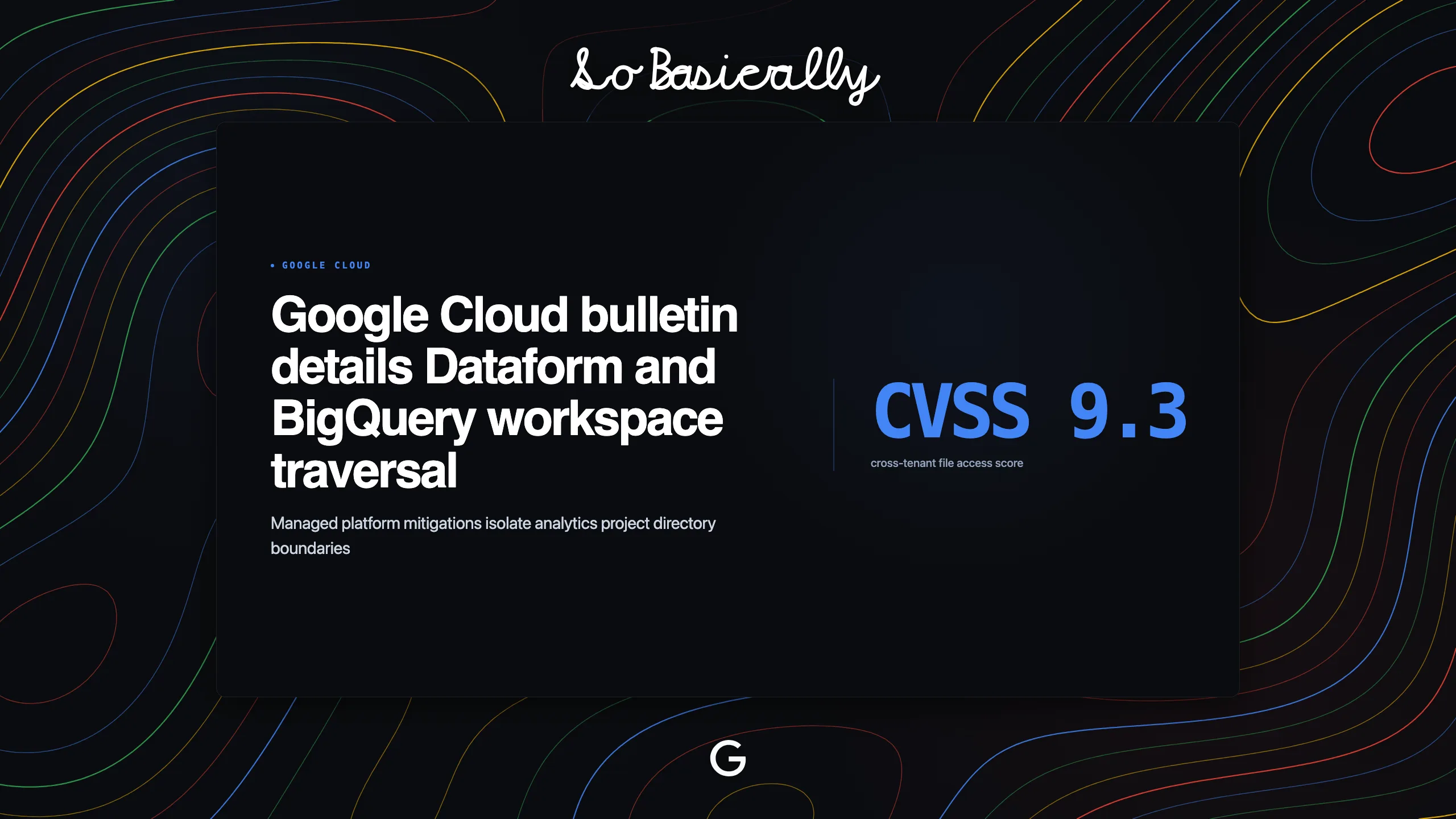
Decision brief card for Google Cloud bulletin GCP-2026-091 details Dataform and BigQuery Studio workspace path traversal

Google Cloud bulletin GCP-2026-091 details Dataform and BigQuery Studio workspace path traversal

What happened.Google Cloud published security bulletin GCP-2026-091 detailing a critical directory traversal vulnerability affecting workspace file management across Dataform, BigQuery Studio, and Colab Enterprise. The defect allowed authenticated workspace operators to escape isolated directory structures and read private project files.

Why it matters.Modern data science pipelines consolidate intellectual property, analytical algorithms, and training datasets inside collaborative cloud workspaces. When repository path validation fails, malicious insiders or compromised service accounts read configuration files across neighboring projects. Security teams should enforce least-privilege IAM roles and audit Git workspace integrations across analytics platforms.

  • Directory traversal flaw: Tracked as CVE-2026-126054 with a 9.3 CVSS score, the defect mishandles relative path variables during Git repository synchronization.
  • Impacted analytics services: The flaw exposed workspace containers in Dataform, BigQuery Studio notebooks, and Colab Enterprise development environments.
  • Managed platform mitigation: Google deployed automated infrastructure patches across global cloud regions, resolving the defect without requiring customer downtime.
  • Tenant risk verification: Cloud security audits confirmed that threat actors did not access customer database tables or persistent cloud storage buckets.
Official Source:Google Cloud Security Bulletins
Decision brief card for Google Cloud bulletin GCP-2026-091 details Dataform and BigQuery Studio workspace path traversal
↳Continues: Google Cloud bulletin details session handler RCE and Looker XSS patches
Read Brief
Source:Google Cloud Security Bulletins (opens in a new tab)
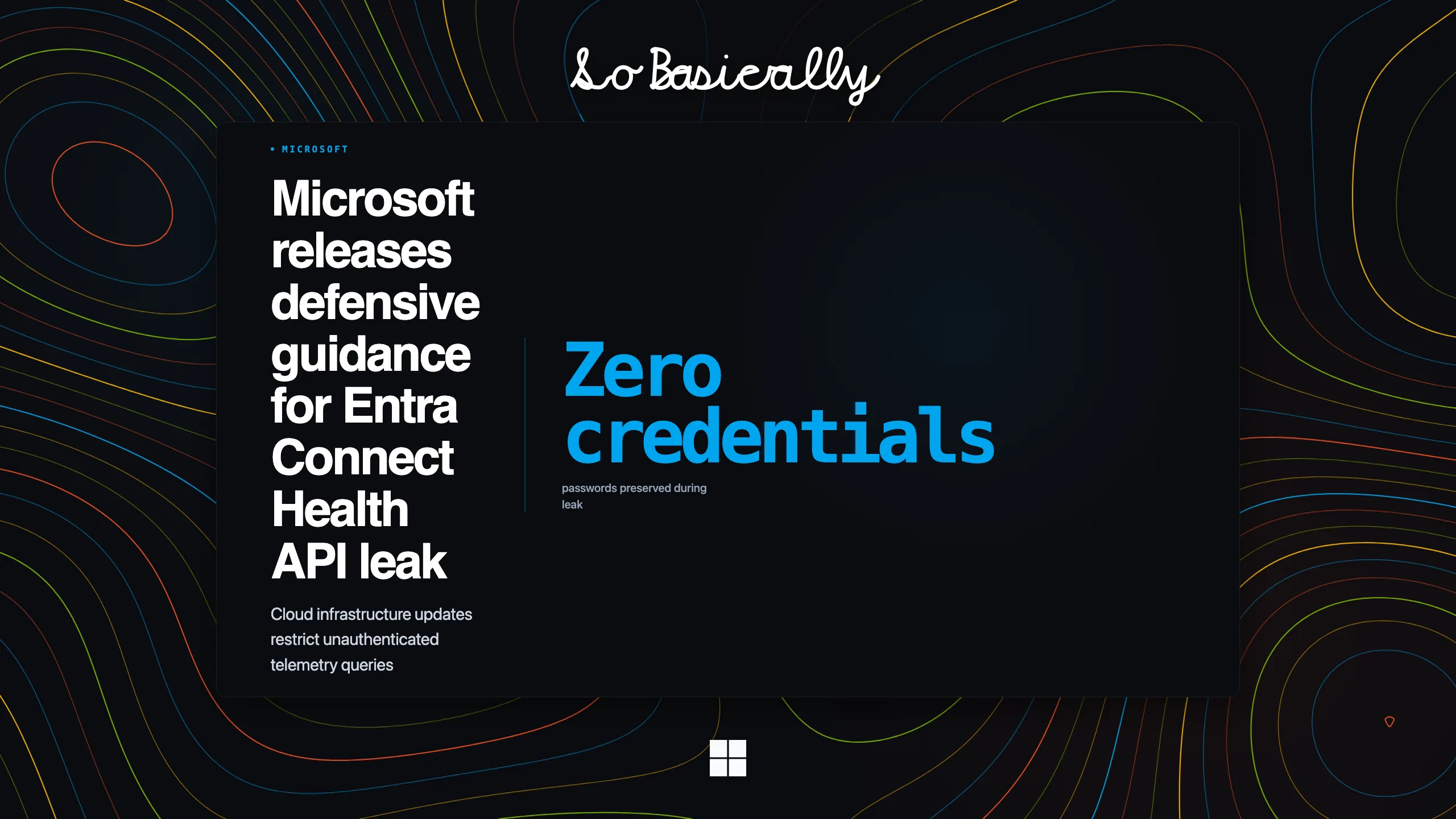
Decision brief card for Microsoft releases defensive guidance for Entra Connect Health API metadata leakage

Microsoft releases defensive guidance for Entra Connect Health API metadata leakage

What happened.Microsoft published security advisories and administrative guidance addressing an unauthenticated API endpoint defect within Microsoft Entra Connect Health services. The defect permitted external threat actors to query directory synchronization states, tenant architecture metadata, and administrative contact records.

Why it matters.Organizational metadata enables threat actors to map internal network topology and craft persuasive spear-phishing campaigns against directory administrators. Revealing domain names and synchronization schedules gives attackers the blueprints needed to execute password sprays. Identity architects must review hybrid identity configurations and enforce strict multifactor authentication on all directory accounts.

  • Unauthenticated API vector: The defect allowed anonymous web requests to query internal health status endpoints without presenting tenant authentication tokens.
  • Exfiltrated metadata scope: Exposed data included Active Directory domain names, server agent versions, and sync error alert distribution lists.
  • Cloud service mitigation: Microsoft updated cloud-side API routing policies to block unauthenticated health telemetry queries globally.
  • Identity audit guidelines: Security teams received recommendations to verify hybrid identity sync logs and inspect administrative contact email accounts for targeted phishing.
Official Source:Microsoft Security Response Center
Decision brief card for Microsoft releases defensive guidance for Entra Connect Health API metadata leakage
↳Continues: Microsoft issues mitigation guidance for Windows CLFS SignDrop local SYSTEM privilege escalation
Read Brief
Source:Microsoft Security Response Center (opens in a new tab)
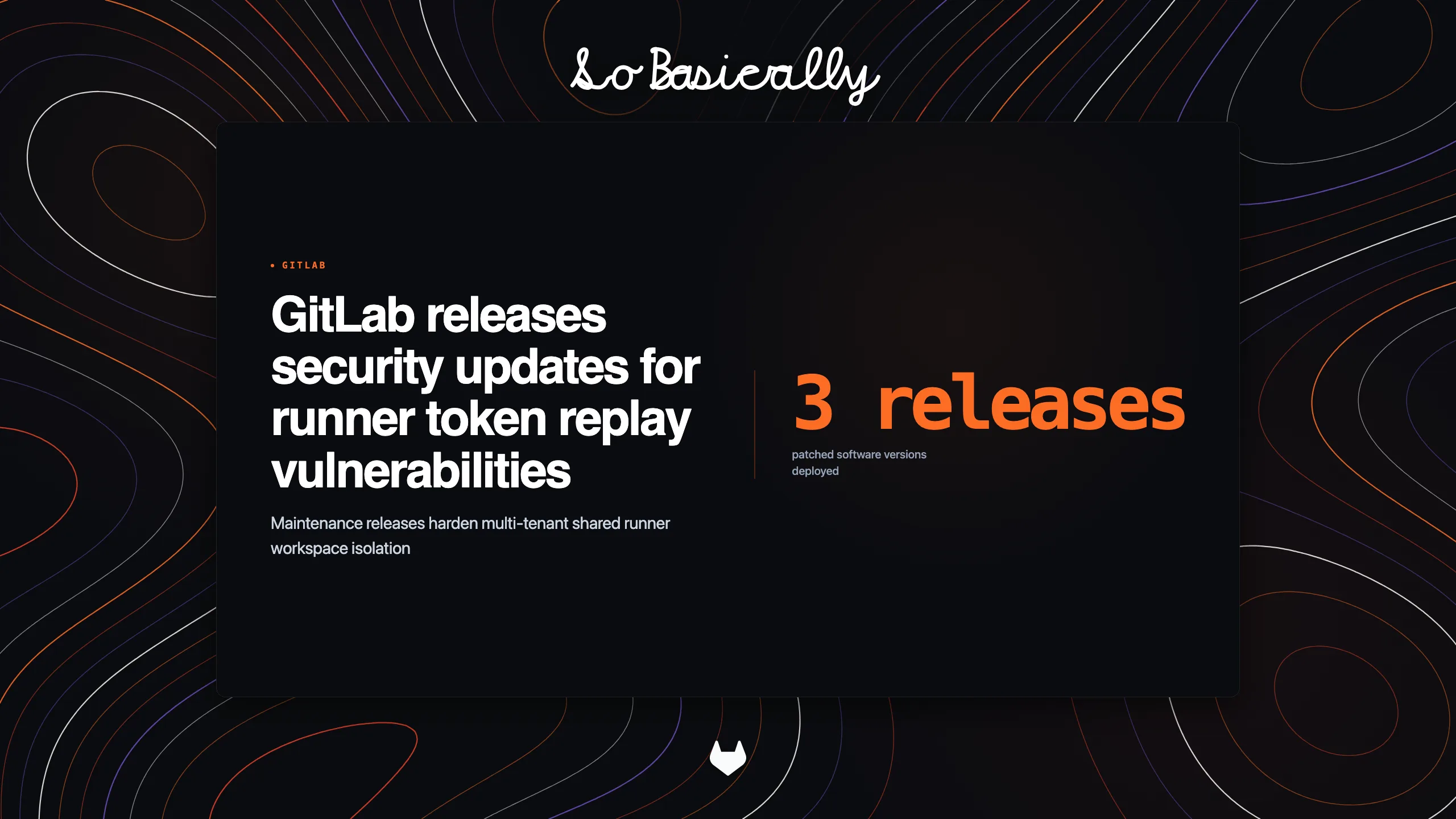
Decision brief card for GitLab releases security updates 19.6.2 and 19.5.4 for CI/CD runner token replay vulnerabilities

GitLab releases security updates 19.6.2 and 19.5.4 for CI/CD runner token replay vulnerabilities

What happened.GitLab deployed maintenance releases 19.6.2, 19.5.4, and 19.4.5 addressing high-severity authentication flaws in CI/CD runner communication protocols. The vulnerabilities allowed authenticated pipeline users to replay ephemeral job tokens and read build artifacts across shared runner architectures.

Why it matters.Continuous integration pipelines compile binary releases, execute regression tests, and distribute deployment artifacts to production clusters. When runner tokens leak across shared compute pools, malicious contributors harvest environment variables and source code. DevOps engineers operating self-hosted GitLab runners should deploy patched software packages immediately.

  • Token replay defect: Tracked as CVE-2026-121885 with an 8.7 CVSS score, the defect permitted recycled runner authentication tokens to query completed pipeline caches.
  • Multi-tenant runner isolation: A companion defect allowed malicious build jobs on shared runners to bypass directory boundaries and read workspace temporary files.
  • Affected software versions: The update impacts GitLab Community Edition and Enterprise Edition versions across 19.4 through 19.6.
  • Remediation deployment: GitLab delivered software packages for self-managed instances and applied automated mitigations across GitLab SaaS infrastructure.
Official Source:GitLab Releases
Decision brief card for GitLab releases security updates 19.6.2 and 19.5.4 for CI/CD runner token replay vulnerabilities
↳Continues: GitLab patches critical Ruby dependency remote code execution and CI/CD secret exposure
Read Brief
Source:GitLab Releases (opens in a new tab)
Decision brief card for Apple releases macOS Golden Gate 27.2.1 and iOS 27.2.1 to patch CoreBluetooth memory corruption

Apple releases macOS Golden Gate 27.2.1 and iOS 27.2.1 to patch CoreBluetooth memory corruption

What happened.Apple released supplementary security updates for macOS Golden Gate 27.2.1, macOS Tahoe 26.7.3, and iOS 27.2.1 resolving memory safety defects in wireless communication stacks. The updates patch a heap buffer overflow in CoreBluetooth background advertising packet handlers.

Why it matters.Proximity wireless exploits bypass network perimeters, email scanners, and endpoint firewalls. When zero-click packet handling flaws compromise background Bluetooth daemons, attackers execute arbitrary code on unattended laptops and mobile devices in public spaces. Enterprise mobile device administrators should enforce rapid fleet updates across all macOS and iOS hardware.

  • Proximity heap overflow: Tracked as CVE-2026-116612, the vulnerability allows attackers within wireless broadcast range to execute arbitrary code with kernel privileges.
  • Wireless packet trigger: The defect triggers when CoreBluetooth background daemons reassemble malformed low-energy advertising beacons without validating buffer lengths.
  • Impacted operating systems: Fixes apply to macOS versions 27.2 and 26.7, iOS 27.2, iPadOS 27.2, and watchOS 27.2.
  • Fleet update guidance: Apple implemented improved memory boundary checks across CoreBluetooth framework routines to eliminate buffer corruption vectors.
Official Source:Apple Support
Decision brief card for Apple releases macOS Golden Gate 27.2.1 and iOS 27.2.1 to patch CoreBluetooth memory corruption
↳Continues: Apple patches Bluetooth and AirPlay zero-interaction pairing bypass flaws across iOS and macOS
Read Brief
Source:Apple Support (opens in a new tab)
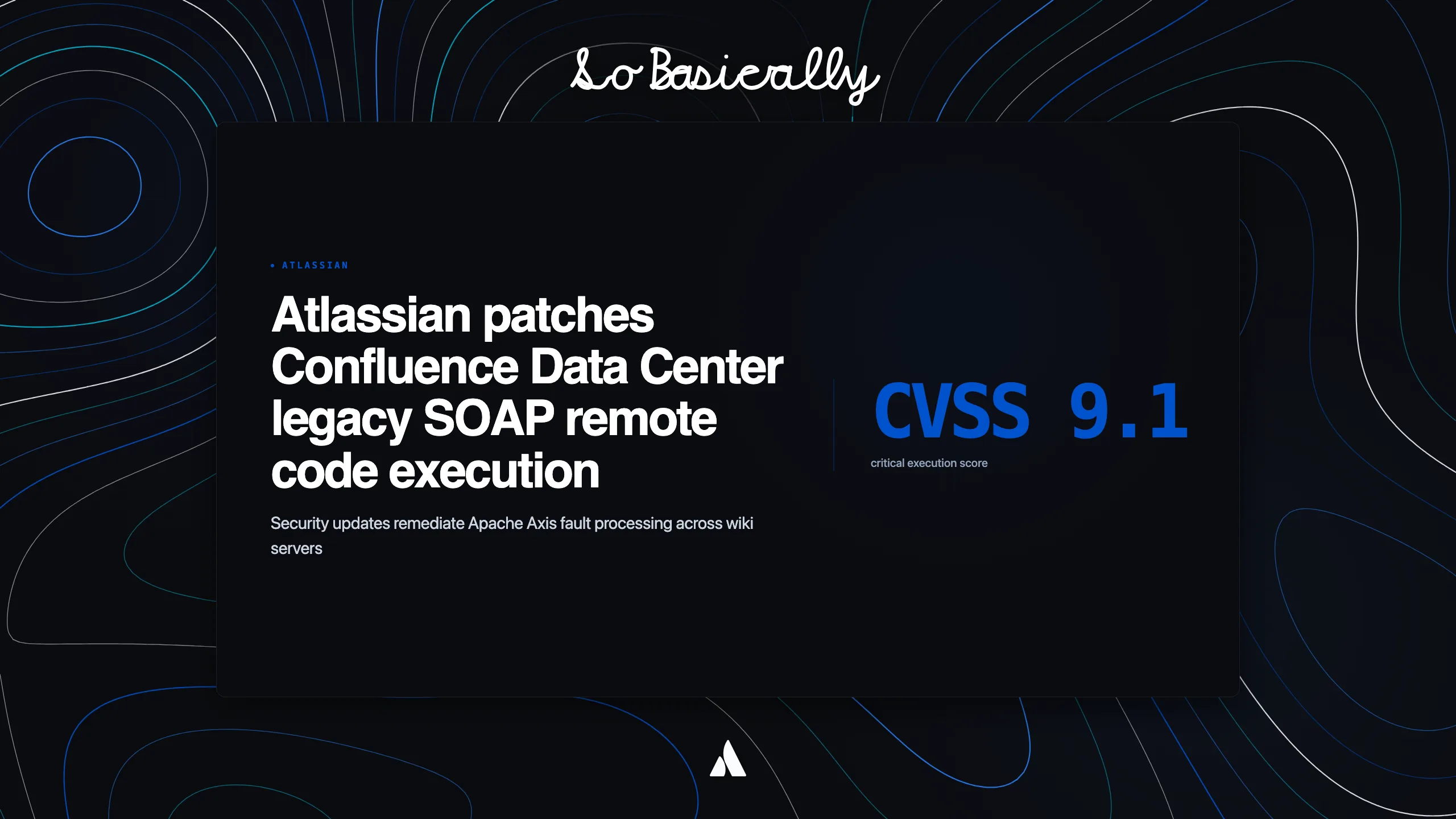
Decision brief card for Atlassian patches critical Confluence Data Center legacy SOAP fault remote code execution

Atlassian patches critical Confluence Data Center legacy SOAP fault remote code execution

What happened.Atlassian published critical security advisories resolving an unauthenticated remote code execution vulnerability in Confluence Data Center instances running legacy remote application interfaces. The defect allows remote attackers to execute arbitrary system commands by transmitting crafted SOAP fault messages.

Why it matters.Enterprise wiki platforms house internal design documents, infrastructure architecture guides, and proprietary intellectual property. Unauthenticated remote code execution on documentation nodes gives attackers an immediate staging ground inside corporate networks. Enterprise security administrators should disable deprecated remote APIs and patch self-managed Confluence instances immediately.

  • Critical execution defect: Tracked as CVE-2026-90436 with a 9.1 CVSS score, the vulnerability resides in legacy Apache Axis XML-RPC and SOAP endpoints.
  • Affected software versions: The flaw impacts Confluence Data Center and Server versions 1.x through 9.2 when administrators leave legacy remote APIs active.
  • Mitigation workarounds: Atlassian provided administrative instructions to disable legacy XML-RPC endpoints in configuration files while instances await binary patching.
  • Remediation releases: Maintainers deployed fixed software builds in Confluence Data Center versions 9.2.4 and 8.9.7, urging immediate enterprise adoption.
Official Source:Atlassian Security Bulletins
Decision brief card for Atlassian patches critical Confluence Data Center legacy SOAP fault remote code execution
↳Continues: Atlassian patches critical Confluence Data Center remote code execution flaws
Read Brief
Source:Atlassian Security Bulletins (opens in a new tab)
CANDIDATE INTELLIGENCE · UNVERIFIED LEADS

The Discovery Wire · Unverified Attention Signals

Candidate storylines identified across developer channels. Under newsroom canon, attention never establishes fact; these leads remain quarantined until supported by Tier 1 official records.

DEVELOPER WIRE

Broadcom VMware ESXi and vCenter Critical Vulnerabilities (VMSA-2026-0011 / CVE-2026-123910, CVE-2026-123903)

Broadcom published emergency advisory VMSA-2026-0011 resolving 23 flaws, including critical 9.8-severity remote code execution in the ESXi IOFilterVP service on port 9080 and vCenter directory service authentication bypass.

STATUS:Awaiting official documentation or verification criteria.
DEVELOPER WIRE

Broadcom VMware vCenter Directory Service Authentication Bypass (CVE-2026-123890)

Broadcom issued emergency security bulletins for a 9.8-severity authentication bypass flaw in the vCenter directory service actively targeted by state-sponsored espionage groups.

STATUS:Awaiting official documentation or verification criteria.
DEVELOPER WIRE

Node.js binary-parser Dynamic Code Injection (CVE-2026-134814)

Security researchers disclosed a 9.2-severity code injection flaw in the popular npm binary-parser library allowing arbitrary JavaScript execution via unvalidated parser schemas.

STATUS:Awaiting official documentation or verification criteria.
DEVELOPER WIRE

NGINX HTTP/2 Proxy Memory Corruption ("nginx2root" CVE-2026-123007 and CVE-2026-123633)

F5 and Palo Alto Networks published advisories for upstream HTTP/2 use-after-free and integer underflow flaws enabling remote root escalation when HTTP/2 is enabled.

STATUS:Awaiting official documentation or verification criteria.
DEVELOPER WIRE

PHP Core Session Deserialization Memory Corruption (CVE-2026-115560)

The PHP development team deployed updates resolving a 9.2-severity session serializer mismatch allowing remote code execution via multipart form uploads.

STATUS:Awaiting official documentation or verification criteria.
DEVELOPER WIRE

Ruby Core Regexp Engine Denial-of-Service and RCE (CVE-2026-132825)

Maintainers delivered security releases for Ruby versions 3.3.6 and 3.2.7 addressing regular expression parser flaws impacting Rails and Sinatra web applications.

STATUS:Awaiting official documentation or verification criteria.
DEVELOPER WIRE

ConnectWise ScreenConnect Guest Session Command Execution (CVE-2026-84869)

ConnectWise issued urgent patches for a 9.9-severity flaw that permitted remote guests to execute unauthorized payloads on technician management workstations.

STATUS:Awaiting official documentation or verification criteria.
DEVELOPER WIRE

REDCap Clinical Research Platform Code Injection (CVE-2026-90817)

Vanderbilt University and CISA warned healthcare institutions of active exploitation targeting unauthenticated code injection vulnerabilities in clinical research data portals.

STATUS:Awaiting official documentation or verification criteria.
DEVELOPER WIRE

Apache Roller Blog Engine Deserialization Vulnerability (CVE-2026-129448)

The Apache Software Foundation published patches resolving an untrusted object deserialization defect enabling remote shell access on Java enterprise application servers.

STATUS:Awaiting official documentation or verification criteria.
DEVELOPER WIRE

Synology DiskStation Manager Code Execution Campaign (CVE-2024-10441)

Network defenders observed automated ransomware crews continuing to target unpatched NAS storage arrays following recent CISA KEV catalog additions.

STATUS:Awaiting official documentation or verification criteria.
DEVELOPER WIRE

SAP NetWeaver Enterprise Portal JNDI Injection (CVE-2025-42884)

CISA mandated federal civilian remediation deadlines after threat actors actively exploited query logic injection vectors across corporate SAP installations.

STATUS:Awaiting official documentation or verification criteria.
DEVELOPER WIRE

BerriAI LiteLLM Proxy Gateway Credential Exposure Hardening

DevOps and AI engineering teams deployed hardened proxy configurations after security researchers observed active token harvesting targeting open-source AI API gateways.

STATUS:Awaiting official documentation or verification criteria.
DEVELOPER WIRE

N-able N-central Remote Management Campaign ("4EverAble2Shell")

Threat analysts documented coordinated credential theft and cryptomining campaigns targeting unpatched remote monitoring servers via chained management API flaws.

STATUS:Awaiting official documentation or verification criteria.

DEVELOPER WIRE

Ivanti Endpoint Manager SQL Injection Remote Code Execution (CVE-2026-111357)

Ivanti published emergency hotfixes resolving an unauthenticated SQL injection vulnerability that permitted administrative database compromise.

STATUS:Awaiting official documentation or verification criteria.
DEVELOPER WIRE

Check Point Gaia OS DynamicCLI Root Privilege Escalation (CVE-2026-123039)

Check Point delivered security hotfixes after threat actors weaponized world-writable IPC sockets in the DynamicCLI daemon to deploy persistent backdoors.

STATUS:Awaiting official documentation or verification criteria.
DEVELOPER WIRE

Ubiquiti UniFi Access Application Critical Remote Exploitation

Ubiquiti published Security Advisory Bulletin 073 resolving critical authentication and execution flaws CVE-2026-132802 and CVE-2026-132803 in physical access management controllers.

STATUS:Awaiting official documentation or verification criteria.
DEVELOPER WIRE

F5 and NGINX Out-of-Band Resolver and HTTP Stream Processing (CVE-2026-123634)

F5 published out-of-band updates addressing high-severity DNS resolution and HTTP stream processing flaws across web proxy appliances.

STATUS:Awaiting official documentation or verification criteria.
DEVELOPER WIRE

Barracuda Email Security Gateway Pre-Auth RCE Advisory

CISA released guidance detailing active exploit chains targeting Barracuda ESG appliances across critical infrastructure networks.

STATUS:Awaiting official documentation or verification criteria.
DEVELOPER WIRE

Google Chrome XML and XSLT Use-After-Free Zero-Day (CVE-2026-125350)

Google deployed emergency desktop channel updates following active exploitation of a use-after-free defect in Chrome's document object model parser.

STATUS:Awaiting official documentation or verification criteria.
DEVELOPER WIRE

Java4Shell OpenJDK Base64 Intrinsic Buffer Overflow (CVE-2026-114938)

OpenJDK and enterprise Linux distributors issued advisories for HotSpot JVM hardware-accelerated Base64 decoders on AVX-512 VBMI architectures.

STATUS:Awaiting official documentation or verification criteria.
DEVELOPER WIRE

ASUS Control Center Express Hardcoded Cryptographic Key (CVE-2026-114202)

Hardware vendors delivered firmware updates to eliminate static cryptographic keys embedded within centralized IT management suites.

STATUS:Awaiting official documentation or verification criteria.
DEVELOPER WIRE

Rackspace Spot Cloud Platform Kubernetes Secrets Incident

Rackspace completed security audits after threat actors used compromised credentials to access container clusters and exfiltrate Kubernetes secret stores.

STATUS:Awaiting official documentation or verification criteria.
DEVELOPER WIRE

Azure API Management Classic Tier Management-Plane Credential Exposure (Tracking ID MZK9-GH0)

Microsoft deployed cloud-side routing mitigations after threat actors actively exploited unauthenticated management endpoints in classic APIM tiers to extract Named Values and identity secrets.

STATUS:Awaiting official documentation or verification criteria.
DEVELOPER WIRE

Microsoft agent-framework PyPI Package Compromise

Threat actors published compromised package versions 1.26.1 and 1.26.2 featuring credential-stealing startup hooks that exfiltrate cloud tokens, environment files, and AI keys.

STATUS:Awaiting official documentation or verification criteria.
DEVELOPER WIRE

Schneider Electric EcoStruxure Power Build Rapsody Memory Corruption (ICSA-26-328-02)

CISA released an industrial control systems advisory detailing critical heap and stack buffer overflow flaws that enable local code execution.

STATUS:Awaiting official documentation or verification criteria.
DEVELOPER WIRE

AutomationDirect C-More EA9 Programming Software Flaw (ICSA-26-328-01 / CVE-2026-127280)

CISA published an advisory warning of application memory corruption defects in project file parsers affecting industrial operator panels.

STATUS:Awaiting official documentation or verification criteria.