Skip to content
SoBasicallyVOL. I · RUN 2026-11-10-ai-technology
ARCHIVAL EDITION2026-11-10-ai-technology8 STORIES · 1477 WORDS
← Back to Archive

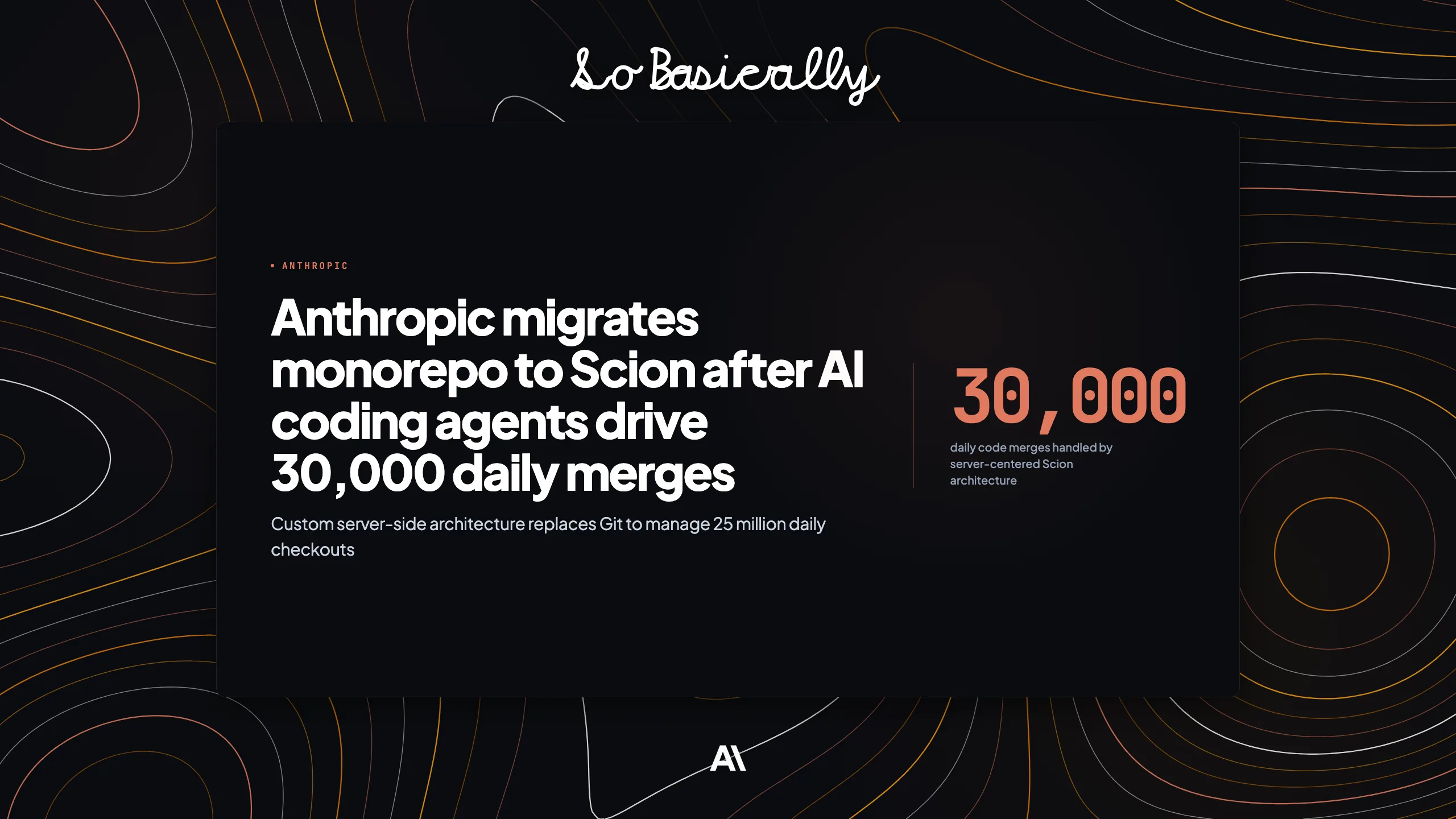
Anthropic migrates monorepo to Scion after AI coding agents drive 30,000 daily merges

Topographic elevation contour card for Anthropic migrates monorepo to Scion after AI coding agents drive 30,000 daily merges

What happened.Anthropic migrated its internal monorepo from Git to Scion, a proprietary version control system built to support software development driven by autonomous AI agents.

Why it matters.Traditional developer infrastructure assumes human work rhythms, local checkouts, and intermittent commits. When software agents execute code in parallel loops around the clock, centralized version control becomes mandatory to prevent continuous integration queues from stalling.

Read Full Brief →
Source:Anthropic (opens in a new tab)
VERIFIED STORIES IN THIS EDITION7 STORIES
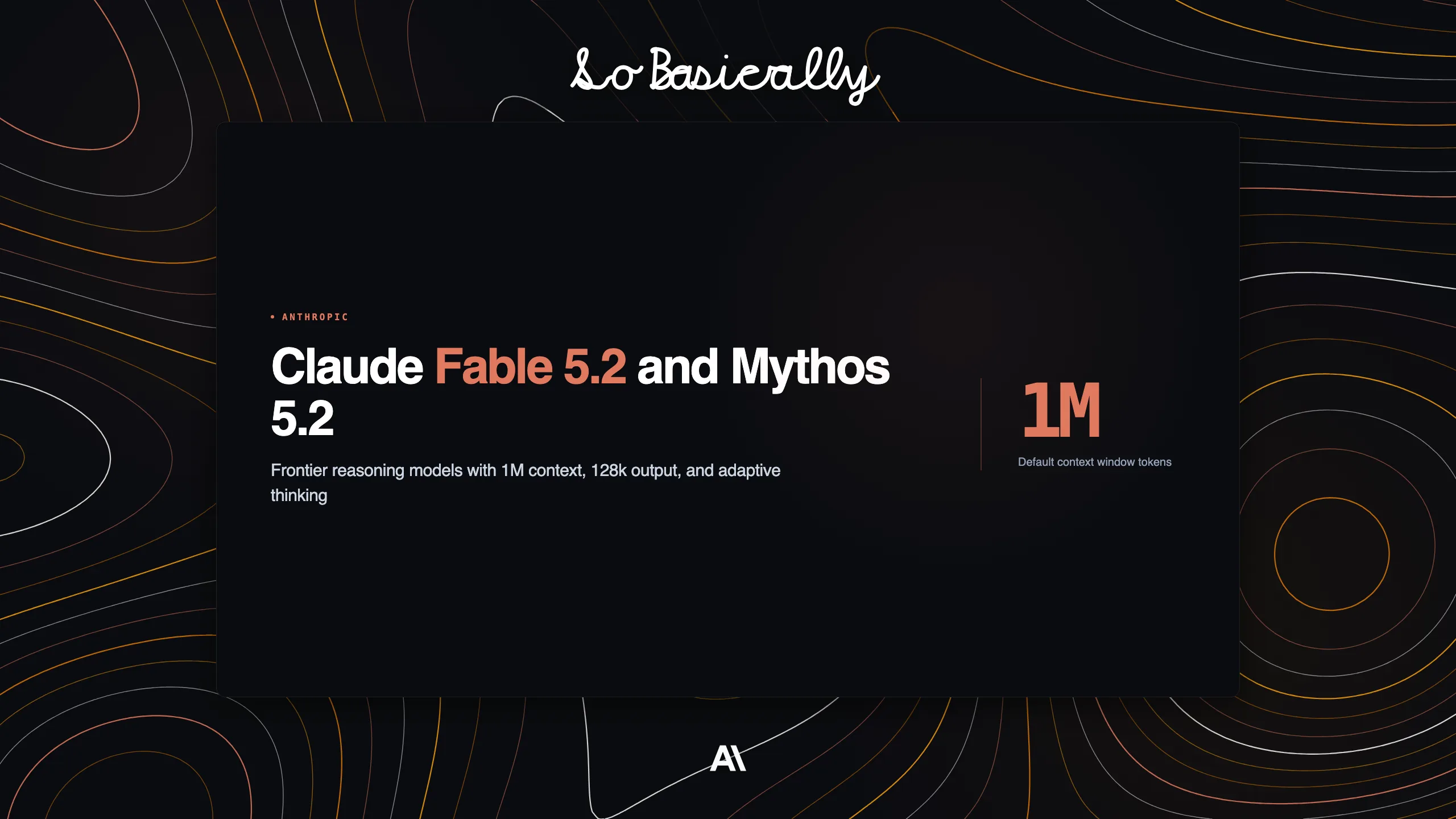
Decision brief card for Anthropic unveils Claude Fable 5.2 and Claude Mythos 5.2 models

Anthropic unveils Claude Fable 5.2 and Claude Mythos 5.2 models

What happened.Anthropic released Claude Fable 5.2 and Claude Mythos 5.2. The frontier models are engineered for long-horizon software engineering and scientific research.

Why it matters.Frontier reasoning models are shifting from conversational chat toward persistent engineering agents. Lowering token costs while expanding context windows to one million tokens makes sustained autonomous agent loops practical for production software teams.

  • Context capacity: Both models feature a default one-million-token context window paired with a maximum output limit of 128,000 tokens.
  • Compute economics: Standard pricing dropped to eight dollars per million input tokens and forty dollars per million output tokens, generating outputs thirty percent faster than version 5.1.
  • Access tiers: Fable 5.2 provides standard safeguards, while Mythos 5.2 grants unmitigated access strictly to organizations verified through specialized vetting programs.
  • Benchmark evaluations: The architecture scored 83.5 percent on BenchCAD 2.1 and 69 percent on Diode PCB Gym during prerelease testing.
  • Agentic execution: Engineers coordinated more than 1,000 parallel subagents over eight days to design an experimental operating system prototype.
Official Source:Anthropic
Decision brief card for Anthropic unveils Claude Fable 5.2 and Claude Mythos 5.2 models
↳Continues: Anthropic demonstrates Claude designing working electronic prototypes end-to-end
Read Brief
Source:Anthropic (opens in a new tab)
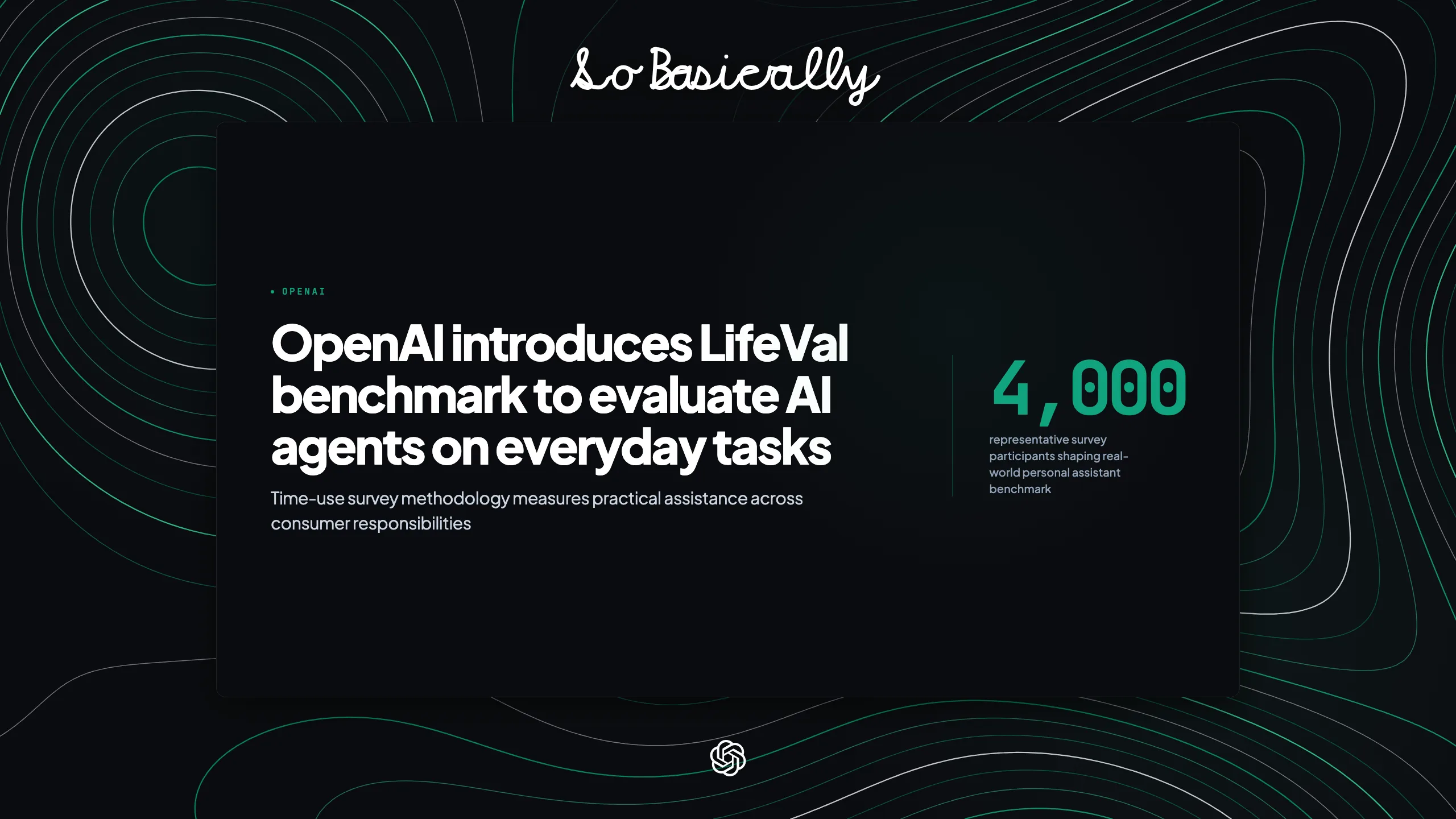
Decision brief card for OpenAI introduces LifeVal benchmark to evaluate AI agents on everyday tasks

OpenAI introduces LifeVal benchmark to evaluate AI agents on everyday tasks

What happened.OpenAI introduced LifeVal, an evaluation benchmark measuring how effectively autonomous AI agents assist people with practical consumer responsibilities.

Why it matters.Traditional academic evaluations measure code generation and trivia recall rather than real-world task execution. Standardizing agent performance against daily time-use burdens provides software founders with objective benchmarks for autonomous customer assistance workflows.

  • Empirical baseline: The benchmark compiles tasks using data from the American Time Use Survey and the Multinational Time Use Study.
  • Survey methodology: Researchers gathered responses from nearly 4,000 demographically representative individuals to identify high-friction daily challenges.
  • Task categories: Test environments evaluate multi-step errands across childcare planning, household budgeting, healthcare logistics, and government paperwork.
  • Internal progress: OpenAI confirmed it used LifeVal over the previous year to guide agentic improvements across consecutive model generations.
Official Source:OpenAI
Decision brief card for OpenAI introduces LifeVal benchmark to evaluate AI agents on everyday tasks
Read Brief
Source:OpenAI (opens in a new tab)
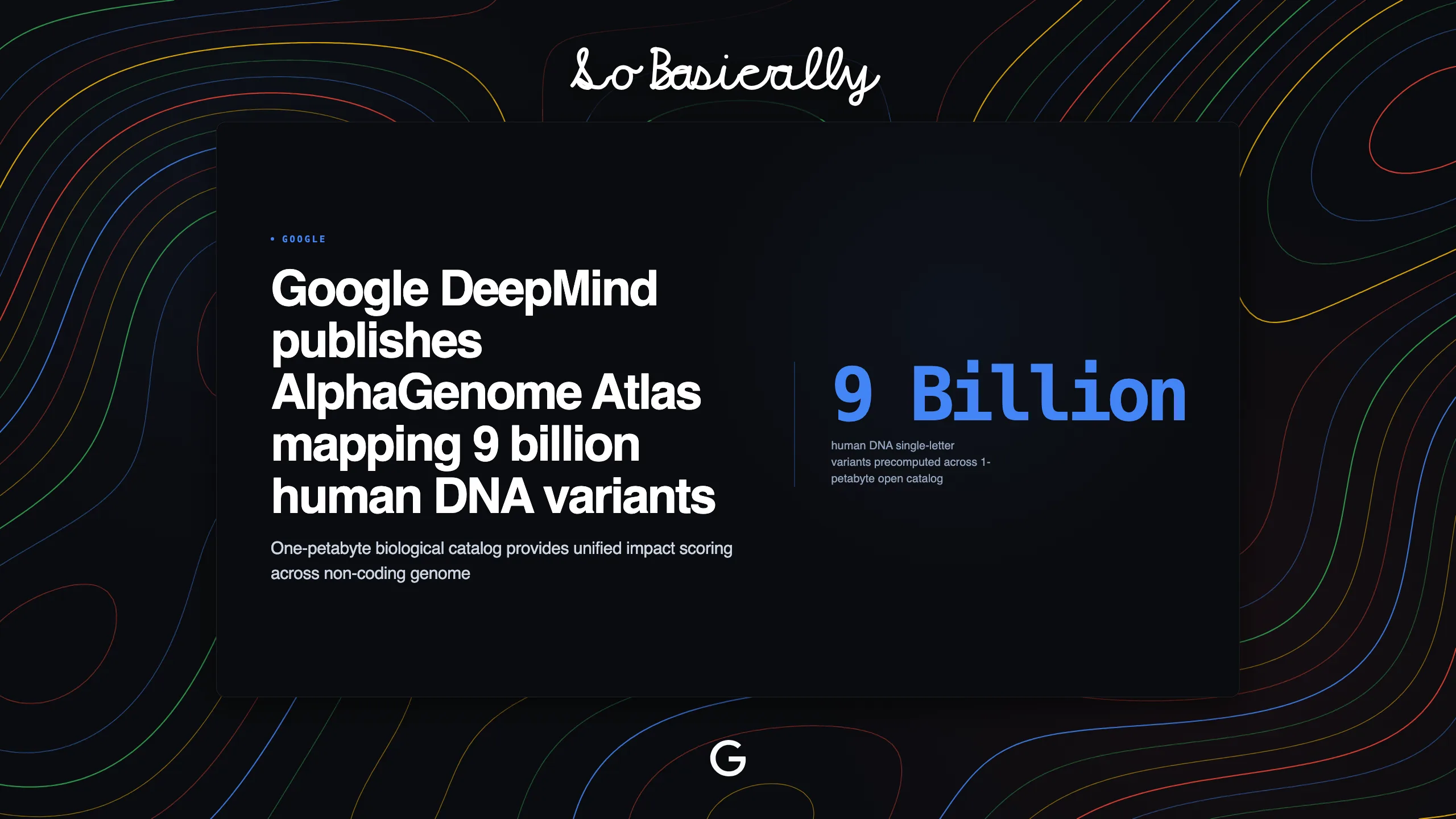
Decision brief card for Google DeepMind publishes AlphaGenome Atlas mapping 9 billion human DNA variants

Google DeepMind publishes AlphaGenome Atlas mapping 9 billion human DNA variants

What happened.Google DeepMind released the AlphaGenome Atlas, a one-petabyte biological catalog predicting the molecular consequences of nine billion possible single-letter genetic variations across the human genome.

Why it matters.Interpreting the non-coding ninety-eight percent of the human genome has historically required years of targeted wet-lab mutagenesis. Distributing precomputed variant scores across petabyte scales allows medical researchers to screen patient genomes for pathogenic mutations without local supercomputing clusters.

  • Genomic coverage: The open database maps predictions across protein-coding regions and the non-coding genetic sequences that regulate cellular gene expression.
  • Unified scoring: The platform introduces the AlphaGenome Variant Impact score, combining regulatory predictions with AlphaMissense protein mutation models into a unified metric.
  • Academic access: DeepMind published the complete dataset alongside public query interfaces, application programming interfaces, and automated workflows without subscription fees.
  • Clinical research: Geneticists can use precomputed scores to prioritize rare non-coding mutations responsible for cryptic splicing errors in rare diseases.
Official Source:Google DeepMind
Decision brief card for Google DeepMind publishes AlphaGenome Atlas mapping 9 billion human DNA variants
Read Brief
Source:Google DeepMind (opens in a new tab)
Decision brief card for NVIDIA expands physical AI collaborations across South Korean industrial leaders

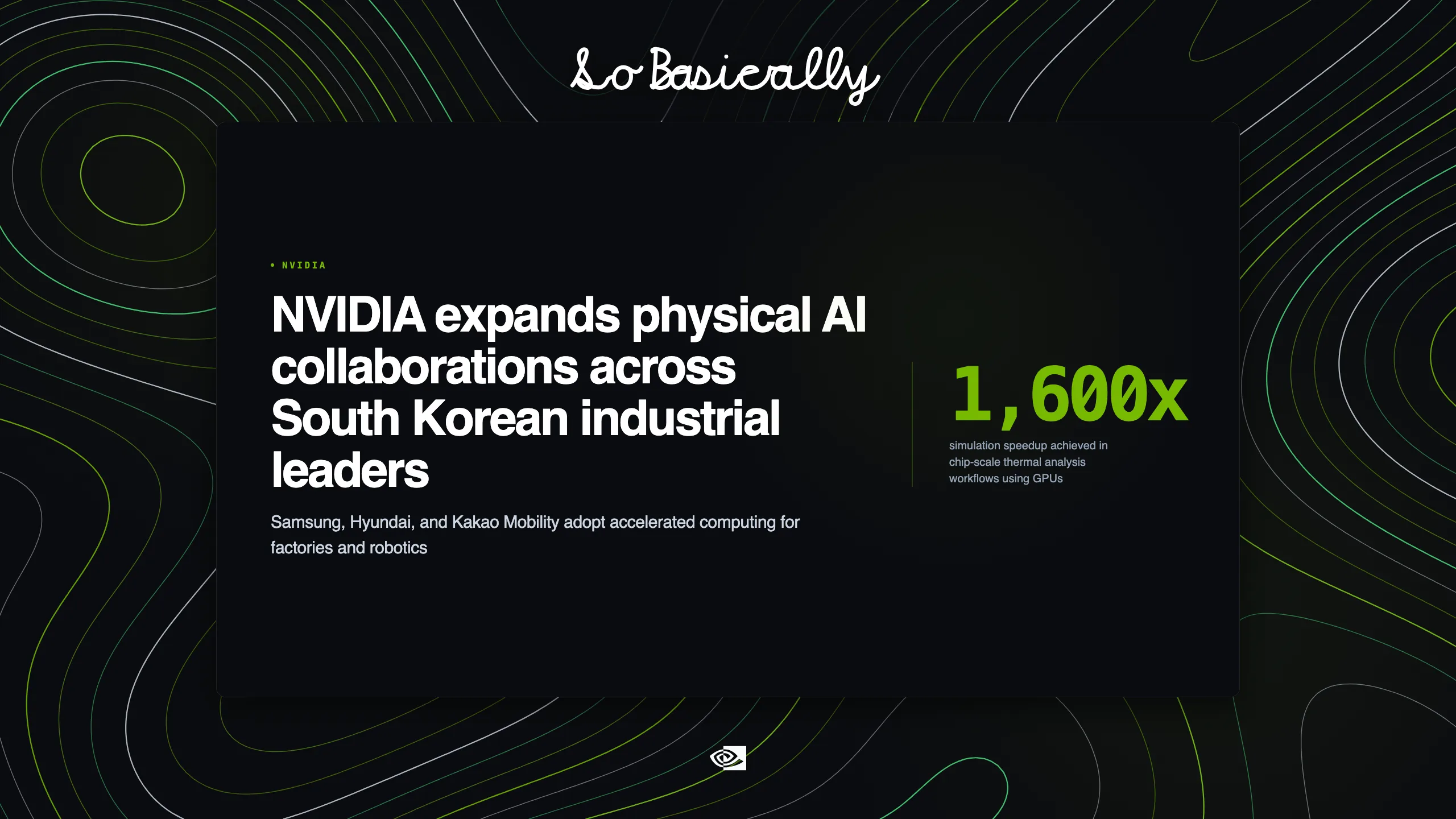
NVIDIA expands physical AI collaborations across South Korean industrial leaders

What happened.NVIDIA expanded strategic engineering partnerships across South Korea to deploy accelerated computing and physical AI platforms across industrial manufacturing.

Why it matters.Transitioning autonomous systems from software agents into physical hardware requires massive spatial simulation and digital twin pipelines. Partnering with major industrial conglomerates establishes reference architectures for operating autonomous robots across heavy manufacturing.

  • Semiconductor simulation: Samsung Electronics adopted cuISS, cuDSS, and PhysicsNeMo libraries, accelerating chip-scale thermal analysis workflows by up to 1,600 times.
  • Automotive robotics: Hyundai Motor Group integrated digital twin environments to simulate assembly line robotics hundreds of thousands of times faster than real time.
  • Autonomous transport: Kakao Mobility partnered with NVIDIA to advance Level 4 autonomous vehicle software architectures for urban transit.
  • Factory automation: Korean electronics manufacturers deployed NVIDIA Isaac and Omniverse tools to establish continuous data flywheels across smart manufacturing plants.
Official Source:NVIDIA Blog
Decision brief card for NVIDIA expands physical AI collaborations across South Korean industrial leaders
Read Brief
Source:NVIDIA Blog (opens in a new tab)
Decision brief card for Microsoft accelerates silicon design using custom Azure Cobalt 200 processors

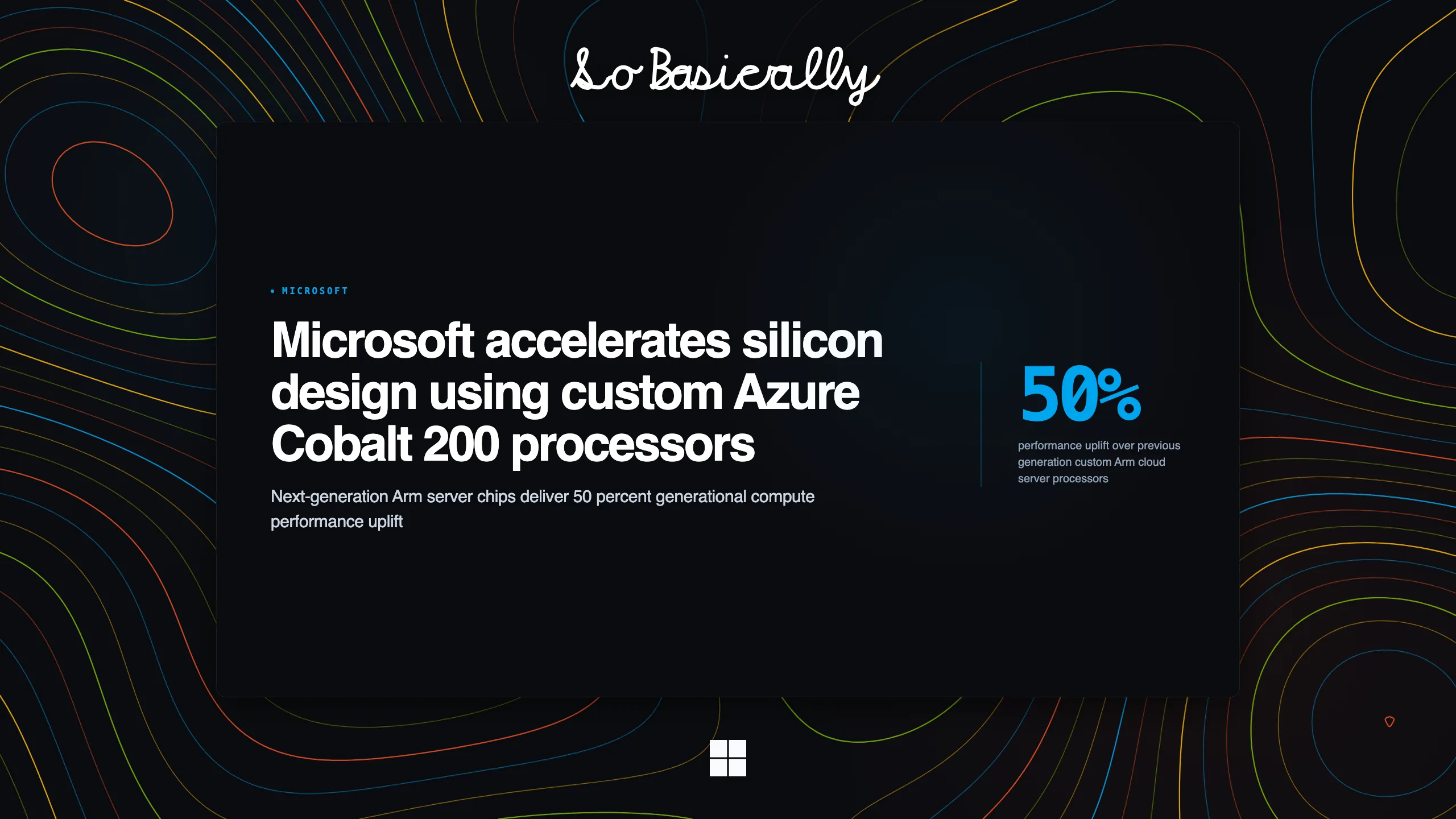
Microsoft accelerates silicon design using custom Azure Cobalt 200 processors

What happened.Microsoft deployed custom Azure Cobalt 200 processors to accelerate electronic design automation workloads and scale cloud infrastructure for autonomous reasoning agents.

Why it matters.Autonomous AI agents execute sustained sequences of reasoning loops that strain memory bandwidth and server-side compute economics. Deploying proprietary Arm silicon across cloud datacenters reduces operating costs while optimizing server performance for high-density agent workloads.

  • Architectural uplift: Built on the Arm Neoverse CSS V3 platform, the processor delivers up to 50 percent higher performance than the previous Cobalt 100.
  • Silicon engineering: Microsoft uses the processors internally to run electronic design tools, achieving performance speedups up to four times over earlier hardware.
  • Workload targeting: The custom silicon is engineered to host high-concurrency database queries, web tier microservices, and sequential agent reasoning loops.
  • Datacenter efficiency: Integrated power management and memory safety defenses enable cloud operators to maximize rack density while preventing hardware faults.
Official Source:Microsoft Azure Blog
Decision brief card for Microsoft accelerates silicon design using custom Azure Cobalt 200 processors
Read Brief
Source:Microsoft Azure Blog (opens in a new tab)
Decision brief card for Meta releases SAM 3 with promptable concept segmentation for open-vocabulary tracking

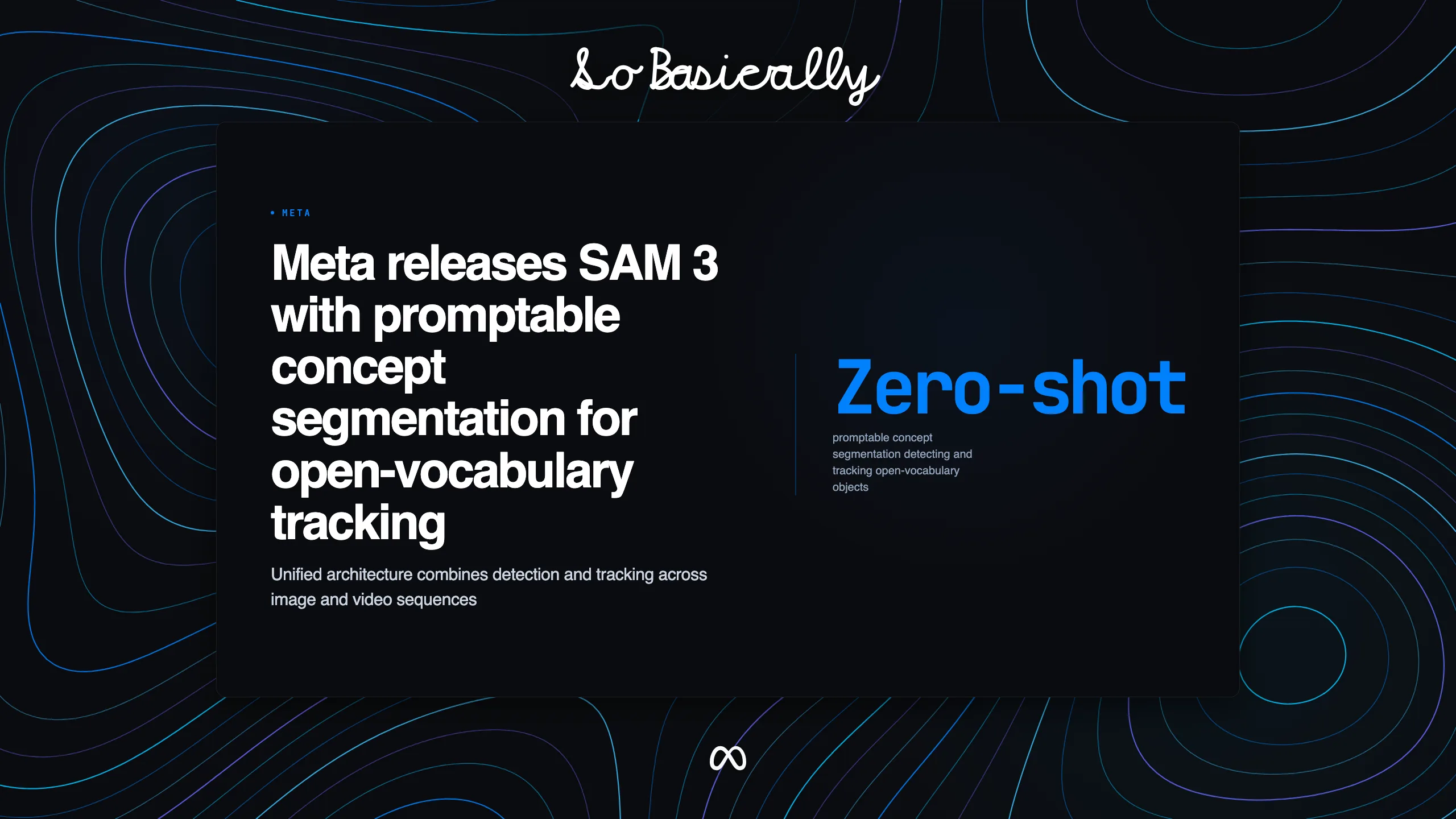
Meta releases SAM 3 with promptable concept segmentation for open-vocabulary tracking

What happened.Meta introduced Segment Anything Model 3, uniting visual detection and temporal tracking into a single architecture driven by open-vocabulary text phrases and image exemplars.

Why it matters.Traditional segmentation models require manual bounding boxes or per-frame clicks to follow dynamic items across video feeds. Combining open-vocabulary concept detection with temporal tracking gives robotics and spatial computing systems continuous object awareness without retraining on custom labels.

  • Concept prompting: Users can detect and segment every instance of an object category across video clips by supplying natural language descriptions.
  • Shared backbone: The architecture pairs an image detection head with a temporal memory tracker over a single shared visual perception trunk.
  • Decoupled presence: A specialized presence head distinguishes object existence from spatial boundary localization to eliminate false positives in crowded frames.
  • Open resources: Meta released model checkpoints under a permissive research license alongside the Segment Anything with Concepts evaluation suite.
Official Source:Meta AI
Decision brief card for Meta releases SAM 3 with promptable concept segmentation for open-vocabulary tracking
Read Brief
Source:Meta AI (opens in a new tab)
Decision brief card for Zep AI introduces Zep Agent Skills compiling procedural memory from verified execution traces

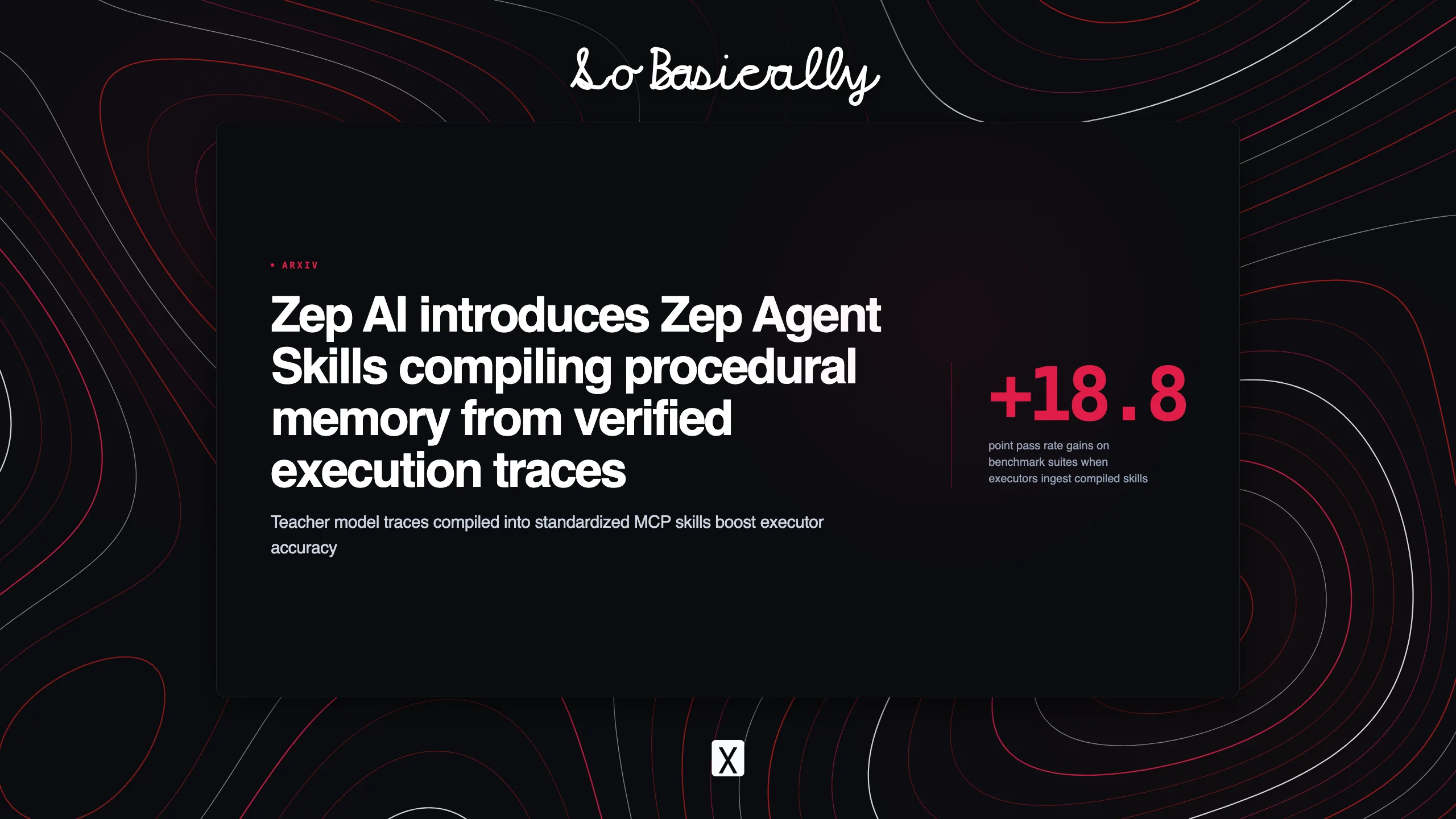
Zep AI introduces Zep Agent Skills compiling procedural memory from verified execution traces

What happened.Zep AI researchers published an architecture that extracts procedural memory from verified agent execution traces, converting successful tool runs into reusable skill packages.

Why it matters.Long-running agents frequently repeat expensive discovery steps across distinct runtime sessions. Compiling verified trajectories into structured procedural skills allows engineering teams to transfer problem-solving strategies across model tiers without continuous fine-tuning runs.

  • Trace compilation: An automated pipeline separates reflection and curation stages to transform raw trajectory logs into structured skill libraries.
  • Open standard: The compiled packages adopt the open Agent Skills format, allowing agents to discover capabilities over the Model Context Protocol.
  • Admission gates: Skills undergo validation checks and performance-based search ranking before entering production agent memory indices.
  • Benchmark results: Distributing skills compiled from teacher models lifted the pass rate of smaller executor models by up to 18.8 percentage points.
Official Source:arXiv
Decision brief card for Zep AI introduces Zep Agent Skills compiling procedural memory from verified execution traces
Read Brief
Source:arXiv (opens in a new tab)
CANDIDATE INTELLIGENCE · UNVERIFIED LEADS

The Discovery Wire · Unverified Attention Signals

Candidate storylines identified across developer channels. Under newsroom canon, attention never establishes fact; these leads remain quarantined until supported by Tier 1 official records.

DEVELOPER WIRE

ByteDance open-sources Axion 1.0 agent foundation models with simplified GRPO recipe

Open-weights 35B and 122B parameter Mixture-of-Experts models trained using two-stage supervised fine-tuning and asynchronous GRPO. Moved to watchlist following promotion of breaking Claude Fable 5.2 and Claude Mythos 5.2 foundation model release.

STATUS:Awaiting official documentation or verification criteria.
DEVELOPER WIRE

OpenAI lists ChatGPT Enterprise on AWS Marketplace to streamline enterprise procurement

Enterprise AI suite available through AWS billing to count toward existing cloud commitments. Kept on watchlist pending broader independent billing validation.

STATUS:Awaiting official documentation or verification criteria.
DEVELOPER WIRE

Anthropic evaluates multi-agent trading and covert sabotage in Project EVE

Empirical study evaluating autonomous Claude agents inside persistent virtual economies. Moved to watchlist following promotion of breaking Scion version control architecture release.

STATUS:Awaiting official documentation or verification criteria.
DEVELOPER WIRE

OpenAI patches 948 Linux kernel vulnerabilities with autonomous pipeline

Cybersecurity pipeline validated and generated patches for local privilege escalation flaws in Linux kernel. Moved to watchlist following promotion of breaking LifeVal evaluation benchmark release.

STATUS:Awaiting official documentation or verification criteria.
DEVELOPER WIRE

Google debuts TPU 8tx and 8i Max accelerators for agentic workloads

Eighth-generation custom silicon family designed for long-running autonomous agent workloads. Moved to watchlist following promotion of breaking AlphaGenome Atlas publication.

STATUS:Awaiting official documentation or verification criteria.
DEVELOPER WIRE

Anthropic demonstrates Claude designing working electronic prototypes end-to-end

Research evaluating Claude generating breadboard schematics and circuit board manufacturing files. Moved to watchlist following promotion of breaking Scion monorepo migration.

STATUS:Awaiting official documentation or verification criteria.
DEVELOPER WIRE

Google releases Gemini Omni 1.2 Flash with synchronized audio

Native audio-visual streaming foundation model processing live microphone and camera inputs. Moved to watchlist following promotion of breaking AlphaGenome Atlas announcement.

STATUS:Awaiting official documentation or verification criteria.
DEVELOPER WIRE

Microsoft deploys Azure Failure Prediction to live-migrate fragile nodes

Predictive hardware health models forecasting server failures across Azure datacenters. Moved to watchlist following promotion of breaking Azure Cobalt 200 silicon deployment.

STATUS:Awaiting official documentation or verification criteria.
DEVELOPER WIRE

Meta pauses commercial terms update following web scraping backlash

Policy revision regarding crawler data rights across developer APIs. Moved to watchlist following promotion of breaking SAM 3 foundation model release.

STATUS:Awaiting official documentation or verification criteria.
DEVELOPER WIRE

NVIDIA, Rebellions, and SK Telecom partner on NVLink Fusion sovereign AI

Partnership expanding sovereign AI infrastructure and rack-scale inference across South Korea. Moved to watchlist following promotion of breaking industrial physical AI deployment.

STATUS:Awaiting official documentation or verification criteria.
DEVELOPER WIRE

Researchers release MCPHallu to benchmark agent failures on MCP servers (arXiv:2611.07689)

Benchmark testing frontier models across isolated tasks to isolate branch collapse and context forgetting. Kept on watchlist pending serving harness replication.

STATUS:Awaiting official documentation or verification criteria.
DEVELOPER WIRE

Researchers formulate EvoMemState to resolve memory conflicts in agents (arXiv:2611.03743)

Formal memory framework clustering contradictory memories across multi-turn agent chains. Held on watchlist pending commercial runtime integration.

STATUS:Awaiting official documentation or verification criteria.
DEVELOPER WIRE

Researchers formulate SwarmEvolve for latent agent evolutionary discovery (arXiv:2611.08483)

Swarms communicating via latent Key-Value cache activations solve algorithmic discovery benchmarks in under eight minutes. Held on watchlist pending production serving framework integration.

STATUS:Awaiting official documentation or verification criteria.
DEVELOPER WIRE

United States voters approve moratoriums on AI data centers across forty municipal ballots

Local elections approved restrictions on data center power allocations across ten states citing electrical grid strains. Held on watchlist pending state utility commission regulatory rulings.

STATUS:Awaiting official documentation or verification criteria.
DEVELOPER WIRE

Anthropic advances Form S-1 registration statement under Securities and Exchange Commission review

Updated pre-IPO disclosures detailing compute obligations. Held on watchlist pending effective registration statement.

STATUS:Awaiting official documentation or verification criteria.
DEVELOPER WIRE

OpenAI closes eleven billion dollar credit facility at one point two five trillion dollar valuation

Syndicated funding round concluded with institutional backers. Held on watchlist pending official equity filings.

STATUS:Awaiting official documentation or verification criteria.
DEVELOPER WIRE

Researchers formulate adversarial speculative reasoning to improve long-horizon coding agents (arXiv:2611.05345)

Training draft models to fail at critical decision branches forces target models to sample tokens under lowest noise conditions. Held on watchlist pending production integration.

STATUS:Awaiting official documentation or verification criteria.
DEVELOPER WIRE

Google Cloud previews managed GKE Workspaces for distributed machine learning training

Technical preview for developer workspaces integrated directly with Kubernetes clusters and TPU accelerators. Kept on watchlist pending general availability release.

STATUS:Awaiting official documentation or verification criteria.