Skip to content
SoBasicallyVOL. I · RUN 2026-11-06-cybersecurity-advisories
ARCHIVAL EDITION2026-11-06-cybersecurity-advisories8 STORIES · 1663 WORDS
← Back to Archive

CISA adds Ivanti Connect Secure zero-days to KEV catalog

Topographic elevation contour card for CISA adds Ivanti Connect Secure zero-days to KEV catalog

What happened.The Cybersecurity and Infrastructure Security Agency added two actively exploited Ivanti Connect Secure zero-day vulnerabilities to its Known Exploited Vulnerabilities catalog.

Why it matters.Secure access gateways terminate remote sessions at network perimeters. When threat actors chain privilege escalation flaws with file upload defects to achieve root access while bypassing integrity checkers, perimeter defenses fail silently. Security operations teams must conduct memory forensics and inspect active directories for compromised administrator credentials. Infrastructure operators should deploy network-level packet inspection around VPN appliances rather than relying solely on built-in diagnostic tools.

Read Full Brief →
Source:CISA (opens in a new tab)
VERIFIED STORIES IN THIS EDITION7 STORIES
Decision brief card for GitHub Advisories reports OpenSSH auth bypass on musl libc

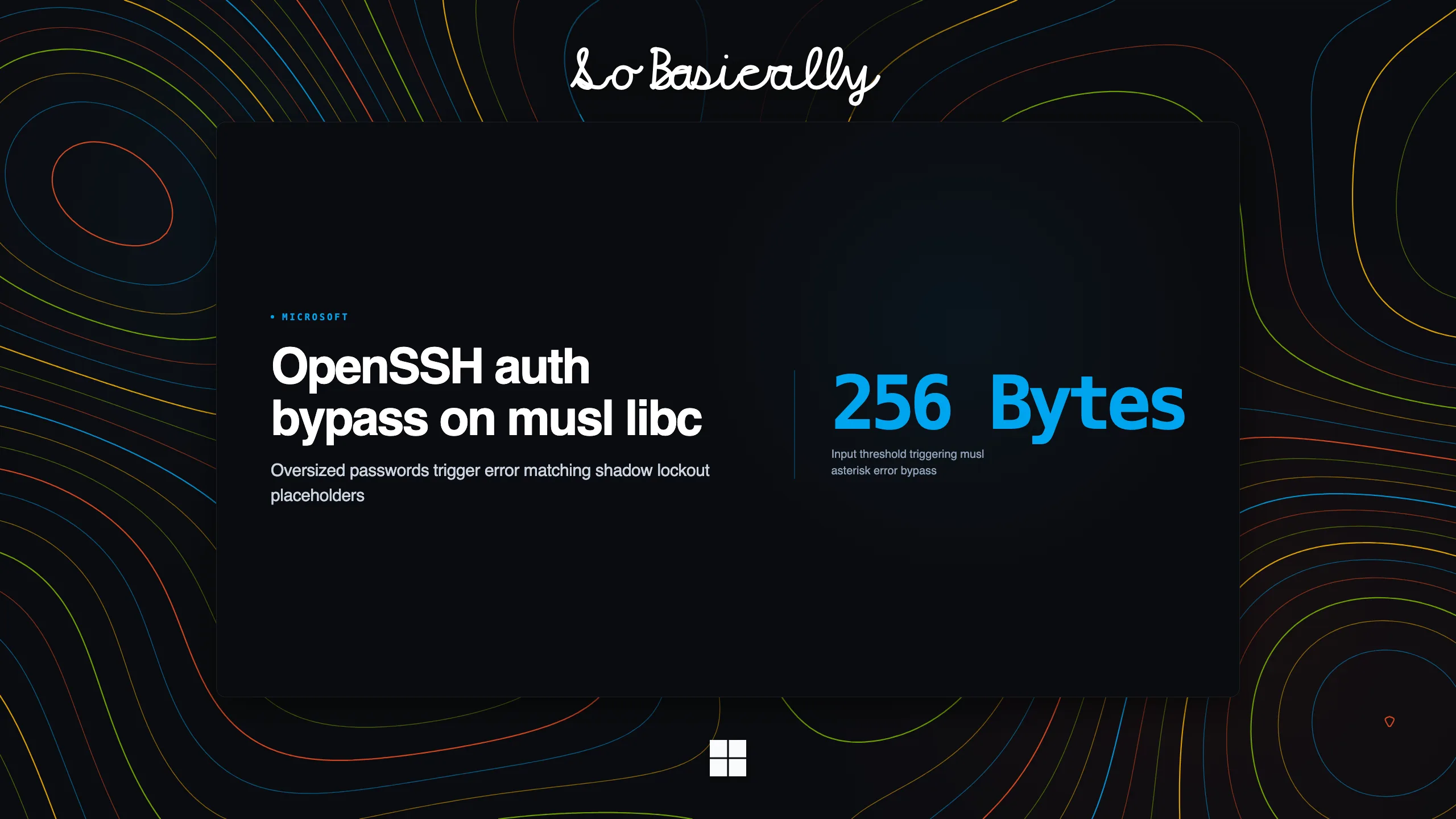
GitHub Advisories reports OpenSSH auth bypass on musl libc

What happened.The GitHub Advisory Database and OpenSSH maintainers published a critical advisory detailing an authentication bypass flaw affecting OpenSSH deployments running on the musl C library.

Why it matters.Lightweight container base images like Alpine Linux run across thousands of microservices and pipelines. When library error codes match lockout tokens, locked accounts permit remote password logins. Platform engineers running Alpine containers must update OpenSSH packages and restart the SSH daemon immediately. Security teams should enforce key authentication across bastions to neutralize password handling flaws.

  • Vulnerability mechanics: Tracked as CVE-2026-123158, the defect occurs when OpenSSH invokes the musl crypt function for accounts without usable password hashes.
  • Password parsing defect: When submitted passwords exceed 256 bytes, musl returns an asterisk error value that matches the asterisk lockout placeholder in shadow files.
  • Affected distributions: The weakness impacts Linux distributions utilizing musl libc without PAM enabled, notably standard Alpine Linux container and server images.
  • Remediation release: Maintainers published OpenSSH Portable 10.6p2 and backported distribution packages, advising teams without immediate patch access to disable password authentication.
Official Source:GitHub Security Advisories
Decision brief card for GitHub Advisories reports OpenSSH auth bypass on musl libc
Read Brief
Source:GitHub Security Advisories (opens in a new tab)
Decision brief card for Cisco patches high-severity RCE flaw in UCS Central Software

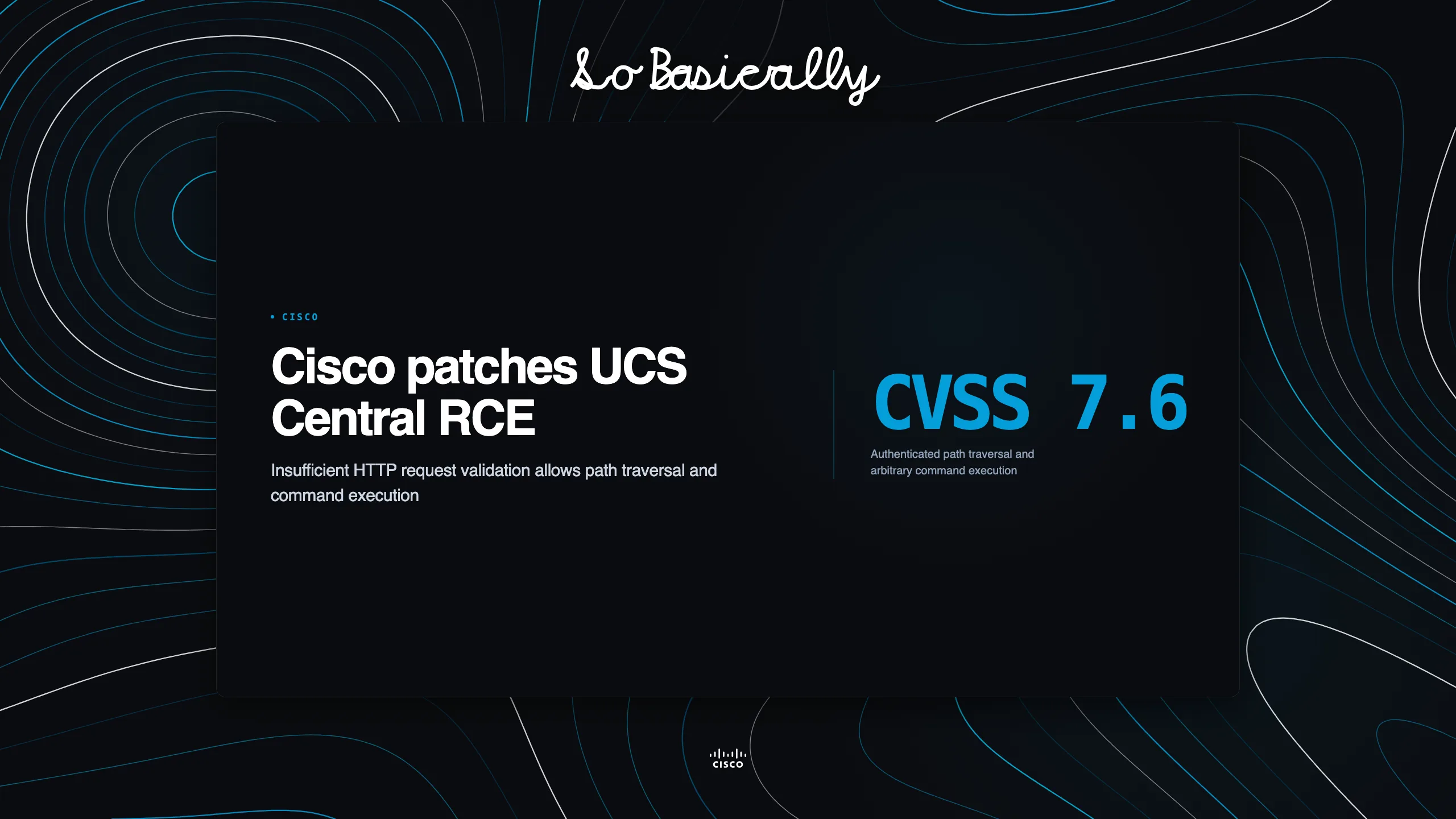
Cisco patches high-severity RCE flaw in UCS Central Software

What happened.Cisco published security advisory cisco-sa-cucs-rce-LzHSFRDQ detailing a high-severity remote code execution and path traversal vulnerability in UCS Central Software.

Why it matters.Server management platforms coordinate compute clusters and hardware fabric configurations across private cloud facilities. When management consoles allow low-privilege users to traverse paths and run system commands, compromised employee credentials yield infrastructure control. Data center engineers must apply official Cisco UCS Central updates across all management appliances immediately. Security operations teams should review HTTP request logs for directory traversal signatures around management endpoints.

  • Vulnerability mechanics: Tracked as CVE-2026-76506 with a CVSS score of 7.6, insufficient input validation in HTTP requests permits path traversal within web management interfaces.
  • Exploitation impact: Authenticated remote attackers with valid low-privilege credentials can execute arbitrary operating system commands and write files across the filesystem.
  • Information leakage: Exploitation allows attackers to read sensitive configuration files and exfiltrate internal system telemetry from managed server pools.
  • Remediation status: Cisco released software updates addressing the defect, confirming that no configuration workarounds exist to mitigate vulnerable deployments.
Official Source:Cisco Security Advisories
Decision brief card for Cisco patches high-severity RCE flaw in UCS Central Software
Read Brief
Source:Cisco Security Advisories (opens in a new tab)
Decision brief card for Zyxel patches out-of-bounds write zero-day in GS1900 switches

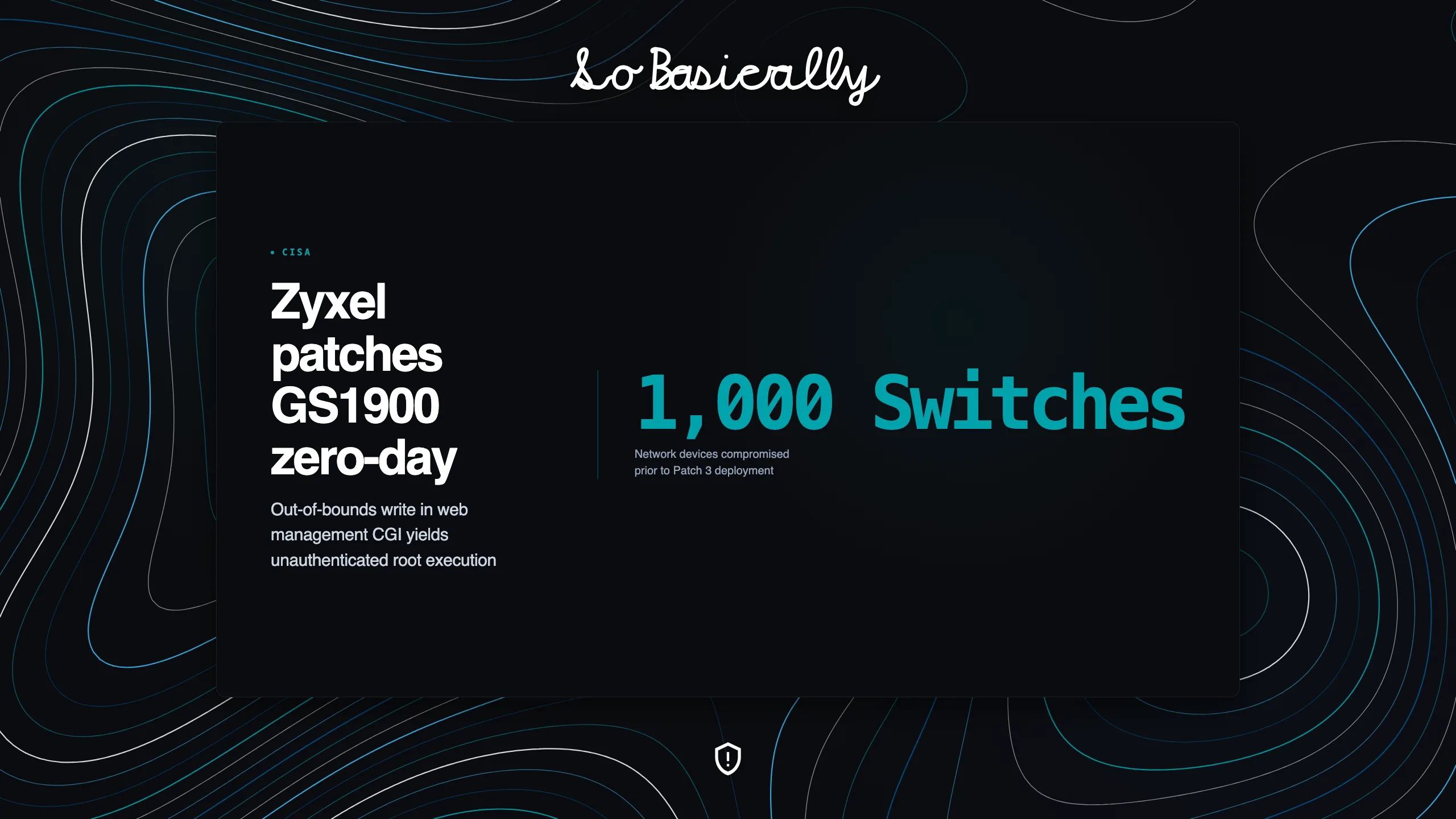
Zyxel patches out-of-bounds write zero-day in GS1900 switches

What happened.Zyxel and cybersecurity agencies published an urgent advisory detailing an actively exploited out-of-bounds write zero-day vulnerability in GS1900 series smart managed switches.

Why it matters.Smart managed network switches direct local network traffic and enforce VLAN isolation across enterprise offices. When network switch web interfaces harbor unauthenticated remote command execution flaws, attackers gain root privileges without passing edge firewalls. Network engineers must flash Patch 3 firmware updates across all GS1900 switches immediately. Infrastructure teams should remove administrative management consoles from public internet routing and enforce dedicated management VLANs.

  • Vulnerability mechanics: Tracked as CVE-2026-107441 with a CVSS score of 8.8, an out-of-bounds write defect in the web management CGI interface permits unauthenticated remote code execution.
  • Active in-the-wild exploitation: Threat intelligence revealed threat actors exploited the flaw to compromise nearly 1,000 switches across dozens of countries to harvest configuration records.
  • Patch bypass context: The campaign evaded earlier June 2026 patches because the underlying vulnerable code path remained unaddressed in intermediate firmware releases.
  • Remediation release: Zyxel published Patch 3 firmware updates across 10 switch models, urging operators to restrict administrative web consoles from public routing.
Official Source:CISA
Decision brief card for Zyxel patches out-of-bounds write zero-day in GS1900 switches
Read Brief
Source:CISA (opens in a new tab)
Decision brief card for AWS patches archive extraction file write flaw in GluonTS

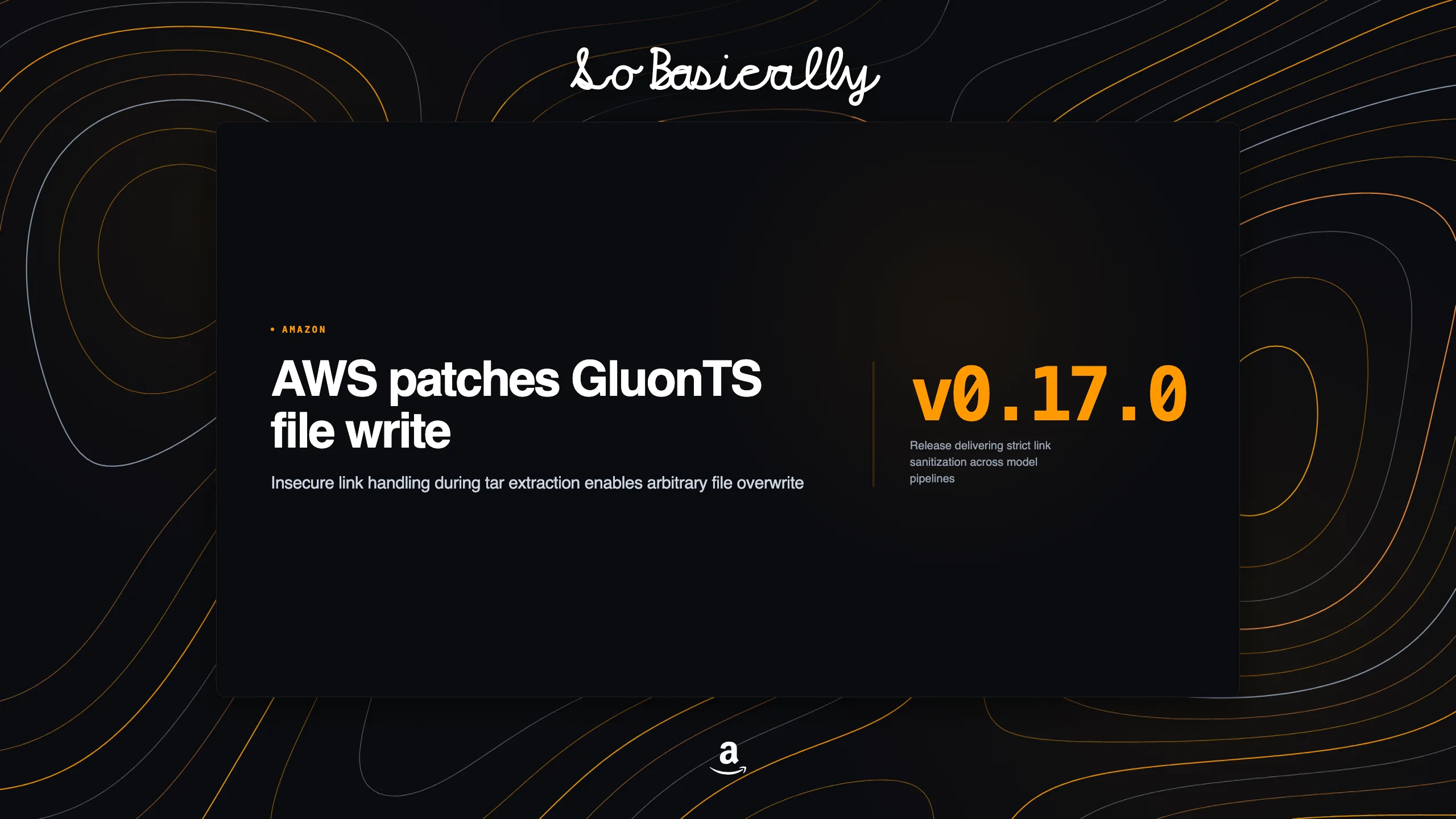
AWS patches archive extraction file write flaw in GluonTS

What happened.Amazon Web Services published security bulletin 2026-171-AWS detailing an arbitrary file write vulnerability during archive extraction in the open-source GluonTS library.

Why it matters.Machine learning pipelines automatically unpack datasets and pretrained model weights during distributed training runs. When archive extraction routines permit link-based directory traversal, untrusted model files overwrite system binaries and execution hooks. Machine learning engineers should upgrade GluonTS dependencies to version 0.17.0 across training containers. Platform teams must enforce read-only container root filesystems to prevent malicious archive extractions from modifying runtime binaries.

  • Vulnerability mechanics: Tracked as CVE-2026-119083, the flaw occurs when GluonTS processes untrusted tar archive packages containing symbolic or hard link targets.
  • Exploitation risk: Applications ingesting machine learning model artifacts or dataset archives can permit attackers to overwrite arbitrary files outside intended extraction directories.
  • Affected packages: The vulnerability impacts GluonTS releases prior to version 0.17.0 across time-series forecasting and deep learning modeling pipelines.
  • Remediation release: AWS published GluonTS 0.17.0 with strict link sanitization, recommending that machine learning engineers upgrade client and server dependencies.
Official Source:AWS Security Bulletins
Decision brief card for AWS patches archive extraction file write flaw in GluonTS
Read Brief
Source:AWS Security Bulletins (opens in a new tab)
Decision brief card for Citrix resolves critical VM breakout flaws in XenServer

Citrix resolves critical VM breakout flaws in XenServer

What happened.Citrix published security bulletin CTX697256 resolving critical host breakout and unauthenticated management network compromise flaws across XenServer virtualization platforms.

Why it matters.Virtualization hypervisors enforce hardware isolation between tenant virtual machines across multi-tenant hosting environments. When guest breakouts allow virtual machines to breach hypervisor boundaries, shared cloud infrastructure loses physical tenant isolation guarantees. Systems administrators operating XenServer clusters must apply latest channel updates across hosts and management appliances immediately. Network engineers should segment hypervisor management networks onto isolated out-of-band administration switches.

  • Vulnerability mechanics: Tracked as CVE-2026-98432 and CVE-2026-102703, the defects allow management network compromises and guest virtual machine breakouts.
  • Host compromise risk: Privileged users inside guest virtual machines can escape hypervisor isolation boundaries to execute code on the underlying virtualization host.
  • Management plane exposure: Unauthenticated attackers with management network reachability can compromise XenServer hosts and associated workload balancing appliances.
  • Affected platforms: The issues impact XenServer 8.4, XenServer 9, Workload Balancing versions prior to 2026.1.1, and Conversion Manager versions prior to 2026.2.0.
Official Source:Citrix Security Bulletins
Decision brief card for Citrix resolves critical VM breakout flaws in XenServer
Read Brief
Source:Citrix Security Bulletins (opens in a new tab)
Decision brief card for GitHub Advisories reports SSRF flaws in Apache OFBiz

GitHub Advisories reports SSRF flaws in Apache OFBiz

What happened.The GitHub Advisory Database and Apache Software Foundation published security advisories detailing request forgery and service dispatch vulnerabilities in Apache OFBiz.

Why it matters.Enterprise resource planning platforms coordinate customer records, warehouse inventory, and internal accounting databases. When public web endpoints permit server-side request forgery, remote adversaries leverage internal server trust to harvest cloud metadata credentials. Enterprise software engineers must upgrade Apache OFBiz deployments to version 24.09.08 immediately. Infrastructure teams should configure local firewall egress filters to block internal service engines from querying cloud metadata IP addresses.

  • Vulnerability mechanics: Tracked as CVE-2026-81828 and CVE-2026-71901, the defects affect the SurveyWrapper component and Sales Force Automation vCard import functions.
  • Request forgery impact: Unauthenticated remote attackers can exploit SurveyWrapper to force server-side HTTP requests against internal cloud metadata endpoints and databases.
  • Unauthorized service execution: Authenticated users manipulating vCard import parameters can override authorization controls to dispatch arbitrary internal business services.
  • Remediation release: Maintainers released Apache OFBiz 24.09.08 to resolve both flaws, advising organizations to retire older installations immediately.
Official Source:GitHub Security Advisories
Decision brief card for GitHub Advisories reports SSRF flaws in Apache OFBiz
Read Brief
Source:GitHub Security Advisories (opens in a new tab)
Decision brief card for Google patches zero-click telephony DoS flaw in Android

Google patches zero-click telephony DoS flaw in Android

What happened.Google published the November 2026 Android Security Bulletin addressing a critical zero-click remote denial-of-service flaw discovered in core telephony services.

Why it matters.Mobile operating systems provide foundational communication and authentication channels for workforce personnel and field operations. When telephony parsing components harbor zero-click crash defects, adversaries can remotely disable employee devices and two-factor authentication channels. Mobile fleet administrators should enforce automated distribution of security patch level 2026-11-05 across enterprise devices. Systems engineers must prepare out-of-band communication protocols for incident responders during cellular service denial events.

  • Vulnerability mechanics: Tracked as CVE-2026-58882, the defect resides in the WAP Push SMS packet decoding routine within the Android operating system framework.
  • Zero-click exploitation: Remote attackers knowing a target device phone number can deliver malformed SMS packets that crash telephony services without user interaction.
  • Emergency impact: Successful exploitation drops active voice connections, disrupts emergency 911 calling capabilities, and can force devices into recurring reboot cycles.
  • Remediation release: Google published operating system patches across security patch levels 2026-11-01 and 2026-11-05, urging carriers and vendors to expedite updates.
Official Source:Android Security Releases
Decision brief card for Google patches zero-click telephony DoS flaw in Android
Read Brief
Source:Android Security Releases (opens in a new tab)
CANDIDATE INTELLIGENCE · UNVERIFIED LEADS

The Discovery Wire · Unverified Attention Signals

Candidate storylines identified across developer channels. Under newsroom canon, attention never establishes fact; these leads remain quarantined until supported by Tier 1 official records.

DEVELOPER WIRE

Keycloak SAML HTTP-Redirect signature verification bypass (CVE-2026-117691 / GHSA-c85j-3hq2-q6wj)

Critical CVSS 9.1 improper verification of cryptographic signatures affecting Keycloak versions prior to 26.8.2. Inconsistency between percent-encoded parameter decoding during message processing and literal raw query matching during signature checks allows unauthenticated remote adversaries to bypass redirect signatures and achieve full federated account takeover.

STATUS:Awaiting official documentation or verification criteria.
DEVELOPER WIRE

Barracuda Networks appliance authorization bypass and command injection chain (CVE-2026-116606 & CVE-2026-111560)

Pre-authentication backup restore flaw chained with timezone command injection yielding root privileges across Email Security Gateways. Barracuda released firmware 9.4.0.030 and security patches (BNSF-40425, BNADC-16586, BNMA-32468, BNWF-60060, BNYF-24789) while NIST NVD confirmed CVSS 9.3 critical severity. Held on watchlist pending public forensic bulletins on active exploitation volumes.

STATUS:Awaiting official documentation or verification criteria.
DEVELOPER WIRE

WordPress Core TOCTOU race condition RCE (CVE-2026-119977)

Federal civilian agency remediation deadline under CISA Binding Operational Directive 26-04 reached on November 6, 2026, with active telemetry tracking exploitation probes targeting unpatched upgrade staging paths across versions 4.7 through 7.1.3.

STATUS:Awaiting official documentation or verification criteria.
DEVELOPER WIRE

GitLab CI/CD regular expression compiler exploitation campaign (CVE-2026-97229 / CVE-2026-110264)

Monitoring active threat actor campaigns targeting over 1,000 internet-exposed unpatched instances following federal KEV remediation deadlines.

STATUS:Awaiting official documentation or verification criteria.
DEVELOPER WIRE

Palo Alto Networks PAN-OS Brotli decoder out-of-bounds write (CVE-2026-111497)

Critical CVSS 9.2 buffer overflow in the Brotli decompression engine affecting PAN-OS firewalls (12.2, 12.1, 11.2) and Prisma Cloud Application Security Transporter Client during TLS traffic inspection. Hotfixes released across PAN-OS lines (12.2.4-h1, 12.1.7-h11, 11.2.10-h17) and Prisma Cloud 0.2.9.

STATUS:Awaiting official documentation or verification criteria.
DEVELOPER WIRE

Control Web Panel Linux stealth backdoor ("CWPdoor")

Malicious actors replacing legitimate `cwpsrv` Nginx binaries with custom backdoored executables across internet-exposed hosting panels, executing root commands via signed HTTP headers while suppressing logging.

STATUS:Awaiting official documentation or verification criteria.
DEVELOPER WIRE

Industrial refrigeration and cold chain monitoring controller cyberattacks

CISA, FBI, HHS, USDA, and DOT published a joint advisory warning of cyber actors targeting internet-accessible electronic temperature and refrigeration controllers across food, healthcare, and chemical distribution logistics.

STATUS:Awaiting official documentation or verification criteria.
DEVELOPER WIRE

Better Auth multi-vulnerability framework security release (v1.7.16 / v1.8.0-beta.5)

Reviewing 12 individual GitHub advisory disclosures addressing cross-purpose token verification and authentication bypasses across plugin lines.

STATUS:Awaiting official documentation or verification criteria.
DEVELOPER WIRE

PHP2Shell lateral exploitation tracking (CVE-2026-109618 / CVE-2026-109619)

Monitoring secondary attack vectors chaining PHP out-of-memory longjmp heap corruption against enterprise firewall management interfaces.

STATUS:Awaiting official documentation or verification criteria.