Skip to content
SoBasicallyVOL. I · RUN 2026-11-05-cybersecurity-advisories
ARCHIVAL EDITION2026-11-05-cybersecurity-advisories4 STORIES · 782 WORDS
← Back to Archive

CISA adds WordPress Core race condition RCE to Known Exploited Vulnerabilities catalog
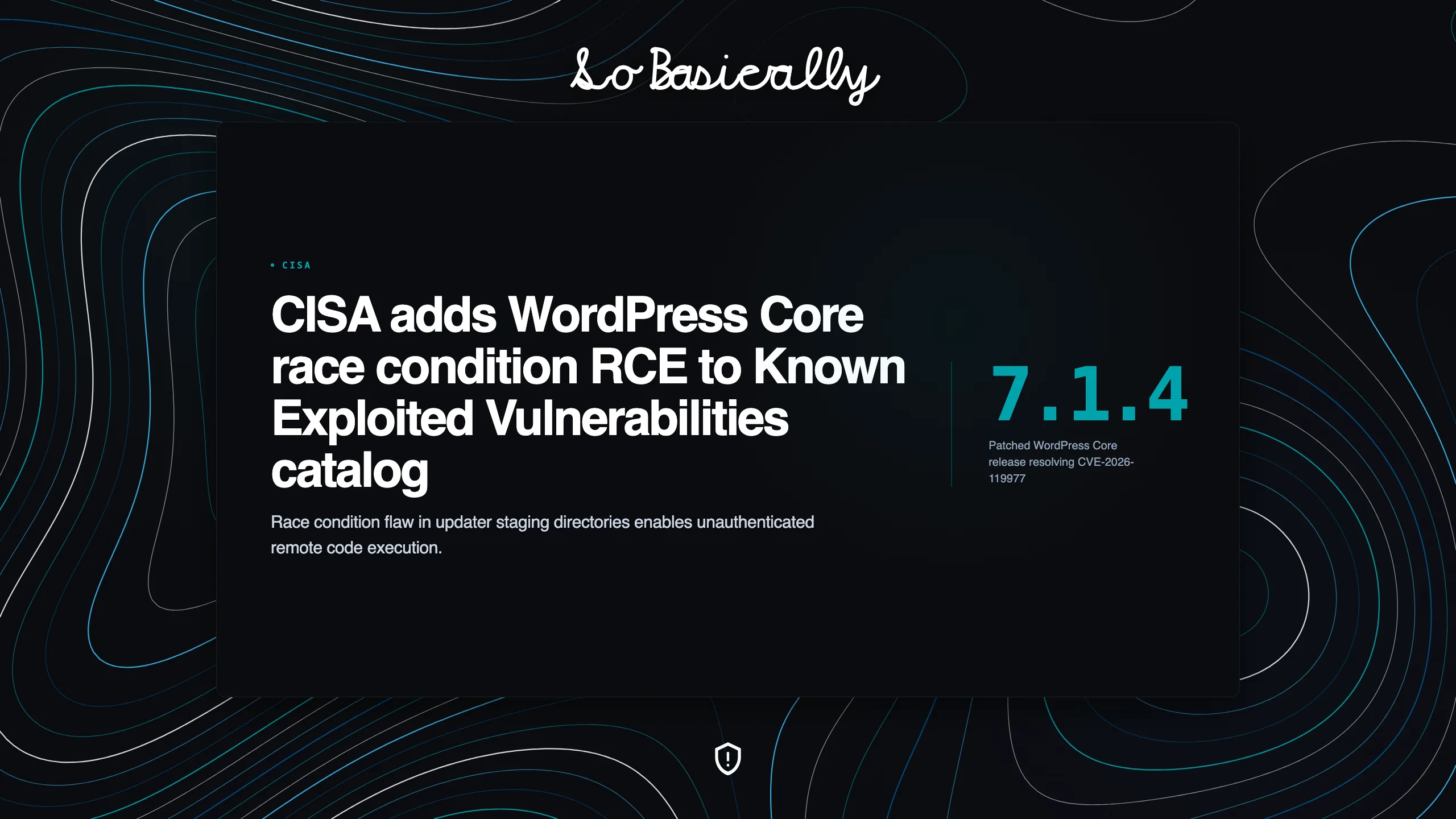
Topographic elevation contour card for CISA adds WordPress Core race condition RCE to Known Exploited Vulnerabilities catalog

What happened.The Cybersecurity and Infrastructure Security Agency added WordPress Core race condition vulnerability CVE-2026-119977 to its Known Exploited Vulnerabilities catalog after confirming active exploitation in the wild.

Why it matters.Content management platforms power critical enterprise documentation portals, web applications, and customer hubs. When core updater workflows expose temporary directories to unauthenticated remote attackers, perimeter controls fail during routine maintenance operations. Infrastructure engineers must verify that production sites run WordPress 7.1.4 or patched security backports immediately. Platform teams should restrict public web access to upgrade staging directories to stop automated exploitation scripts.
Read Full Brief →
Source:CISA (opens in a new tab)
VERIFIED STORIES IN THIS EDITION3 STORIES
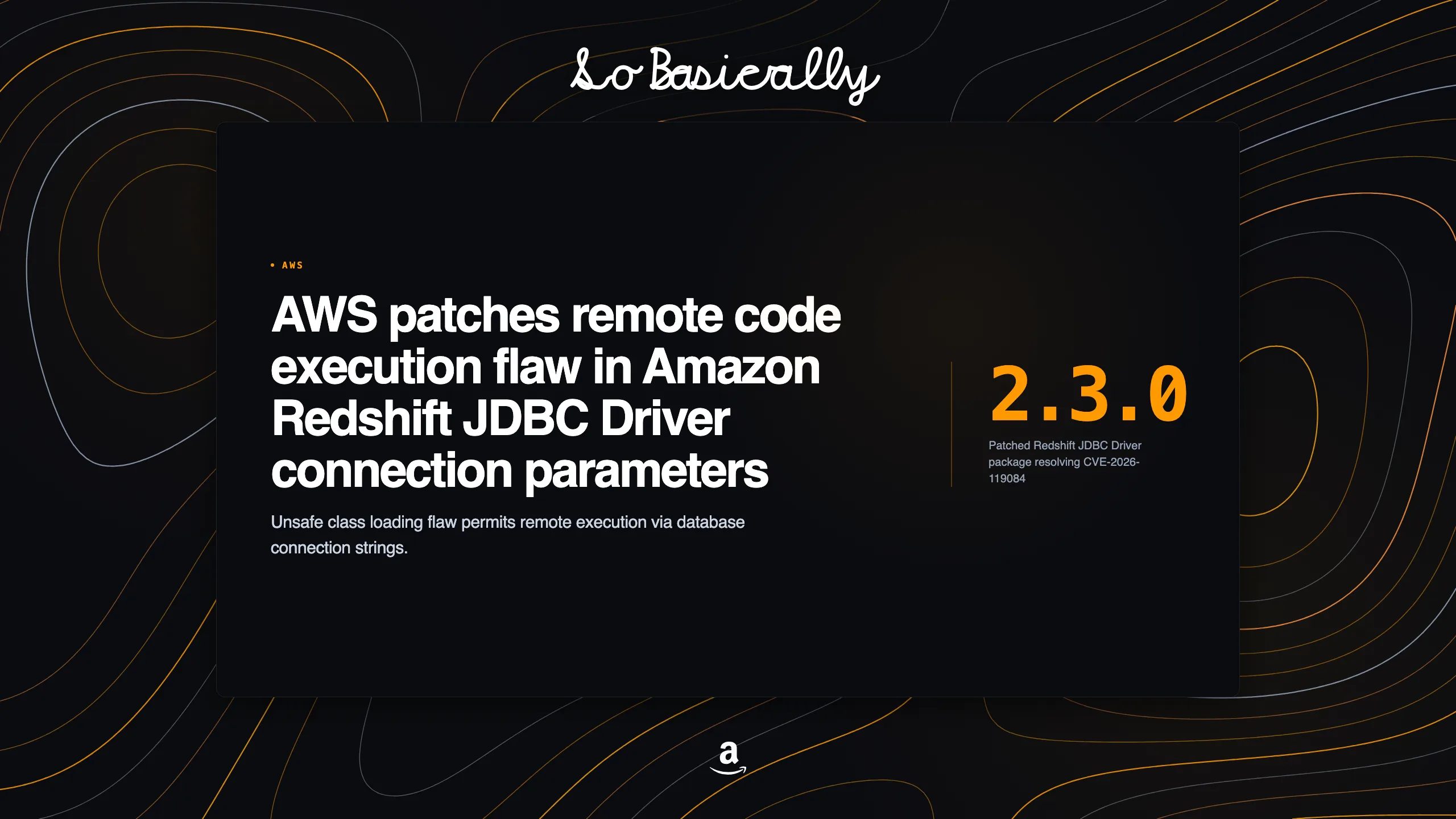
Decision brief card for AWS patches remote code execution flaw in Amazon Redshift JDBC Driver connection parameters

AWS patches remote code execution flaw in Amazon Redshift JDBC Driver connection parameters

What happened.Amazon Web Services published security bulletin 2026-168-AWS detailing a remote code execution vulnerability discovered in the Amazon Redshift JDBC Driver.

Why it matters.Data analytics pipelines rely on database drivers to ingest telemetry and query distributed analytical warehouses. When client drivers execute unverified classes during connection initialization, attackers can bridge SQL interfaces to achieve process execution. Engineering teams maintaining data pipelines should upgrade driver packages to version 2.3.0 without delay. Security engineers must enforce static connection configurations to ensure external users cannot inject connection parameters.

  • Vulnerability mechanics: Tracked as CVE-2026-119084, an unsafe class loading flaw allows arbitrary class instantiation when the driver processes connection URL parameters or credentials profiles.
  • Exploitation risk: Applications that construct database connection strings from untrusted inputs permit remote attackers to execute arbitrary code within the host JVM environment.
  • Remediation release: AWS released Amazon Redshift JDBC Driver version 2.3.0 across official distribution mirrors, advising software builders to replace vulnerable client dependencies.
Official Source:AWS Security Bulletins
Decision brief card for AWS patches remote code execution flaw in Amazon Redshift JDBC Driver connection parameters
Read Brief
Source:AWS Security Bulletins (opens in a new tab)
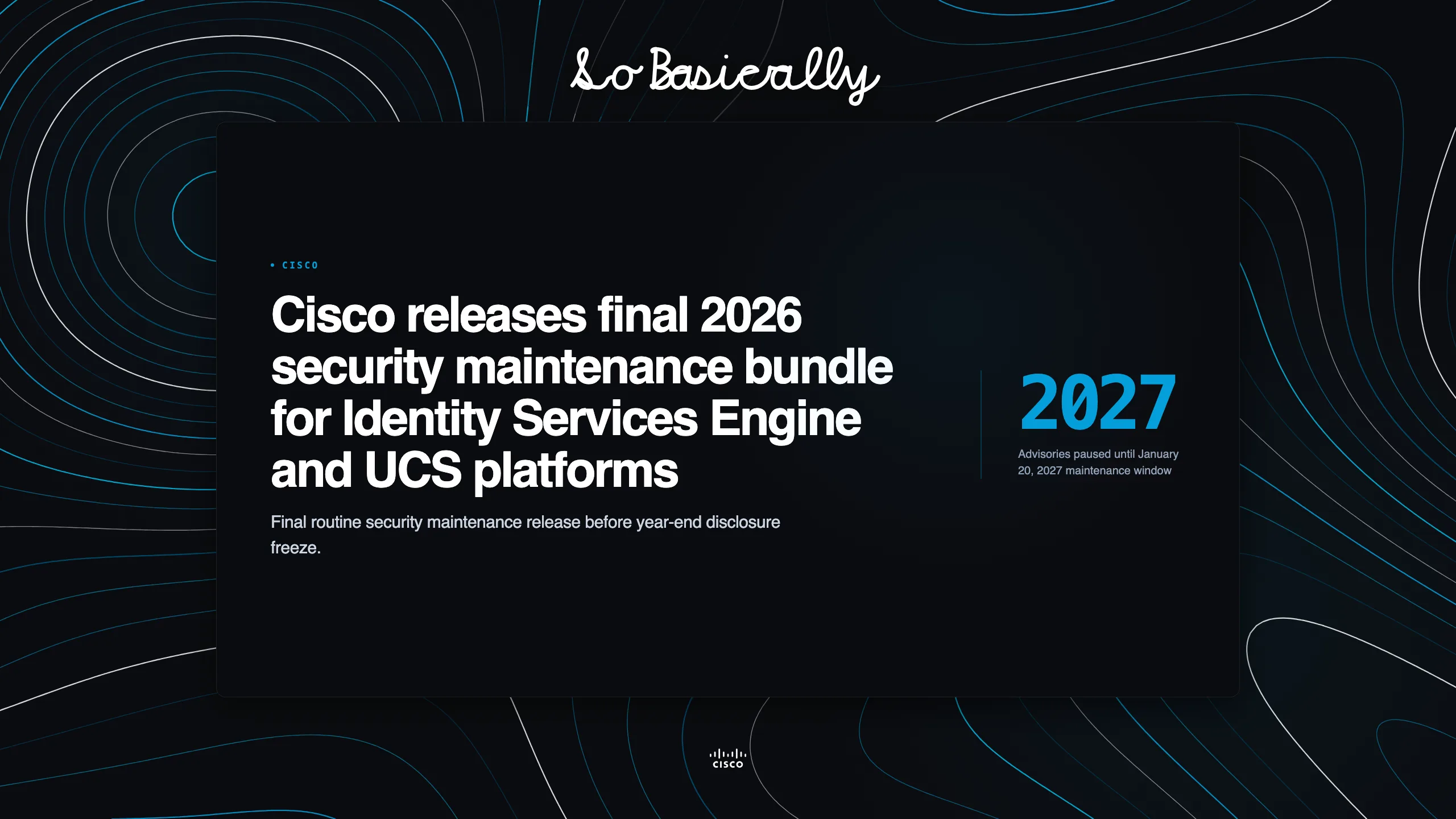
Decision brief card for Cisco releases final 2026 security maintenance bundle for Identity Services Engine and UCS platforms

Cisco releases final 2026 security maintenance bundle for Identity Services Engine and UCS platforms

What happened.Cisco Systems published its scheduled security maintenance releases for Identity Services Engine and Unified Computing System platforms ahead of an end-of-year advisory publication freeze.

Why it matters.Access governance engines and enterprise compute managers control access to internal corporate networks and server clusters. When vendors enter extended advisory freezes, unpatched vulnerabilities linger in corporate environments throughout fourth-quarter holiday operational moratoriums. Network architects should install all released maintenance updates across identity nodes before year-end change freezes commence. Infrastructure operations teams must monitor perimeter telemetry closely while routine vendor advisory disclosures remain paused.

  • Impacted platforms: The maintenance bundle resolves identified vulnerabilities across Cisco Identity Services Engine, UCS Central Software, and Unified Communications Manager deployments.
  • Cadence freeze: Cisco announced that this batch represents its final routine security advisory publication for calendar year 2026, suspending scheduled updates until January 20, 2027.
  • Operational guidance: Enterprise administrators must apply the published maintenance patches across affected access control servers and compute fabric managers to resolve open vulnerabilities.
Official Source:Cisco Security Advisories
Decision brief card for Cisco releases final 2026 security maintenance bundle for Identity Services Engine and UCS platforms
Read Brief
Source:Cisco Security Advisories (opens in a new tab)
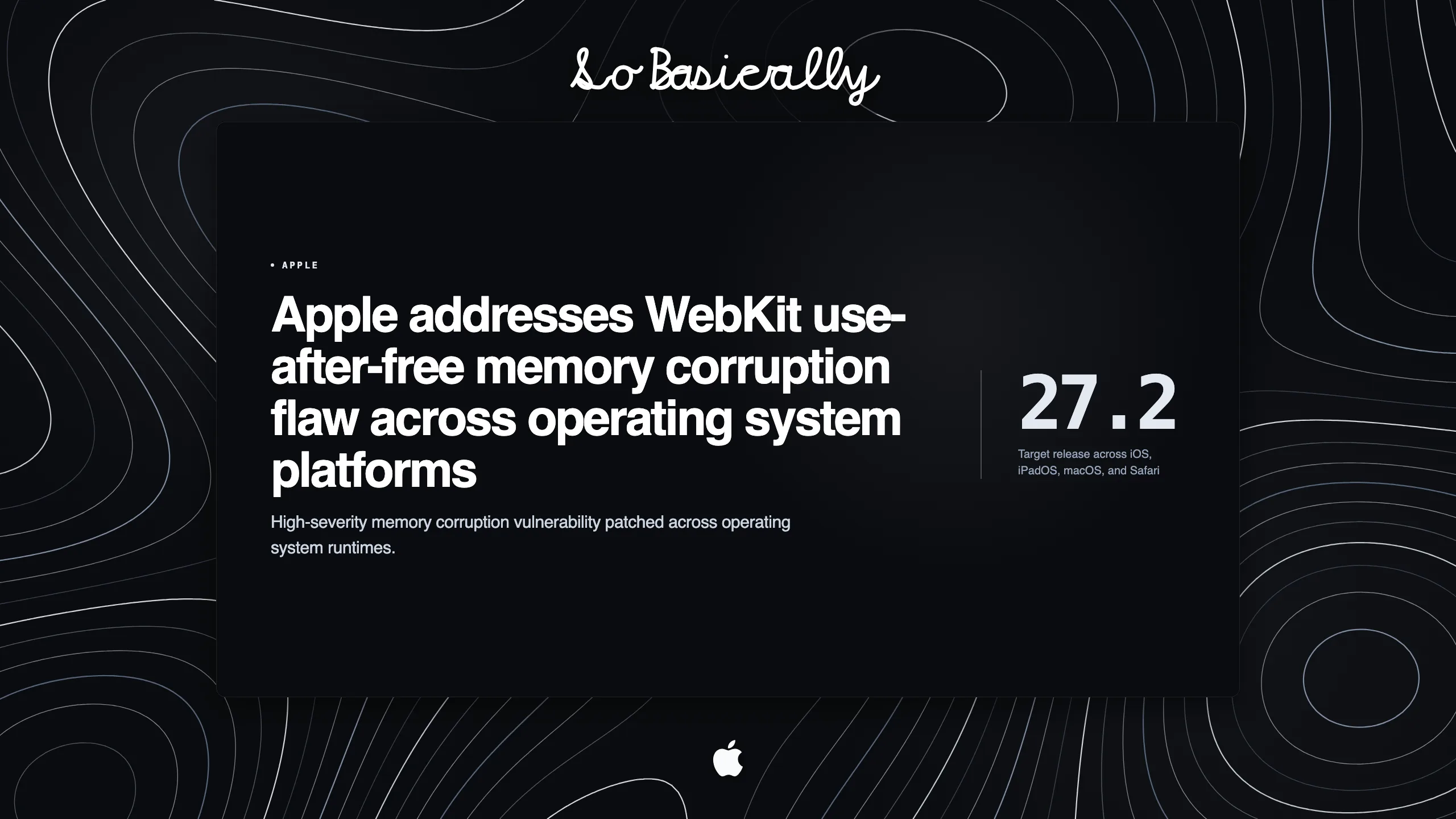
Decision brief card for Apple addresses WebKit use-after-free memory corruption flaw across operating system platforms

Apple addresses WebKit use-after-free memory corruption flaw across operating system platforms

What happened.Apple published a coordinated security update resolving a high-severity use-after-free memory corruption vulnerability discovered within the WebKit browser engine across operating system runtimes.

Why it matters.Rendering engines run behind consumer browsers, internal web views, and mobile application wrappers. When memory corruption vulnerabilities affect core browser components, user interaction with unvetted links can compromise client devices. Systems engineers managing enterprise fleets should enforce automated patch updates across mobile devices and workstations. Mobile application developers should verify that embedded web view components inherit current system WebKit runtime libraries.

  • Vulnerability mechanics: Tracked as CVE-2026-112637, improper memory handling in WebKit canvas and JavaScript bindings allows malicious web content to induce memory corruption.
  • Exploitation impact: Threat actors can exploit the defect by inducing browser sessions to process crafted web pages, triggering arbitrary code execution inside application sandboxes.
  • Platform coverage: Apple deployed patched memory management routines across iOS 27.2, iPadOS 27.2, macOS Tahoe, tvOS 27.2, watchOS 27.2, visionOS 27.2, and Safari 27.2.
Official Source:Apple Security Releases
Decision brief card for Apple addresses WebKit use-after-free memory corruption flaw across operating system platforms
Read Brief
Source:Apple Security Releases (opens in a new tab)
CANDIDATE INTELLIGENCE · UNVERIFIED LEADS

The Discovery Wire · Unverified Attention Signals

Candidate storylines identified across developer channels. Under newsroom canon, attention never establishes fact; these leads remain quarantined until supported by Tier 1 official records.

DEVELOPER WIRE

Barracuda Networks appliance authorization bypass and command injection chain (CVE-2026-116606 & CVE-2026-111560)

Pre-authentication flaw chain yielding root privileges across Email Security Gateways and Web Application Firewalls. Held on watchlist pending public forensic bulletins on active exploitation volumes.

STATUS:Awaiting official documentation or verification criteria.
DEVELOPER WIRE

Canonical LXD and MicroCloud client certificate validation bypass (CVE-2026-112816)

Critical authentication logic flaw in HTTPS API allowing unauthorized client logins with trusted public certificates. Held on watchlist pending wider container distribution advisories.

STATUS:Awaiting official documentation or verification criteria.
DEVELOPER WIRE

IBM Langflow OSS unauthenticated arbitrary code execution flaws (CVE-2026-93680)

Flaw in open-source AI agent workflow platform allowing remote unauthenticated compromises via MCP and SSE endpoints. Held on watchlist pending upstream patch adoption telemetry.

STATUS:Awaiting official documentation or verification criteria.